The Business Of A Life: George Herbert’s “Business”

Through Lent With George Herbert
Tuesday After The Fifth Sunday Of Lent

thomas-stearns-eliot-5-728

This is what you find when you search in “Google Image” for “trochaic tetrameter catalectic”. You discover that although T. S. Eliot did not write “The Love Song of J. Alfred Prufrock” in any regular meter, one can certainly analyse it.

The interest in this next poem, as Ann Pasternak Slater notes, begins with the meter, “a remorselessly regular trochaic tetrameter catalectic” (and, yes, I have to look that up, too).

  • A troche is the opposite of an iamb. Where an iamb has the emphasis on the second of two syllables, a troche has it on the first. Two syllables are usually called a foot, and in combinations they are feet.
  • A tetrameter is made up of four feet, or eight syllables.
  • A catalectic drops a syllable at the beginning at the end.

Thus, Business is a poem of four feet, but drops the syllable at the end, so where one might expect eight syllables there are only seven, and the stress is on the first of each syllable in the foot. This creates a sense of movement – of busy-ness. Even I, who have a poor sense of meter and stress, can see this.

Business

Canst be idle? canst thou play,
Foolish soul who sinn’d today?

Rivers run, and springs each one
Know their home, and get them gone:
Have you tears, or have thou none?

If, poor soul, thou hast no tears,
Would thou hadst no faults or fears!
Who hath these, those ill forbears.

Winds still work: it is their plot,
Be the season cold, or hot:
Hast thou sighs, or hast thou not?

If thou hast no sighs or groans,
Would thou hadst no flesh and bones!
Lesser pains scape greater ones.

But if yet thou idle be,
Foolish soul, Who di’d for thee?

Who did leave his Father’s throne,
To assume thy flesh and bone;
Had he life, or had He none?

If He had not liv’d for thee,
Thou hadst died most wretchedly;
And two deaths had been thy fee.

He so far your good did plot,
That his own self he forgot.
Did he die, or did he not?

If he had not died for thee,
Thou hadst liv’d in misery.
Two lives worse than ten deaths be.

And hath any space of breath
‘Twixt his sins and Saviour’s death?

He that looseth gold, though dross,
Tells to all he meets, his cross:
He that sins, has he no loss?

He that finds a silver vein,
Thinks on it, and thinks again:
Brings your Saviour’s death no gain?

Who in heart not ever kneels,
Neither sin nor Saviour feels.

Ann Pasternak Slater also points out that the first couple announces the theme for the following four triplets, namely, sin. The second couplet does the same for the next four triplets, only for the theme of the death of Jesus. The final two couplets, with the two triplets in between, recapitulate the two themes.

Veins and Hydrothermal Deposits (1)

A gold vein.

The business described here is not a commercial enterprise, but the response of the human soul to sin and death of Jesus, “Who di’d for thee”. The soul that does not take up this work is thus idle or playing. In the first four triplets the work is to weep, and to sigh and groan, which is compared to the waters of rivers and springs and winds. In the second four triplets the two deaths are the normal physical death and the eternal death mentioned in the Book of Revelation, and the two lives are the present life of misery in this world and the coming life and the eternal life in damnation. Human souls ignores Jesus Christ to their peril. The final two triplets contrast 1) the one who loses some gold and tells everyone about it, but does not reflect of the loss caused by sin, and 2) the one who finds silver and can think of nothing more, and yet does not think about the incomparably more important gain acquired in Jesus. The couplets remind us that nothing separates passing from sin to salvation, and that all that is required is humility. Whether one agrees with the sentiments expressed, the poem is artfully made and the form follows the function Herbert wishes it to perform.

90_humbleleadership_700px_thumb

“Humility” and “servant leadership” are big topics in the secular business world. Did they learn it from the Church? Have management gurus been reading George Herbert?

I personally don’t get terribly moved by any fear of eternal damnation, because I was raised with an understanding of God that was always loving, quick to forgive, and, indeed, acting in love and a reckless generosity before I was even aware I might need to repent. Just in case you are wondering, yes, I have repented, and I am conscious of how far I fall short of the glory of God, but I do not dwell on my sins. I know that my relationship with God is not dependent upon anything that I do or do not do, but on the faith of Jesus Christ which, by the Holy Spirit, is growing within me, so that whatever is accomplished in the death and resurrection is at work within me – and you, dear reader, and everybody else. I seek to live in cooperation with that Spirit, and that requires the same humility that Herbert directs us to, a humility that makes us teachable. We try to be aware of how we are at any moment, and not getting lost in the unchangeable past, of disengaging by thinking about the future. If we are wrong, we promptly admit it. This is not easy. I feel that it is only now, in my fifties, that I can claim any aptitude in this type of mindfulness. It is the work of a lifetime, it is my “business”.
 

Posted in Lent, Poetry and Novels | Tagged , , , | 2 Comments

Is This George Herbert’s Worst Poem? “The British Church”

Through Lent With George Herbert
Monday After The Fifth Sunday Of Lent

06

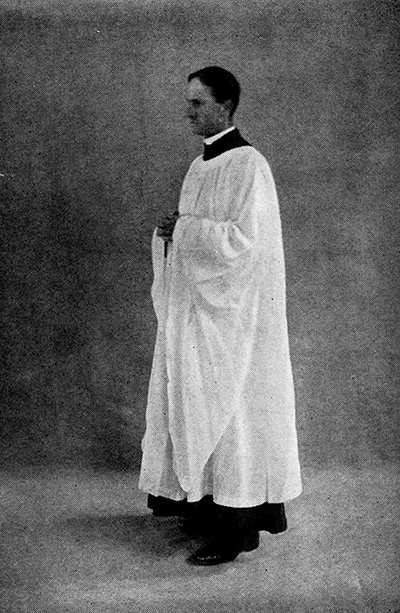
An  Anglican priest in choir habit, with a black cassock and a full white surplice. I dress like this when officiating at Morning Prayer or Evening Prayer. I also wear a black scarf or tippet, and an academic hood.

Is this George Herbert’s worst poem?

  • Ann Pasternak Slater calls it “one of Herbert’s least interesting poems.”
  • John Drury calls it “not one of his great pieces.”
  • Herbert misnames it – a “British Church” would have to include all of Great Britain, but it is talking only about the Church of England, which did not include the Calvinist Church of Scotland.

Whether it is a good poem or not, it is a good statement about his approach to the via media which Anglican tradition supposedly drives between Catholicism and Calvinism.

The British Church

I joy, dear mother, when I view
Thy perfect lineaments, and hue
Both sweet and bright.
Beauty in thee takes up her place,
And dates her letters from thy face,
When she doth write.

A fine aspect in fit array,
Neither too mean nor yet too gay,
Shows who is best.
Outlandish looks may not compare,
For all they either painted are,
Or else undress’d.

She on the hills which wantonly
Allureth all, in hope to be
By her preferr’d,
Hath kiss’d so long her painted shrines,
That ev’n her face by kissing shines,
For her reward.

She in the valley is so shy
Of dressing, that her hair doth lie
About her ears;
While she avoids her neighbour’s pride,
She wholly goes on th’ other side,
And nothing wears.

But, dearest mother, what those miss,
The mean, thy praise and glory is
And long may be.
Blessed be God, whose love it was
To double-moat thee with his grace,
And none but thee.


crlburke.570

The American Cardinal Raymond Burke. These are not Anglican vestments.

The poet plays with the idea of “Church: as a woman. In Greek εκκλησια is feminine in gender, and is often called “the Bride of Christ” and “Mother Church” (given that it is also called “the Body of Christ” this raises issues of gender-blurring and identity, but that can be ignored right now – it’s a metaphor!). Herbert describes three Churches:

  • The “British Church” (sic) is the Church of England, addressed as “dear mother” and perfect, sweet, bright, and beautiful. In Herbert’s time the year began not on January 1 but on March 25, the Feast of the Annunciation, or commonly known as “Lady Day”. Thus, in dating letters, the year begins on the day in which the Lady is remembered.
  • The Roman Catholic Church is described as “wanton” and “painted” (i.e. heavily made up), up on the hills (of Rome, presumably, but also bringing to mind the idol worshippers so often condemned by the Hebrew prophets).
  • The Calvinist Church of Geneva is “mean” and so strict about avoiding pride that her hair is either tied tight around the ears or cut severely, and is basically “undress’d”.
johncalvin_full

A model of John Calvin in his “Geneva gown.” Calvin was never ordained as such, but trained and worked as a lawyer in France. When he took up theology he continued to wear his old habit, and this became the model for the Geneva Gown – a plain black robe, rooted in the academic robes of university students and professors.

Herbert celebrates “the mean”, the middle way of the Church of England. Some of this may be due to the theological approach of Richard Hooker (1554-1600). Hooker opposed Puritanism, which advocated a theology that was essentially Calvinist; he also attacked Catholicism, suggesting that it had been corrupted over time. While he did not use the term via media later Anglican authors felt that he enunciated the themes associated with that, balancing tradition and scripture by the use of reason.

Would Herbert have been a Brexiteer? Perhaps. His reference to a “double-moat” — 1) the grace of God, which meant that is was separated from the extremes of Catholicism and Calvinism, and 2) the actual physical moat of being an island — suggests that he had no great love for the Continent.

Part of the reason I am an Anglican is because the denomination that began in the Church of England combines some of the best of the two other traditions. When I was in my early twenties I was attracted to the Puritan’s heirs, evangelicalism, because of their great love and reverence for scripture, and their evident passion for proclaiming the gospel. At the same time I was attracted to Catholicism, with its deep understanding of spirituality and investment in critical learning at universities and colleges. In the end I could not become an evangelical of any stripe because I felt that their approach to scripture was lacking in any historical or critical analysis, and thus it picked and chose  the passages in scripture that it felt were relevant and ignored the rest; ironically, they did not trust scripture to speak for itself, but bound it in 16th century theology. Likewise I could not become a Catholic because of the totalizing nature of the magisterium and the patriarchy and hypocrisy I saw in the hierarchy. So I stayed an Anglican, a tradition that was rooted in tradition but critical of it and always reforming itself. I do not have the soppy sentimentalism about the church which Herbert displays, but I find myself aligned with what he calls “the mean”.

Posted in Lent, Poetry and Novels | Tagged , | 2 Comments

God Has A Plan to Deal With Poverty And We’re Not Following It

A Sermon preached on The Fifth Sunday of Lent
(The Beginning of Passiontide in the Church of England)
at the Anglican Church of
St. Thomas the Apostle,
Kefalas, Crete, Greece, Part of the Diocese in Europe. 11:00 am April 7, 2019

The readings for the day may be found at: The Lectionary Page

tumblr_inline_o41egvIk871qkqzlv_400You always have the poor with you, but you do not always have me.” Is this an excuse not to do anything about poverty?
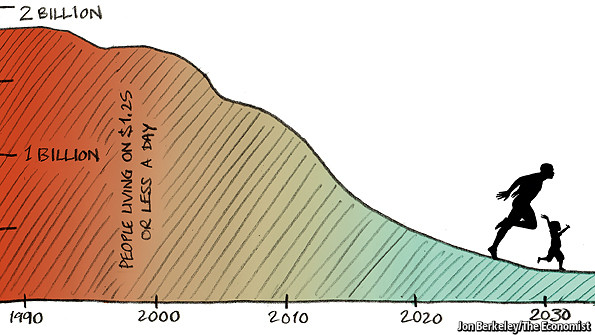
The answer is No, and I will get to that in a minute. But let’s talk about what poverty looks like in 2019.

Poverty is relative. According to one study, in Greece about 20 percent live in conditions of poverty and social exclusion, with another 15 percent of the population being in danger of poverty. Poverty in this study is treated as 60% of the median income in the country, and obviously it will look different for a single person in the countryside than for a family of four in Athens. Another study, using a different standard, puts poverty at about 15% or 1.6 million people.

We see it here in Apokoronas. We see it back home on the streets of the cities from which we come. We have become inured to it, sometimes giving money to people on streets, sometimes contributing to charities that work with the impoverished, and often expecting the government to do something.

Then there is another type of extreme poverty, a type not seen much in Europe and North America. It was defined by the United Nations in 1995 as “a condition characterized by severe deprivation of basic human needs, including food, safe drinking water, sanitation facilities, health, shelter, education and information. It depends not only on income but also on access to services.” In practice it is consumption based: living on less than €1.90 a day.

20130601_LDP002_0

Some of you may remember the Millennium Goals of 2000, which were endorsed by the United Nations. A number of them was about extreme poverty. The good news is that we reached the millennium goal of halving extreme poverty by half five years ahead. By 2010 in China, Indonesia, India, Pakistan and Vietnam some 715 million people were lifted out of extreme poverty, as compared to 1990. The challenge is that there are still some 700 million in extreme poverty, and lifting them out of it will be harder than the first half.

But will the poor be with us always? In today’s gospel reading Judas uses the poor as an excuse to make money for himself. He wants control of the resource that was used to signify the coming death and burial of Jesus. Jesus replies, “You always have the poor with you, but you do not always have me.” It is right and good to honour Jesus, who serves all humanity in his life, death, and resurrection. How do we respond to the poverty around us, in the light Christ’s incarnation?

Dr. Liz Theoharis of the Kairos Center for Religions, Rights, and Social Justice based in New York argues, convincingly, that the disciples and the biblically minded would have heard in Jesus’s words a reference to Deuteronomy 15, where God’s plan to address poverty is laid out. Deuteronomy 15.11 has God saying,

Since there will never cease to be some in need on the earth, I therefore command you, ‘Open your hand to the poor and needy neighbour in your land.’

This is a general encouragement towards generosity, but this is only Part B or God’s plan in Deuteronomy. Plan A, a much more radical approach beyond charity, is referred to earlier – it is a seven-year jubilee, in which debts are all forgiven. God states,

There will, however, be no one in need among you, because the Lord is sure to bless you in the land that the Lord your God is giving you as a possession to occupy, if only you will obey the Lord your God by diligently observing this entire commandment that I command you today.

indexSo, fundamentally, it is a sharing of resources which God gives us. There is enough in the land, and no one should be in need. However, because of debts and unforeseen circumstances, resources may accumulate with some and not with others. So people are required to forgive debts after seven years. This is also paralleled by the 50 year Jubilee, after a week’s week of years (i.e 7 X 7), in which alienated land returns to those who originally owned it.

Today, in 2019, we are more economically savvy than the people of 3400 years ago. The instructions in Deiteronomy 15 are a pretty blunt instrument, but they come from a time when there were no banks, no economists, no statisticians, developers, and social workers studying poverty. In theory we should do better, and in many ways we do, but we err if we think we are better ethically. The world’s wealth is still incredibly concentrated, many of the middle class are experiencing a stagnation in income growth, and it seems that education is becoming ever more expensive. For me the question arises,

  • what do we need to do to create contexts in which the poor can create wealth and benefit from it;
  • what do we need to do to create situations in which people can develop the capacity to live themselves out of poverty,
  • and what do we need to do to distribute the wealth of the world?

Matthew 25 – the Parable of the Judgment when the resurrected are divided like sheep and goats – concludes “Truly I tell you, just as you did it to one of the least of these who are members of my family, you did it to me.” If we wish to honour Jesus, our anointing will be to care for the least of these – the hungry, the thirsty, the imprisoned, the unclothed, and the sick. If we want, as Paul says, “to know Christ and the power of his resurrection”, we will discipline ourselves to be involved in this kind of work.

41rp+WWskpL._SX321_BO1,204,203,200_

In this 1999 book Indian economist Amartya Sen first talked about the “capabilities approach to development” which emphasises not the transfer of resources, but the development of human capital as the chief means of addressing poverty.

We are called not to isolation or passive complacency, but to be part of the transformation of God’s world. We cannot just sit at the foot of the cross forever, resting in Jesus’s sacrifice. Our faith must get off its knees and move to find Jesus in every human being, especially those in need. From Isaiah we hear “I am about to do a new thing; now it springs forth, do you not perceive it?” Let us see this new thing in Christ, let us perceive it. May we say with the psalmist,

The Lord has done great things for us,
and we are glad indeed.
Those who sowed with tears *
will reap with songs of joy

Posted in Lent, Sermons | Tagged , , | Leave a comment

Entropy: George Herbert’s “Decay”

Through Lent With George Herbert
Saturday After The Fourth Sunday Of Lent

b8250944712de970e45fc4ae3c24e8ea_large

Decay

Sweet were the days, when thou didst lodge with Lot,
Struggle with Jacob, sit with Gideon,
Advise with Abraham, when thy power could not
Encounter Moses’ strong complaints and moan:
The words were then, Let me alone.

One might have sought and found thee presently
At some fair oak, or bush, or cave, or well:
Is my God this way? No, they would reply:
He is to Sinai gone, as we heard tell:
List, ye may hear great Aaron’s bell.

But now thou dost thy self immure and close
In some one corner of a feeble heart:
Where yet both Sin and Satan, thy old foes,
Do pinch and straiten thee, and use much art
To gain thy thirds and little part.

I see the world grows old, when as the heat
Of thy great love, once spread, as in an urn
Doth closet up it self, and still retreat,
Cold Sin still forcing it, till it return,
And calling Justice, all things burn.

In the early seventeenth century people did not believe in progress. Rather, they adhered to a classical understanding of humanity’s decline through the “Ages of Man“. According to Hesiod, the Golden Age has long passed, and we have moved through silver, bronze, the heroic age of the Iliad and Odyssey, to the present Iron Age. As Gregory Nagy of Harvard translates it:

now is the time of the Iron Generation.
What will now happen is that men will not even have a day or night
free from toil and suffering.
They will be worn down, and the gods will give harsh cares.
Still, despite all this, even they will have some good mixed in with the bad. (176-179)

This classical understanding was conflated by Christians with the ancient Jewish understanding of the fall of humanity in the Garden of Eden. The Jews believed that even though Adam and Eve were expelled from the Garden, they still knew who God was and worshiped the Lord. Over time, however, humanity turned from the Creator and worshiped the creation, in the form of bulls and other idols. Being divorced from a knowledge of God, they fell into depravity. The first eleven chapters of Genesis is one fall after another – Eden, the murder of Abel, another murder by Lamech, the Flood, and the Tower of Babel. It is all a set up for the call of Abraham, which then goes through three generations to Jacob and his sons in Egypt, thus setting up the Exodus from Egypt to the Promised Land, which covers the next four books of the Torah.

The presence of God among human beings changes over time. Whereas Adam and Eve would speak to God face to face, Jacob, Abraham and Moses do not. Abraham is visited by angels, and in both Hebrew מַלְאָךְ and and Greek ἄγγελος simply means “messenger”. Jacob struggles through a night with “a man” at Peniel, but does not recognise him until afterwards. Herbert takes the messengers that came to Lot to be that mediated presence of God. Moses is told that he cannot see the face of God and live – but he is permitted to see God’s backside.

Whereas in the past God’s presence might be found at the Oaks of Mamre, or Mount Sinai, now God resides in “some one corner of a feeble heart”. It is beseiged by Sin and Satan, wanting the widow’s thirds (and more). The world has grown cold, and the warm love of God is sealed up as ashes in a funerary urn (another classical image, as Christians did not cremate the dead until the last century). But the time will come when Justice will return, and “all things burn”.

LIB-NFB-434_E_2

I grew up with a belief in progress.

  • The land of my birth, Canada, was a growing country, and the future seemed to hold only good things.We were getting super highways!
  • My parents generation, in the post-war era, enjoyed a growth in distributed prosperity never seen before, and that has seemingly carried on into mine own.
  • We landed on the moon, we developed computers and colour television.
  • Women were achieving equality, and racism was condemned.
  • The colonies were freed, the Cold War ended and the Berlin Wall fell.
  • Extreme poverty was actually being reduced.
  • According to Stephen Pinker, we are living in the most peaceful era of our species.

119157

And yet, it doesn’t feel like a time of progress.

  • While GDP has gone up over the past 30 years, it has been so unequally distributed in North America and Europe that many feel left behind.
  • The Arab Spring collapsed in Egypt. Libya fell into civil war.The world was unable to contain the violence in Syria, resulting in two-thirds of Syrian becoming homeless, a flood of millions of refugees, and a corresponding rise of racism in Europe as they sought safety.
  • My children’s generation are confronted by a society that demands ever-more expensive education just to get a foot in the job market.The poor are suffering from austerity measures instituted after the Financial Crisis of 2007-2008, while those responsible have never been held account.
  • Politics is now so polarized by media that there is little consensus on what to do with the crises facing us.
  • The United States and the United Kingdom both seem to be run by amateurs who pay no attention to facts, figures, or science, and even in Canada the federal government appears to be unable to function in any kind of uncompromised manner.
  • Strongmen rule in Russia, Venezuela, Brazil, and the Philippines.
  • Oh, and in a hundred years New York City and London will be under water.

One approach to this is to withdraw and remain faithful in the face of all this decay. The scope of my control is very limited, and one person cannot solve these problems. One can just wait for the Apocalypse, when Christ will appear and all that is sinful will be destroyed, leaving only that which is good, to be remade into a New Heaven and a New Earth. My own approach is more active. I believe that the End Time is now – and has been since the Day of the Resurrection, one Easter Sunday mornings some 1989 years ago. Christians are called to live the Resurrected life now – not just to wait. The heat of love which raised Christ from the dead is available to us now, through the Holy Spirit. We are living in both a time of decay and resurrection, a period of sin and grace. So we help refugees, we are politically active, we continue to oppose racism, and we work to challenge climate change. It may well not be enough, and there may be disasters ahead, but it is better than doing nothing.


Posted in Lent, Poetry and Novels | Tagged , , | 2 Comments

A Procession to Death: George Herbert’s “Mortification”

Through Lent With George Herbert
Friday After The Fourth Sunday Of Lent

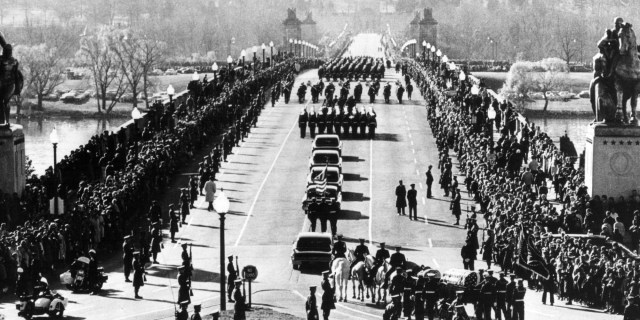
President John F. Kennedy

The funeral procession of John F. Kennedy crosses the Potomac River on Memorial Bridge, on the way to Arlington Cemetery, November 25, 1963.

Mortification.

How soon doth man decay !
When clothes are taken from a chest of sweets
To swaddle infants, whose young breath
Scarce knows the way ;
Those clouts are little winding sheets,
Which do consign and send them unto death.

When boys go first to bed,
They step into their voluntary graves ;
Sleep binds them fast; only their breath
Makes them not dead.
Successive nights, like rolling waves,
Convey them quickly, who are bound for death.

When youth is frank and free,
And calls for music, while his veins do swell,
All day exchanging mirth and breath
In company ;
That music summons to the knell,
Which shall befriend him at the hour of death.

When man grows staid and wise,
Getting a house and home, where he may move
Within the circle of his breath,
Schooling his eyes ;
That dumb enclosure maketh love
Unto the coffin, that attends his death.

When age grows low and weak,
Marking his grave, and thawing ev’ry year,
Till all do melt, and drown his breath
When he would speak ;
A chair or litter shows the bier,
Which shall convey him to the house of death.

Man, ere he is aware,
Hath put together a solemnity,
And drest his hearse, while he has breath
As yet to spare.
Yet Lord, instruct us so to die
That all these dyings may be life in death.

I just presided over a funeral for a seventy-one year old man, my first such service here in Crete. As a priest in the Diocese in Europe, the part of the Church of England that is outside the British Isles, I used the resources of Common Worship, although I confess that for the prayers I did mostly use those on pages of the Book of Alternative Services of the Anglican Church of Canada. One of the prayers I did use from Common Worship was this one:

We have but a short time to live.
Like a flower we blossom and then wither;
like a shadow we flee and never stay.
In the midst of life we are in death;
to whom can we turn for help,
but to you, Lord, who are justly angered by our sins?
Yet, Lord God most holy, Lord most mighty,
O holy and most merciful Saviour,
deliver us from the bitter pain of eternal death.
Lord, you know the secrets of our hearts;
hear our prayer, O God most mighty;
spare us, most worthy judge eternal;
at our last hour let us not fall from you,
O holy and merciful Saviour.

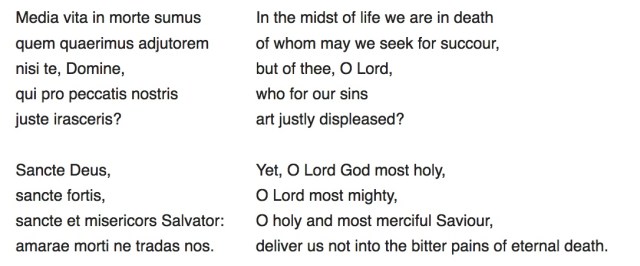
This is a modern adaptation of a well known prayer from The Book of Common PPrayer, which is itself a poetic translation from a 14th century Latin chant:

Media vita in morte sumus

From the Wikipedia article “Media vita in morte sumus

Herbert seems to echo this prayer in the last line of the poem: “That all these dyings may be life in death.” The first five  stanzas are a reflection on the presence of death in life in five stages of life, and the sixth and final stanza sums up the meaning that all life is a formal procession whose destination is death. The five stages of life are similar to that of Shakespeare’s seven from As You Like It. It is not clear if Herbert would have been familiar with the monologue, but the theme was common enough.

Mortification is, according to the Oxford English Dictionary,

In religious use: the action of mortifying the body, its appetites, etc.; the subjection or bringing under control of one’s appetites and passions by the practice of austere living, esp. by the self-infliction or voluntary toleration of bodily pain or discomfort.

The reminders of death that Herbert notes are potential means of mortification. Thus,

  • In infancy the perfumed swaddling cloths (a.k.a. “clouts”) are like burial cloths;
  • For boys the sheets of a bed and their sleeping resembles, again, burial cloths and the immobility of a dead body;
  • The music of youth is a reminder of the death-knell that tolls out the years of life of the deceased;
  • The walls of a home and garden resemble the coffin which will enclose him; and
  • the chair or litter on which an old man is carried is likened to the bier that carries the corpse.

As Arnold Stein notes in his extensive study of the poem in George Herbert’s Lyrics (Baltimore MD: Johns Hopkins Press, 1968, pp. 156-170) the theme of breath is introduced in the third line of first stanza, it rhymes with death in the sixth line, and these two words repeat in this pattern throughout the poem. Breath is the opposite of death. Herbert’s use of “breath” in the third line is extremely clever, because the reader is not given the opportunity to breath, but must read on to the fourth line in order to complete the sense of the sentence.

aboutootgd-e1394315232564-650x305

The Dance of Death, Holy Trinity Church in Hrastovlje, Slovenia

We are, in much of North America and Europe, a death denying society. Certainly we extol youth as a precondition for beauty, and we fight the circumstances of age with hair dyes, make-up, form-shifting clothes, rejuvenating exercise, miracle anti-aging foods, and plastic surgery. Whereas here in Greece funerals are community events, in most of the western world it is a private thing, becoming public only when the person is rich or famous. In much of the United States when someone dies their heirs can just go online and arrange for someone to pick up a dead body and take it away for cremation. Two weeks later a FedEx box arrives at one’s home with the ashes. Movements such as The Order of the Good Death, as well as Death Cafés are working to call all of this denial into question, supplementing what traditional religions have always done.

The Christian Church begins Lent by reminding people of their mortality by placing ashes on their foreheads. We complete Lent and pass to Easter, after remembering the death and burial of Jesus of Nazareth on the previous two days. On the third day we remember Jesus’s resurrection, and recall John’s words that what he is we shall become. But to get there, short of the Last Trumpet and Christ’s appearing, we must live and we must die. I am both living and dying, breathing and pausing between breath. We process through life, but all around us are reminders of our death. And again the question comes back to us – who do we live this gift of life?


Posted in Lent, Poetry and Novels | Tagged , , | 2 Comments

The Paradox of Justice: George Herbert’s “Justice (1)”

Through Lent With George Herbert
Thursday After the Fourth Sunday of Lent

Justice (I)

I cannot skill of these thy ways.
Lord, thou didst make me, yet thou woundest me;
Lord, thou dost wound me, yet thou dost relieve me:
Lord, thou relievest, yet I die by thee:
Lord, thou dost kill me, yet thou dost reprieve me.
But when I mark my life and praise,
        Thy justice me most fitly pays:
For, I do praise thee, yet I praise thee not:
My prayers mean thee, yet my prayers stray:
I would do well, yet sin the hand hath got:
My soul doth love thee, yet it loves delay.
I cannot skill of these my ways.

The Oxford English Dictionary defines Justice as:

I. Administration of law or equity.
1.     Maintenance of what is just or right by the exercise of authority or power; assignment of deserved reward or punishment; giving of due deserts.
2. a. Punishment of an offender; retribution deemed appropriate for a crime; esp. capital punishment, execution. . . .
3. a. The administration of law; due legal process; judicial proceedings. In early use: †legal proceedings of any kind (obsolete).

There are different understandings of justice, but the idea of balance seems to be pretty integral to them all. It is a critical issue in ethics, politics, law, and theology.

Rockwell The-Problem-We-All-Live-With-8x5

Norman Rockwell, “The Problem We All Live With” Originally published in the January 14, 1964 issue of Look magazine.

John Rawls in the 1970s famously saw justice as fairness, calling into question a purely utilitarian conception. Amartya Sen, who won the Nobel Memorial Prize in Economics for his work on the causes of famines, wrote on Development as Freedom (1999), which was worked by Martha Nussbaum and others into a capabilities of human beings as a key component of justice.

For many of us Justice is an intuitive thing. It is only fair that people are not discriminated against on the basis of race, sex, ethnicity, religion, or ideology. The famous painting above by Norman Rockwell of a child, Ruby Bridges, being escorted by US Federal Marshals. One one should be obliged to face racial slurs, threats of violence, and rotten vegetables being thrown at them, just to go to school, much less a six year old. However, prejudices run deep, the those who were children then are adults now, and perpetuate the hatred that their parents felt was justified in 1962.

My own understanding of justice identifies it with the divine in action in the world. There is much in the world that runs against God’s just will, and yet, as Martin Luther King said (repeating what others had said before him), “The arc of the moral universe is long, but it bends toward justice.”

Reflecting on his own personal situation, the poet in Justice (1) finds himself confused by God’s ways. They seem a paradox. The Creator has him suffer, but then relieves his suffering, he knows he will die, but is promised eternal life. Why is there suffering and death? In brief, he is trying to come up with a theodicy, and understanding of evil in the context of God’s overall plan of creation and salvation, which is presumably good, like God. Of course, since the Second World War and the Holocaust many find it hard to construct and theodicy, and the French philosopher Emmanuel Levinas said that it was impossible. We are in the situation of Job, who might want to take God to court and get an answer, but only receives the words of the God from out of the whirlwind, expressing the transcendence of the Creator.

This is Herbert’s approach. To the paradox of God’s ways he counters with his own ways. He prays, and yet so often does not pray, and his thoughts wander (something I can identify with). By external standards he seems to do well, yet the poet knows the sin that still has the upper hand. He loves God, but paraphrasing Augustine, he things, “Make me good, just not yet!” There is thus a correspondence between the paradox of God’s justice with the paradoxical nature of human beings. While not quite the image of God, perhaps this is an echo of the divine in humanity, in that in our fragile, broken state we resemble how the divine approaches us.

I find myself concerned with justice. Why am I comfortable while others do without? Why are some people undocumented refugees while I live in a nice home with a recognized citizenship and a visa that allows me to live in a foreign land? Why have police give me a break when I get pulled over on the road while others with a different hue of skin are harangued and, in some cases, shot? I suppose, in the long run, the question is not where is the justice in all this, but what I am I doing to create a just society? Yes, I have many unearned privileges, but what am I doing to use these privileges to help those who do not have them, and what am I doing to deconstruct the system that put me in this position? It is for this reason that I am working towards a post-colonial theology I (and others) are calling Unsettling Theology, of which my soon-to-be-submitted PhD dissertation is a contribution, looking at the theologies which informed those who operated the “Indian Residential Schools” in Canada.  It is for this reason that I have been involved, at various times in my career, with advocacy for sex workers, refugees, street people, and the hungry. It has never been enough, but it is a start. It is what John Rawls would cal “fair”. Or, as the prophet Micah said:

What does the Lord require of you
but to do justice, and to love kindness,
and to walk humbly with your God?       Micah 6.8

Posted in Lent, Poetry and Novels | Tagged , , , | 2 Comments

The Dear Feast Of Lent: George Herbert’s “Lent”

Through Lent With George Herbert
Wednesday After The Fourth Sunday of Lent

lent-wordle.png

Lent

Welcome dear feast of Lent: who loves not thee,
He loves not Temperance, or Authority,
But is compos’d of passion.
The Scriptures bid us fast; the Church says, now:
Give to thy Mother, what thou wouldst allow
To ev’ry Corporation.

The humble soul compos’d of love and fear
Begins at home, and lays the burden there,
When doctrines disagree,
He says, in things which use hath justly got,
I am a scandal to the Church, and not
The Church is so to me.

True Christians should be glad of an occasion
To use their temperance, seeking no evasion,
When good is seasonable;
Unless Authority, which should increase
The obligation in us, make it less,
And Power itself disable.

Besides the cleanness of sweet abstinence,
Quick thoughts and motions at a small expense,
A face not fearing light:
Whereas in fulness there are sluttish fumes,
Sour exhalations, and dishonest rheums,
Revenging the delight.

Then those same pendant profits, which the spring
And Easter intimate, enlarge the thing,
And goodness of the deed.
Neither ought other men’s abuse of Lent
Spoil the good use; lest by that argument
We forfeit all our Creed.

It’s true, we cannot reach Christ’s forti’eth day;
Yet to go part of that religious way,
Is better than to rest:
We cannot reach our Saviour’s purity;
Yet we are bid, ‘Be holy ev’n as he,
In both let’s do our best.

Who goeth in the way which Christ hath gone,
Is much more sure to meet with him, than one
That travelleth by-ways:
Perhaps my God, though he be far before,
May turn and take me by the hand, and more:
May strengthen my decays.

Yet Lord instruct us to improve our fast
By starving sin and taking such repast,
As may our faults control:
That ev’ry man may revel at his door,
Not in his parlour; banqueting the poor,
And among those his soul.

It would be hard to go through Lent with George Herbert without looking at his poem Lent, so that is what we do today. It is eight stanzas of six lines each, which makes for forty-eight lines, although one might think Herbert would have worked out something like a forty line poem. I thought that maybe if you added in the Sundays in Lent (which are not counted as part of the forty days) you might get the poem’s numbers – but that only get you up to forty-six. Even throwing in Easter Sunday doesn’t help – so there is no significance to the number of lines. The rhyme scheme is simply AABCCB, and the metre is 10.10.6.10.10.6.

Herbert plays with paradox, labeling the season of Lent, normally a time of fasting, as a feast. In the last stanza he speaks of starving sin, which puts me in mind of the words of the late Terry Finlay, Archbishop of Toronto (1937-2017):

Fast from excess and feast on simplicity,
Fast from negatives and feast on alternatives,
Fast from discontent and feast on gratitude,
Fast from gossip and feast on silence,
Fast from self-concern and feast on compassion,
Fast from anxiety and feast on faith.

In the 17th Century in England the Puritans – the wing of the Church of England that followed the reformed teachings of John Calvin – opposed the calendar of the Book of Common Prayer, with its observances of Christmas, Saint’s days, Easter, and the seasons of Lent and Easter, considering such things to be corruptions and innovations introduced by the Roman Church and not authorized by Scripture. Thus, there was controversy in the Church of England over the observance of Lent and the fasting that went with it.

800px-Joachim_Beuckelaer-Marché_aux_poissons

Joachim Beuckelaer (c. 1533 –1575) , Le Marché aux poisons 1568, Musée des Beaux-Arts de Strasbourg

Herbert was not comfortable with such conflict. If the scriptures said that fasting was a good thing, and the Church following tradition said that the forty days before Easter were the chief time to do so, he saw little reason to question it. Thus, in the third stanza, the only reason to oppose the church’s requirements is if the expectation becomes too heavy.

Herbert was realist enough to know that every person’s Lenten discipline would fall short of Christ’s time in the wilderness; it is an ideal that we cannot reach, but “let’s do our best.” This reminds me of the first line in The Scout Promise:

On my honour I promise that I will do my best—
To do my duty to God and the King (or to God and my Country)
To help other people at all times and
To obey the Scout Law.

The rhyme in the sixth stanza is downright Kiplingesque, and it evokes a pre-World War One kind of manly Christianity. The poem gets better in the last stanza, where it alludes to Isaiah 58.6-7:

Is not this the fast that I have chosen?
to loose the bands of wickedness, to undo the heavy burdens,
and to let the oppressed go free, and that ye break every yoke?
Is it not to deal thy bread to the hungry,
and that thou bring the poor that are cast out to thy house?
when thou seest the naked, that thou cover him;
and that thou hide not thyself from thine own flesh?

True fasting, ultimately, is not about oneself, but about others, and injustice. As God feeds us at the table of the Lord, so we are called to feed the poor and undo oppression.


Posted in Lent, Poetry and Novels | Tagged , , | 2 Comments

Hiding In Plain Sight: George Herbert’s “Coloss. 3.3”

Through Lent With George Herbert
Tuesday After The Fourth Sunday Of Lent

hiding-in-plain-sight

Coloss. 3.3.
Our life is hid with Christ in God

My words and thoughts do both express this notion,
That Life hath with the sun a double motion.
The first Is straight, and our diurnal friend,
The other Hid, and doth obliquely bend.
One life is wrapped In flesh, & and tends to earth:
The other winds towards Him, whose happy birth
Taught me to live here so, That still one eye
Should aim and shoot at that which Is on high:
Quitting with daily labour all My pleasure,
To gain at harvest an eternal Treasure.

This is another one of those poems which John Dryden did not like. The conceit is that a slightly modified verse from Colossians 3.3 is hidden in the text, diagonally, as one moves down the lines: My life is hid in him, that is my treasure. It is even more obvious when printed properly, which the WordPress site won’t let me do, with the last two lines indented.

Apparently Herbert was one of those clergy who liked writing biblical verses around the house and church, painting them on walls or inside windows so that one sees them only when sitting down and staring at them. One of them was the verse from Colossians 3.3., which he had painted in the stall in the church where his wife would normally sit, thus associating her with Christ and life.

Herbert compares the life of a human being with that of the sun, which has two apparent motions. These are in fact the result of the motion of the earth, but since we move with the globe it looks like it is the sun that moves. The first is the daily east to west motion of the sun, most obvious. The second is the annual motion of the sun against the stars, in that over the 365 days  of the year the motion of the sun shifts west to east by just under 1 degree of a 360 degree circle. This is the result of the motion of the earth around the sun, and is obvious only to those who watch the sky carefully, although over time the movement is significant. This is compared to that other sun, the Son, Jesus Christ. The life enveloped in flesh look to the earth, but will tend to the heavenly Lord as well, slowly and surely. As Henry Francis Lyte wrote in Abide With Me some two-hundred years later as he, too, died of a chronic respiratory disease,

Swift to its close ebbs out life’s little day.
Earth’s joys grow dim, its glories pass away.
Change and decay in all around I see
O Thou who changest not, abide with me.

What does it mean for one’s life to be hidden in Christ? The passage from Colossians 3 is worth reading in its larger context of the Letter.

3So if you have been raised with Christ,
seek the things that are above,
where Christ is, seated at the right hand of God.
2Set your minds on things that are above,
not on things that are on earth,
3for you have died, and your life is hidden with Christ in God.
4When Christ who is your life is revealed,
then you also will be revealed with him in glory.

5 Put to death, therefore, whatever in you is earthly:
fornication, impurity, passion, evil desire, and greed (which is idolatry).
6On account of these the wrath of God is coming on those who are disobedient.
7These are the ways you also once followed, when you were living that life.
8But now you must get rid of all such things
— anger, wrath, malice, slander, and abusive language from your mouth.
9Do not lie to one another,
seeing that you have stripped off the old self with its practices
10and have clothed yourselves with the new self,
which is being renewed in knowledge according to the image of its creator.
11In that renewal there is no longer Greek and Jew,
circumcised and uncircumcised,
barbarian, Scythian,
slave and free;
but Christ is all and in all!

12 As God’s chosen ones, holy and beloved,
clothe yourselves with compassion, kindness, humility, meekness, and patience.
13Bear with one another and,
if anyone has a complaint against another, forgive each other;
just as the Lord has forgiven you, so you also must forgive.
14Above all, clothe yourselves with love,
which binds everything together in perfect harmony. 1
5
And let the peace of Christ rule in your hearts,
to which indeed you were called in the one body.
And be thankful.
16Let the word of Christ dwell in you richly;
teach and admonish one another in all wisdom;
and with gratitude in your hearts sing psalms, hymns, and spiritual songs to God.
17And whatever you do, in word or deed,
do everything in the name of the Lord Jesus,
giving thanks to God the Father through him.

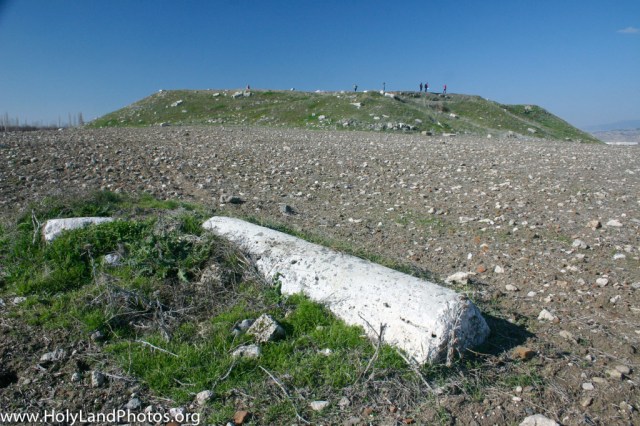
twcscl23

Colossae, in what is now Turkey. Not much left.

Most contemporary biblical scholars would argue for a number of reasons that this was probably not written by Paul but by someone in his name some time after his death. Regardless, it is a powerful passage reflecting a number of themes found in the undisputed letters. Chief among them is the sense that followers of Jesus have died with him and are waiting to rise with him in glory; what Jesus is now in resurrected glory, we will become. Thus, in a sense, we are living that resurrected life now, by the power of the Holy Spirit, albeit not fully realized. Thus we must struggle with “whatever is earthly” and put it to death, so that we no longer lie and put away “anger, wrath, malice, slander, and abusive language from your mouth”. While we might think this kind of advice is obvious, we only need to look of some of the leaders of the world today to see how potent these eartly things are in the mouths of demagogues – and they were considered normal and perhaps even laudable in Roman times. “Compassion, kindness, humility, meekness, and patience” were seen as signs of weakness, what Nietzsche later described as belonging to a “slave mentality”. But the author is adamant that the followers of Jesus must be peaceful, thankful, and clothed with love.  This kind of living collapses apparently cosmically ordained categories of religion, ethnicity, cultural development, and class, so that Christ is all and in all.

To be hid with Christ is to be in the world but to carry this eschatological reality in the body, to live as a resurrected being now and not simply wait like a stone for it to come to pass. The movement may appear to be in one direction, but over a lifetime it actually moves the other, towards the divine.

Posted in Lent, Poetry and Novels | Tagged , , , , | 2 Comments

Many Mansions: George Herbert’s “The World”

Through Lent with George Herbert
Monday After The Fourth Sunday of Lent

GettyImages-154504322

Moshe Safdie’s Habitat, in Montreal, QC, Canada.

The World

Love built a stately house, where Fortune came,
And spinning fancies, she was heard to say
That her fine cobwebs did support the frame,
Whereas they were supported by the same;
But Wisdom quickly swept them all away.

Then Pleasure came, who, liking not the fashion,
Began to make Balconies, Terraces,
Till she had weakened all by alteration;
But reverend laws, and many a proclamation
Reforméd all at length with menaces.

Then entered Sin, and with that Sycomore
Whose leaves first sheltered man from drought and dew,
Working and winding slily evermore,
The inward walls and Sommers cleft and tore;
But Grace shored these, and cut that as it grew.

Then Sin combined with Death in a firm band,
To raze the building to the very floor;
Which they effected,–none could them withstand;
But Love and Grace took Glory by the hand,
And built a braver Palace than before.

This is an allegory, and allegories were common enough in the time of Herbert, although they soon fell out of fashion. Obviously, from the title, it is about the world, but the question for me remains – what is the world, and what is the “stately house”, and what is the “braver palace”?

Ann Pasternak Slater in her notes to the Everyman’s Library edition of The Complete English Works declares that

a stately house: this is mankind. The World refers to the antagonistic forces (Fortune, Pleasure, Sin and Death) that are countered by the worldly forces of good (Wisdom, Law), and by divine Love and Grace to bring man’s soul to Glory. . . .
a braver Palace: heaven, the abode of divine love, to which the human soul is welcomed in Love (3).

In an article in 2004 Guillaume Coatalen argued that the source of the image in the poem came from a Latin play by Plautus, where “man” is compared to a house that undergoes all kinds of degeneration through lack of upkeep. It would appear that Pasternak Slater is on solid ground.

I am not convinced. The divine abode in Love (3) might be identified with heaven, but it may simply be being in the presence of God in this world. It may be the general resurrection and living in the New Jerusalem of Revelation 21-22. It may also be interpreted as the Holy Eucharist (or, as Herbert would have called it, Holy Communion). The danger with allegory, I think, is that one can fix its meaning too readily. I prefer to leave the ambiguity.

This extends, then, to the “stately house”.

  • It may be humanity, but . . .
  • It may also be the creation of heaven and earth in time, to be superseded by the New  Heaven and the New Earth.
  • It may be the human body, susceptible to death and the evils of sin, and the more ambiguous events of fortune and pleasure, only to be replaced by the resurrected body, which, like Christ’s, does not know the power death or sin, except as something now past.
  • It may be the Church; the reformation required in line 10 suggests as much.
biggest-houses-pensmore-mansion-700x467-c

The unfinished Pensmore in Highlandville, Missouri, USA. It was supposed to be a 13-bedroom, 14-bathroom 72,000-square-foot lab/bunker/family home. What it is, is really, really ugly.

The characters of Fortune and Pleasure are not inherently evil. They remind me of the kind of flaky friends who are big on ideas but lousy on implementation, and I wonder if Herbert had in mind some of the wealthy but not very clever young men who came to Cambridge and subsequently, quite literally, ruined their houses by ill-advised additions and changes. Fortune and Pleasure require Wisdom and the order of law to avoid their problematic by-products. Sin and Death are evil, which is why they intend to destroy the house, and they can only be countered by God’s own Grace and Love. These two take Glory by the hand – a reference to the Johannine understanding of Jesus’s death on the cross – and build the braver palace.

20-of-the-smallest-houses-in-the-world-20

A small house on a trailer, somewhere in Canada. Reportedly, two people lived in it for three years. Other than the limited space for books, it’s GREAT!

The artistry of Herbert is seen in the multiple ways this poem might be interpreted. God’s action in the world cannot be caught by any one portrait, but requires a gallery. Thus we have four gospels, the pictures drawn by Paul in his letters, and the apocalyptic images in the Revelation to John, all of which is grounded in the epic of God’s love for Israel told from multiple perspectives in the Hebrew Bible. It is less a single narrative than a symphony with a hundred musicians, and the power of the whole is found in the tensions which cannot be easily resolved. In writing poetry like this, Herbert was emulating what the authors of the scriptures had done.

Posted in Uncategorized | 2 Comments

Knockin’ on Heaven’s Door: George Herbert’s “Sunday”

Through Lent With George Herbert
The Fourth Sunday of Lent: Mothering Sunday

Normally I post my sermon on Sundays here, but I am not preaching this week – Julia Bradshaw, our postulant for the diaconate here at St. Thomas, Kefalas, is speaking this Mothering Sunday. So in lieu of that, here are some reflections on Herbert’s poem on Sunday.

WeekInReview_thumb_thumb_thumb_thumb_thumb-720x479

Sunday

O day most calm, most bright
The fruit of this, the next world’s bud,
Th’endorsement of supreme delight,
Writ by a friend, and with his blood;
The couch of time; care’s balm and bay:
The week were dark, but for thy light:
Thy torch doth show the way.

The other days and thou
Make up one man; whose face thou art,
Knocking at heaven with thy brow:
The worky-days are the back-part;
The burden of the week lies there,
Making the whole to stoop and bow,
Till thy release appear.

Man had straight forward gone
To endless death: but thou dost pull
And turn us round to look on one,
Whom, if we were not very dull,
We could not choose to look on still;
Since there is no place so alone,
The which he doth not fill.

Sundays the pillars are,
On which heav’n’s palace arched lies:
The other days fill up the spare
And hollow room with vanities.
They are the fruitful beds and borders
In God’s rich garden: that is bare,
Which parts their ranks and orders.

The Sundays of man’s life,
Threaded together on time’s string,
Make bracelets to adorn the wife
Of the eternal glorious King.
On Sunday heaven’s gate stands ope;
Blessings are plentiful and rife,
More plentiful than hope.

This day my Saviour rose,
And did enclose this light for his:
That, as each beast his manger knows,
Man might not of his fodder miss.
Christ hath took in this piece of ground,
And made a garden there for those
Who want herbs for their wound.

The rest of our Creation
Our great Redeemer did remove
With the same shake, which at his passion
Did th’earth and all things with it move.
As Samson bore the doors away,
Christ’s hands, though nail’d, wrought our salvation,
And did unhinge that day.

The brightness of that day
We sullied by our foul offence:
Wherefore that robe we cast away,
Having a new at his expense,
Whose drops of blood paid the full price,
That was requir’d to make us gay,
And fit for Paradise.

Thou art a day of mirth:
And where the weekdays trail on ground,
Thy flight is higher, as thy birth.
O let me take thee at the bound,
Leaping with thee from sev’n to sev’n,
Till that we both, being toss’d from earth,
Fly hand in hand to heav’n!

This is known to be a poem that was actually sung by Herbert. His biographer, Isaac Walton (of The Compleat Angler fame) wrote:

The Sunday before his death, he [George Herbert] rose suddenly from his bed or couch, called for use of his instruments, took it into his hand . . . And having tuned it, he played and sung: “The Sundays of man’s life . . .”

We do not know the tune, but the meter is 6.8.8.8.8.8.6 which is quite unusual – I do not know any melody that fits it. Perhaps more relevant is the fact that the nine stanzas each have seven lines, reflecting the seven days of the week.

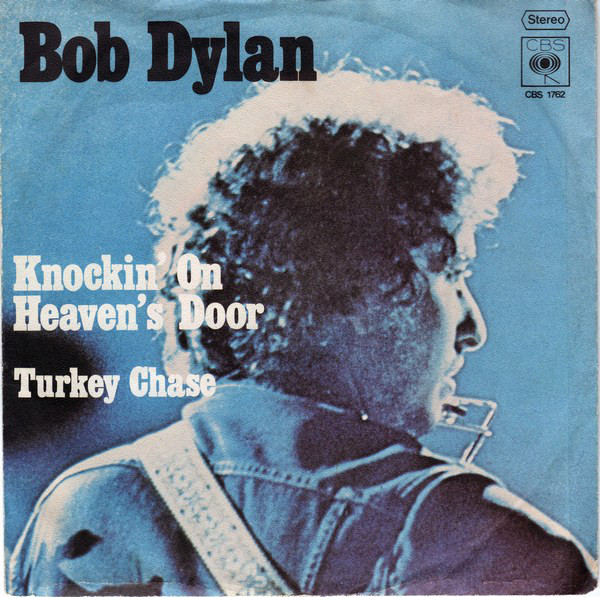
Herbert writes of an idealized Sunday, perhaps  a reflection of his experience in Cambridge and Bemerton. Unlike today, in those days people did genuinely cease work on Sundays – no lectures in the university, no tending to the fields in the country. Except for what was absolutely necessary, such as milking cows and feeding the chickens, people would have spent Sundays in church and at home. The shops were closed and no business as such would have been transacted. Herbert finds it to be calm and bright, a fruit of the coming world of the kingdom of God, a time of healing, a day of mirth. It is the day when we stop our plunge towards death and look on Jesus, whom we ignored throughout the week although he fills all places and time. It is the day of resurrection, an earthquake and an opening door. It is the place where we knock on heaven, not in a fearful way as in Bob Dylan’s song, but in hope and relief.

Dylan

Paradoxically, for me, Sundays have often been a time of anxiety. With a diagnosis of Generalized Anxiety I found that Sundays were often the culmination of all my fears, because as an ordained minister that is when I would see the parishioners and I was afeared that they would find out my hypocrisies, my procrastinations, and my inadquacies. I might be afraid of conflict or embarrassment. Thus, Saturdays in particular, as I prepared for the Sunday services, would be times of dread. Indeed, my wife and I came to call them “the Saturday dreads”. Of course, on Sunday itself most turned out just fine; I would get into the groove of leading worship and preaching, and the people would respond well, and focus on God and not the preacher. I no longer have such Saturday dreads – well, hardly ever – but the memory of them is not pleasant.

The fact is that on a Sunday I can think of no other place I would want to be than with a worshiping community. While I am sufficiently competent to preach and lead, i do not feel any necessity to do so, and I really enjoy visiting other congregations and communities; just because I know how to drive a car does not mean that I need to be in the driver’s seat. That, for me, is Sunday – a time to be with God’s people, and with them, be the body of Christ, and catch a glimpse of the divine. It is something that goes beyond simply knowing God as the Creator, and it is also beyond knowing God as transcendent, as wholly other – it is finding the divine in community, which Herbert alludes to in the lines in the second stanza, “The other days and thou / Make up one man; whose face thou art, / Knocking at heaven with thy brow”. My prayer for today is that you have that experience of heaven on earth, of the divine in the human, of Christ in the face of friend and stranger.

Posted in Lent, Poetry and Novels | Tagged , , , | 2 Comments