It’s All Greek To Me: Ancient Greek

In my first posting on the Greek language I gave a broad historical overview of the Greek language. In the second I talked briefly about Mycenean Greek which we know from clay tablets and inscriptions written in the syllabic Linear B and found in the ruins of Bronze Age sites on Crete and the Peloponnese such as Knossos, Mycenae, and Pylos. This is the earliest attested form of Greek, unknown before the 1950s, and they date from about 1650 BCE to 1190 BCE.

What we normally know of as Ancient Greek falls into three periods (which, to be honest, overlap and evolve into each other).

800 BCE to Homeric Greek (Archaic Greek)
420 BCE to Classical Greek
330 BCE to 300 CE Hellenistic Greek (Koiné or New Testament)

To make it a little more confusing,the first two are often combined under the name”Classical Greek” or, along with Latin, part of the discipline known as “Classics”. The third type has several names. Biblical scholars will call it Koiné, which means “Common”, for it was indeed the common language of the Eastern Mediterranean and beyond after the conquests of Alexander the Great (356 BCE – 323 BCE). However, only those who have studied call it that – so most people know it as “New Testament Greek”. Since there is a large body of literature beyond the New Testament that is in this form of the language non-Biblical historians of the era call it “Hellenistic Greek”.

Archaic Greek, or Homeric Greek, is exemplified by The Odyssey and The Iliad, and is found in inscriptions, shorter written texts such as Hesiod’s Theogony, and the lyric poetry of Sappho. Virtually all scholars accept the tradition that the Homeric epics were composed to be sung and accompanied by a harp-like instrument known as a lyre. The great Homeric Question is actually several questions: 1) How were the two great epics composed? 2) How was it transmitted? 3) Was it originally oral, and only written down at a later date? 4) Was there a person named Homer who composed it? 5) Who and when was it written down? 6) Does it bear any relation to history? I’ll discuss these issues in a later post.

Classical Greek is from – no surprise here – the Classical period, during which Europeans from the Renaissance on believed ancient Greece to have reached its highest points. The first date bookending it refer to the the beginning of the Peloponnesian War between Athens and Sparta, although arguably one could push the date back to the Battle of Marathon to include the war between the Greeks and the Persians. The second date refers to the hegemony of the northern kingdom of Macedon over all of Greece and the defeat and conquest of the Persian Empire by Alexander. We have ancient texts from

  • the philosophers, such as Plato and Aristotle;
  • the playwrights, such as Sophocles, Euripides, and Aeschylus;
  • the medical texts of Hippocrates;
  • the historians, such as Herodotus, Thucydides and Xenophon; and
  • the poets, such as Pindar.

All in all, it is a large body of texts. Much of it is in a variety of dialects, so the grammar and vocabulary will vary depending on where the author was from.

Hellenistic Greek is what Classical Greek evolved into, and while it is a somewhat simpler form of the language, it is still much closer to the Greek of Aristotle than the type of Greek I would hear if I turned on the television today. Think of it as the difference between the prose of a Jonathan Swift or a Jane Austen and the style of a J. D. Salinger or the manual to your washing machine. Hellenistic Greek was used all over the eastern Mediterranean. Thus, parts of the New Testament may have been written in what is now Turkey, Egypt, Syria, or Israel-Palestine, as well as in what is now Greece. Josephus wrote his massive works The Jewish War and Jewish Antiquities in the late 70s or 80s of the Common Era (“CE”). The Greek translation of the Bible known as The Septuagint, done about 150 years before Jesus, is also in Hellenistic Greek. Archimedes and Euclid also used this ancient form of Greek.

Ancient Greek is taught to all high school students for at least one year. It is not as difficult as for us reading Old English, say, Beowulf, which is practically a different language, but it is at the level of difficulty of reading Chaucer. The Greeks that I have talked to about this all describe it as being very difficult, as ancient Greek has an extra case for the nouns and somewhat different verb forms, with changes in them according to what dialect the author used. The vocabulary is also a bit strange. Some words are exactly the same, but many have dropped out, or changed meaning somewhat. That said, they are proud of their great heritage.

Sig short

Posted in Uncategorized | 1 Comment

Lessons from the Great War: The End

main-qimg-83c1344000fc094fa5a63cef108476c8-c

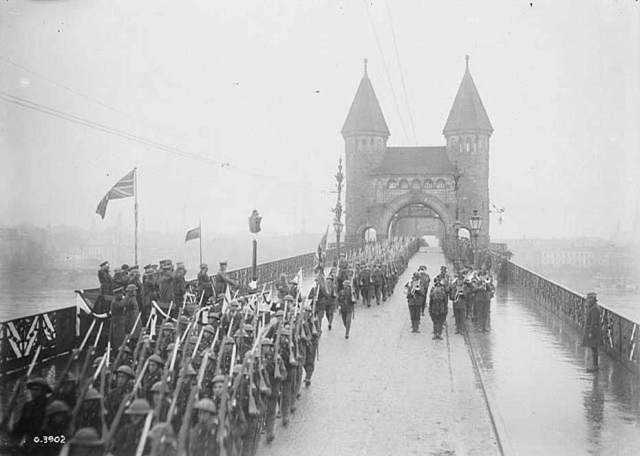
The 22nd (French Canadian) Battalion crossing the Rhine at Bonn, December 1918. Credit: Canada. Department of National Defence. Library and Archives Canada, PA-003778

In my initial post on the Great War I asked four questions. The first of them was about the reasons for the war, and the second was about why the belligerants persisted in the war at such great cost rather than negotiating peace when the stalemate emerged. The causes of the First World War, and the reason the war kept going despite the failure of either side to progress much, have both been analyzed many times in many books, and there are many points of disagreement. Regarding the third question, as to the end of the war – things are more clear.

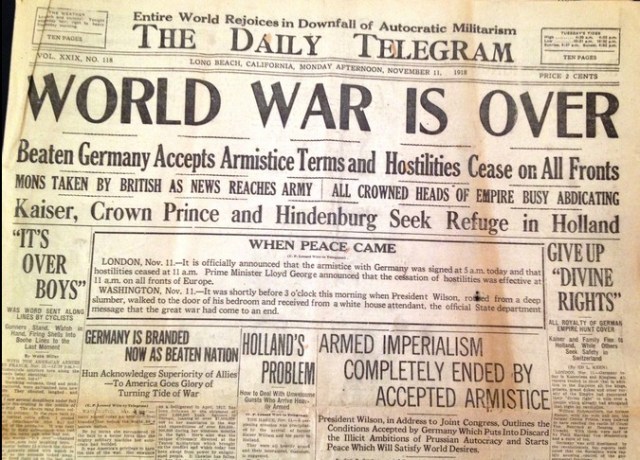
To frame the question a bit differently, why did the Allies win the Great War and not the Central Powers?  Remember that the Armistice of November 11 1918 took most people by surprise. Both the soldiers and the leaders of the nations assumed the war would go on well into 1919.

Let’s assume that “victory” and “defeat” is based on the achievement of war goals. Let’s also assume that the war was determined on the Western Front. The German war goals were to defeat the Russian Empire and the French Republic. They accomplished the former but not the latter. The Allies never lost the will to throw soldiers into the meat grinder of the Western Front. The Germans, having made a victor’s peace with the Bolsheviks in 1917, threw all they had into the Spring 1918 offensive. While they pushed the Allied armies back, they were unable to completely destroy them, or call into question the will of the politicians to continue. By September 1918 the Allies had finally figured out how to overcome trench warfare. It required a combination of mechanized warfare and squad-based tactics that, at a high casualty cost, finally made the war mobile. The Allies had also figured out that battles petered out after a few days; after achieving the destruction of the enemy troops and the gain of some land, they applied pressure at some other point. The German front never collapsed, but they were constantly in retreat in the last hundred days, and there was nothing the Germany army could do to stop it.

telegramIt was only at that point that the will of the German leadership began to fail. If the Allies only comprised the British and the French the German leadership might have been able to look to a time when Allied offensive would run out of steam, but the fact was that the Americans were now in the war, and even though relatively few of them were fighting in 1918, they would become the main force in 1919.

The Central Powers came to believe that defeat was inevitable in or around September 1918, and importantly, that it was the Germans who saw it as such. Tactically I believe the Allied Army, still mainly French and British in 1918, could have taken the war to the Rhine, but it would have required the Americans to take it into the heart of Germany. The Germans knew this, and so sued for peace.

The Great War was a long, bloody war of attrition. By late 1918 neither side had been bled dry, but both sides were aware of their limits. Had the Americans not entered the war in 1917 the Germans could have theoretically moved to fight a purely defensive war and hope that the British and French would run out of soldiers. The entry into the war of the Americans meant that the Allies had significantly more resources with which the Germans could not compete.

So, in another sense, the defeat of the Central Powers became inevitable when the US entered the war. Retrospectively we can see that this was the case, but it was not apparent at the time. After all, while the German Reich was indeed relatively new, it had still been unified for over 40 years when war was declared. The Austro-Hungarian Empire seemed monolithic, and while many saw the Ottoman Empire as the sick man of Europe it was no push over, as Gallipoli and the Siege of Kut showed.

An argument can be made that the defeat of the Central Powers became inevitable when the offensive of 1914 ended in the establishment of trench warfare. It would have required the Germans suing for peace while standing on Allied territory, and then seeing what happened. The fact that neither side would consider doing so in 1914 committed both sides to a war of attrition, and it was quite unclear at that time who would have been able to win it. Obviously, as it turned out, the Allies were capable and did win the war, so one might say that the defeat was inevitable in the late autumn of 1914. But, of course, hindsight is 20:20.

colourized_tank

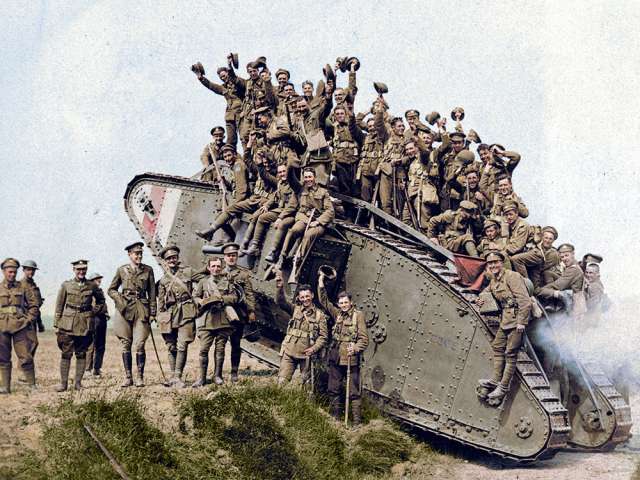
So, to summarize, the war ended because the Germans lost the will to fight. They lost the will to fight because the Allies were consistently advancing on the western front because they were using mechanized warfare – tanks – and they had developed squad tactics. Strategically, instead of reinforcing exhausted troops after several days of battle, they rapidly shifted the attack to another weak point in the line. There was never a complete breakthrough by the Allies, but the Germans could not maintain their ground and were constantly moving backwards. Finally, although the US Expeditionary Force was still relatively small in 1918, the German leadership knew that it would expand massively in 1919, so that it could take over from the depleted French and British.

Sig short

Posted in War | Tagged , , , , | Leave a comment

Wade In The Water

A sermon preached for The Second Sunday of the Epiphany: The Baptism of Christ at the Anglican Church of St. Thomas, Kefalas, Crete, Greece, 11:00 am January 13, 2019.

Do you know your birthdate?

Well, of course you do. You may not want to admit just how long ago it was, but you know it and you probably have proof of it.

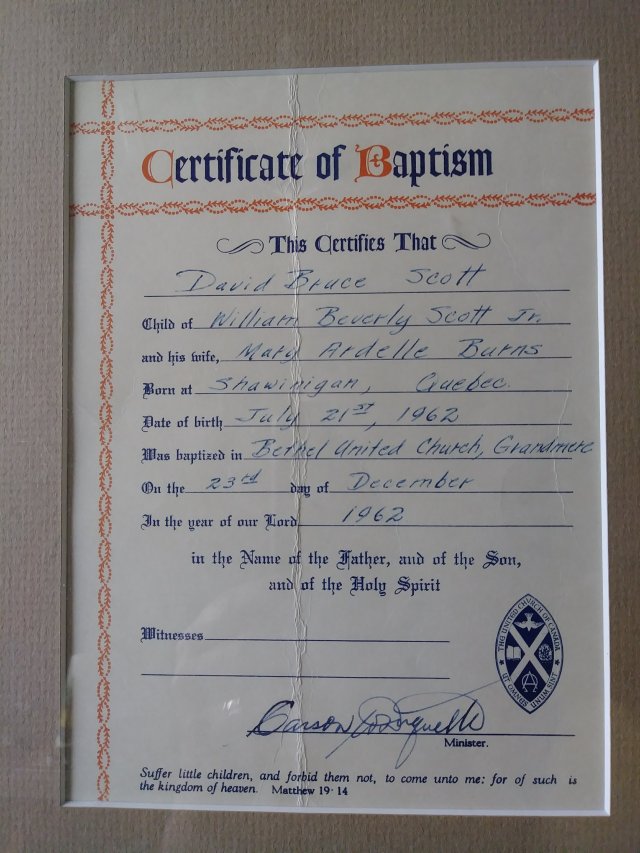
Now, do you know the date of your baptism? Probably not, eh? I know mine, December 23, 1962, because when I was born over 56 years ago my baptismal certificate was also the registration of my birth – so I have seen that date repeatedly. Over time the province of Quebec moved to a secular form of registration, so I have now gone through three different birth certificates, but they all refer back to that baptism.

Should we celebrate the day of our baptisms? Consider what is happening.

  1. For many of us, it was the day of naming.
  2. We are signed with the cross to show that we are Christ’s forever.
  3. It is the day on which we formally enter the church.
  4. It is the day on which we mystically become part of the body of Christ. We are spiritually “incorporated”. We become part of the one who was the Word made flesh. We become Jesus.
  5. Like Jesus, we are given a sign that we are beloved. It is a mark of the love of God, that we are accepted as God’s children. We are loved, and we are lovable. No matter how little we or others might think of us, God declares that we are worth loving. We have value, we are inherently good and marvelous creatures.
  6. Paul describes it as a burial with Christ, and a rising again from the tomb. We die with Christ and rise with him in new life. It is a mystical union. The same power which raised Jesus Christ from the dead is at work in us.
  7. Just as John washed away sins, so in baptism sin dies to us. We are washed, we are pure.
  8. Jesus pours out the Holy Spirit upon us, and empowers us to do wonderful things for God.
  9. And so we are new creations.
  10. We are commissioned as part of the royal priesthood, and sent out as ministers into the world to carry on the work of Christ. Not just clergy, but all the people of God have this baptismal calling. It is the original calling from God, from which the ordained ministry is derived.

But so what? Lots of people are baptized, and not all of the act like this has happened amongst them. The idea of baptismal regeneration – that one is actually changed in baptism – seems hard to believe. At best, is it not just a mere sign?

Do not underestimate the power of baptism.

Wade in the water, wade in the water, children,
Wade in the water, God’s a-gonna trouble the water.

  • An old hymn developed when slavery was part and parcel of the United States.
  • Various versions, even tunes differing slightly.
  • Some have speculated it was a code for the slaves to seek liberation, like the Israelites who were slaves in Egypt.

1. See that band all dressed in white, God’s a-gonna trouble the water,
The leader looks like the Israelite, God’s a-gonna trouble the water.
2. See that band all dressed in red, God’s a-gonna trouble the water,
Looks like the band that Moses led, God’s a-gonna trouble the water.

  • The first two verses connect baptism and exodus, washing and freedom.

3. Look over there, what do I see? God’s a-gonna trouble the water,
The Holy Ghost a-coming on me,! God’s a-gonna trouble the water.

  • The third verse talks about the Holy Ghost, the Holy Spirit transforming the singer.

4. If you don’t believe I’ve been redeemed, God’s a-gonna trouble the water,
Just follow me down to Jordan’s stream, God’s a-gonna trouble the water.

  • The fourth verse is a call to the listener to join in the liberating transformation.
  • The song speaks of the power of God in the midst of slavery, of grace in the midst of oppression, of hope and joy when confronted with despair.
  • In the end, the people were freed, and they are being freed now.

If baptism did that with an enslaved people 150 years ago, what will it do with us today?

My brothers and sisters:
Let us hear that voice say to us, in Christ, You are my beloved, in whom I am well pleased.
Let us hear God tell us we are precious in his sight and that the divine is always with us.
Let us hear the invitation to his banquet hall and join in the gathering from the ends of the earth.
Let us welcome the Holy Spirit and be set free from anything evil that possesses us.
Let us wade in the water, again, and celebrate.

Posted in Liturgy, Sermons | Tagged , , , , , | 1 Comment

It’s All Greek To Me: The Origins of the Greeks

byron comes to greece

“The Reception of Lord Byron at Missolonghi“, by Theodoros Vryzakis, 1861 / National Gallery of Greece. Byron treated the modern Greeks as the descendants of the ancient Greeks.

In the eighteenth century, when many classically educated Englishmen and Germans made the long journey to Greece and Anatolia, they were struck by what they found to be a major disjunction between the glories of ancient Greece and the Greek-speaking peoples they encountered. Were these people, simple peasants and the occasional clever merchant, really the descendants of Herodotus and Sappho, Euripedes and Themistocles? The modern day Greeks seemed unaware of their classical heritage and all too submissive to the Eastern Orthodox church. Where was the martial spirit of Sparta and Athens? Where was the skeptical questioning of Socrates? Given that Western Civilization was thought to have started in Greece, could these people really be their heirs?  They seemed to have more in common, they thought, with other subject peoples, like the southern Slavs in the Balkans. In particular, Jakob Philipp Fallmerayer believed that

The race of the Hellenes has been wiped out in Europe. Physical beauty, intellectual brilliance, innate harmony and simplicity, art, competition, city, village, the splendour of column and temple — indeed, even the name has disappeared from the surface of the Greek continent…. Not the slightest drop of undiluted Hellenic blood flows in the veins of the Christian population of present-day Greece.

While this was an unpopular thesis with the Greeks and the supporters of their new nation, just recently freed from Turkish domination in a revolution, Fallmerayer’s prejudice carried on well into the the Twentieth century.

And they were wrong, of course. Studies have been made comparing the recovered genetic material from the bones and teeth of ancient peoples in various parts of Greece with that of modern Greeks. On the Peloponnese genetic studies demonstrate that there is very little relation between the current inhabitants and the peoples of the Slavic countries to the north. They show that, for the most part, the population in what we now know as Greece has actually remained fairly stable for the past 10,000 years.  According to one study, about 3/4 of the ancestry of modern Greeks can be traced back to neolithic farmers in Anatolia and the lands around the Aegean Sea (i.e. stone-age peoples living there 12,000 – 6500 years before the present).

Sir Arthur Evans of Knossos fame believed that the ancient Minoans did not originate in Europe but came from Egypt around 3000 BCE, as refugees from a southern invasion. This echo of the Aeneid, retro-projected into the 4th millennium BCE, was predicated on the prejudice that the Minoans could not have developed their buildings, writing, and economics on their own. Always controversial, Evans’s belief has also been definitively  disproved by genetic analysis; the Minoans were descendants of the people that had settled the island millennia before, and originally came from Europe.

ag_nik_map

What does becomes clear from the genetic evidence is that the non-Greek speaking Minoans and the Greek-speaking Myceneans were somewhat different populations. The Myceneans and the Minoans represented different waves of settlers from the north. In time they merged into one population, the ancestors of modern Greeks on Crete and the Aegean islands; the one exception is a group of people on the relatively inaccessible Lasithi plateau, who appear to be the descendants of Minoans who fled to the hills to escape the Myceneans and all subsequent colonizers.

We do not know what language the ancient Minoans spoke. We do not even know what they called themselves, or if they called the site “Knossos”. We do know much about their pottery and architecture and that they recorded things in Linear A, and based on the use of the same signs by Linear B for Mycenean Greek we can guess at what some of the words sounded like – but the corpus of Linear A is too small and complex to allow for a decipherment. It seems clear that after the Minoan civilization was weakened, perhaps  by earthquakes and volcanic eruptions, that the Mycenean Greeks entered Crete and began to rule the land. Contrary to what Evans thought, most scholars in the field now believe that the Minoans were no more and no less warlike than the Myceneans.

Greek tradition held that during the Greek Dark Age (approximately 1100 BCE – 800 BCE) the Greek-speaking Dorians displaced the Greek-speaking Ionians who were living in the Peloponnese. At some point the Dorians also made it to Crete, as that was the dialect on the island during classical times. How the Dorian migration relates to the fall of late Mycenaean civilization around 1100 BCE is not at all clear, but there does seem to be some remembrance of movements of peoples who spoke different dialects of the same language. The genetic studies suggests that that this remembrance was just of the most recent waves of these related peoples – the Greek-speaking Mycenaeans were already subsumed into legends.

Is any of this important? Well, yes, because it demonstrates “continuity but not isolation in the history of populations of the Aegean, before and after the time of its earliest civilizations”, as the authors of one of the genetic studies suggests. The Greek population now living in the nation of Greece are the descendants of the population that has been here for some ten-thousand years. They are the heirs of Knossos and Mycenae, Sparta and Athens, Macedon and the Hellenistic Empires. We cannot let those of us from western European let our prejudices get in the way of respecting them.

Sig short

Posted in Crete, Greece | Tagged , , , | 2 Comments

It’s All Greek To Me: Mycenaean Greek

agamemnon

For all we know, Agamemnon (if he existed) spoke with a Scottish accent. Sean Connery as Agamemnon in “Time Bandits”.

What did Achilles, Odysseus, and Agamemnon sound like? Up until the 1950s you would have been directed to the earliest form of “classical Greek”, the archaic form of ancient Greek found in the lyrics of The Iliad and The Odyssey, as well as a few other texts. However, the heroes of these epics were held to have lived centuries before (if they had existed at all), so while they spoke in Homeric Greek in the poems, their actual language might have been different.

The 19th century was a period of rediscovery by Europeans of the historical roots of these ancient classics. Heinrich Schliemann famously uncovered Troy in Anatolia, in what is now eastern Turkey by the Dardanelles. His methods were a bit crude – dynamite is not normally considered to be a basic tool in archaeology – but he confirmed that one could peer past the texts of antiquity and find something that, if not verifying the Trojan War, certainly might have provided the seed for epics centuries later. Schliemann also excavated the Bronze Age sites of Mycenae (“Mee-ke-nee”) and Tiryns (“Tir-inz”) in the north-eastern corner of the Peloponnese, and labelled the common civilization that flourished from the 16th to the 12th century BCE as Mycenaean (which is usually pronounced in English, perversely, as “My-sen-ian”). In 1900 Sir Arthur Evans began excavations at a site in Crete, believing it to be the ancient Knossos of the legendary King Minos of minotaur and labyrinth fame. In all three of these locations and elsewhere a type of writing was found on tablets, written on pottery, and as inscriptions. After a fair size corpus of texts had been built up Evans was able to distinguish between two types of related but different writings. The older he called Linear A, and the more plentiful type found in higher, younger levels of the strata he called Linear B. He named the civilization at the site Minoan and declared that he had found Knossos, and the place has been known by that name ever since.

linear_b_musée_archéologique_de_mycènes

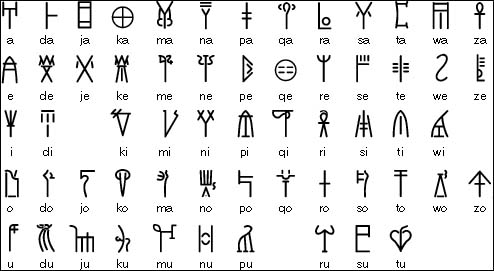
There were attempts to decipher both Linear A and B, but there was no easy success with either. What was evident from the number of symbols was that Linear B seemed to be a syllabary much like Japanese, ancient Egyptian, or Cree – instead of an alphabet, the symbols represented combinations of consonants and vowels, so that, for example, “ba”, “da”, “bi” and “di” would each be represented by a different syllabogram. As well, it appeared that the syllables were supplemented by simple ideograms, images that looked like the things to which they referred, i.e. an ox was represented by something that looked like an ox head. A number of prominent archaeologists and linguists suggested connections with the ancient Hittites, others with Homeric Greek, but all of their solutions were subjective and not very obvious.

The story of how Linear B was finally cracked has been written up many times, but is best told in “The Riddle of the Labyrinth: The Quest to Crack an Ancient Code” (2013) by Margalit Fox. An initial challenge was to get all of the texts onto paper so that some sort of analysis could be done. The heavy lifting on this was done by Professor Alice Kober of Brooklyn College, City University of New York. Starting in the 1930s she transcribed the many hard to read tablets and started to construct grids of associations in forty notebooks, and using over 180,000 cards. She died in 1950, but before then had determined that the language was inflected – that the word endings changed according to what they were doing.

linearb

Michael Ventris, an architect and highly knowledgeable amateur classicist, deciphered the texts in 1952, building on the work of Kober. He treated it very much as a puzzle, and it was a bit like doing a sudoku by inserting guesses and then seeing if the other numbers would fit in. Many of the guesses were wrong, but working on the assumption that he was dealing with a very old form of Greek he tried out the idea that some of the syllabograms represented place names. This started a cascade of deductions, and in 1952, working with John Chadwick of Cambridge University, they published their results. Ventris, unfortunately, was killed in a car accident just before the publication of Documents in Mycenean Greek. Chadwick carried on the work in Linear B, which continues today.

Much to the disappointment of many, the tablets in Linear B proved to be, for the most part, inventories of oil, gold, tripods, and such. While gods were occasionally mentioned, all that could be determined was that there was some continuity of names between the Mycenean Greeks and the Homeric gods of seven centuries later. So, while there was no real insight into the culture and religion of the Myceneans, there was now significant evidence about their economics and the lifestyles of the rich and powerful. Another important achievement was the demonstration that Greek-speaking peoples had been in Greece as early as the 16th century BCE, something which had been hotly disputed before the decipherment.

What was it like? Unlike modern Greek, with four cases, or classical Greek, with five, nouns in Mycenaean Greek had seven: nominative, genitive, accusative, dative, vocative, instrumental and locative. The “w” sound was present, unlike most dialects of classical Greek where it had entirely dropped out (modern Greeks have difficulty with the sound, as it is now quite foreign). Linear B, as it turns out, was not a good means of writing down a highly inflected language. After the mysterious fall of Mycenaean civilization around 1200 BCE the use of the script ceased, and when the Greeks began to write again in the 8th century they adopted and adapted the alphabetic script of the Phoenicians.

Linear A, the writings system of the earlier population Evans called “Minoan” is clearly related, but the language it represents does not appear to be Greek or any other known ancient language. It may represent an ancient language like Etruscan or Basque that pre-dates the arrival of languages belonging to the Indo-European family.

Posted in Crete, Greece | Tagged , , , , , , | 2 Comments

A Few Reasons I Should Have Known I Was Going To Move To Greece

I moved to Greece a little over three months ago. I had never been there before until a visit after my interview in Brussels, and I don’t think I ever had it on my list of Things To Do Before I Die. And yet, here I am.

But then again, maybe there were some hints that this was a more than fanciful possibility. Here are some reasons I should have known I was going to move to Greece.

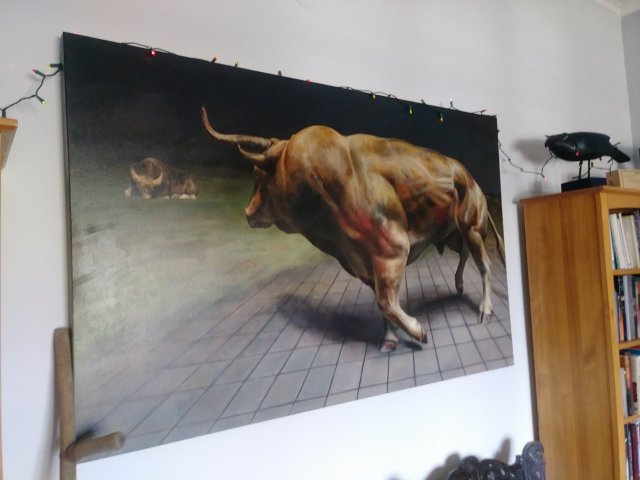
Painting by Joe Coffey

1. We owned a Minotaur or two.

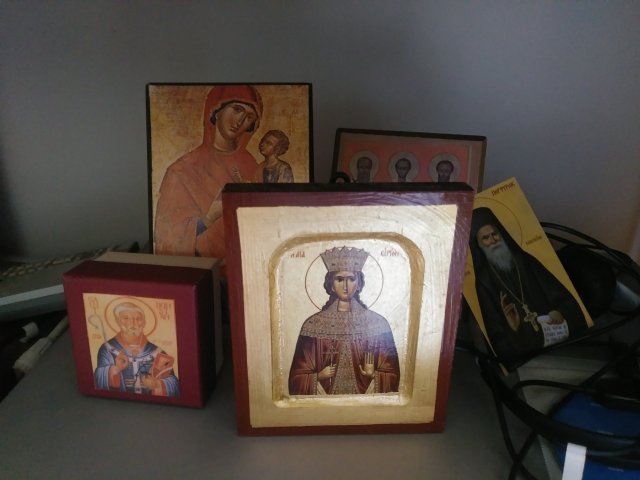
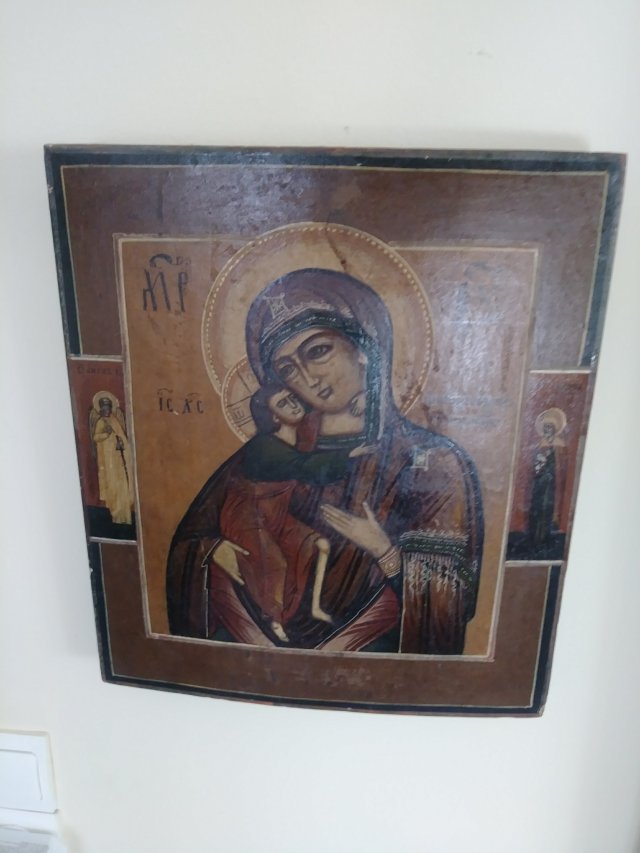
2. Icons. We already had some.

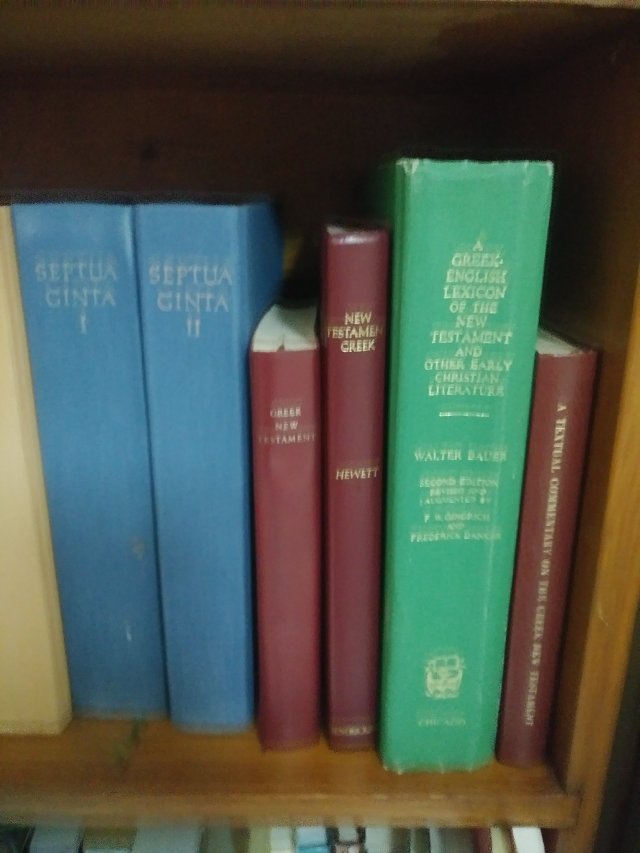
3. My study of Koiné Greek

4. My interest in Greek history.

5. Baklava!

6. We named our daughter Sophia, which means “wisdom”, and is about as Greek a name as you can get.

Posted in Uncategorized | Leave a comment

Lessons from the Great War: Some Questions

ghosts_of_vimy_ridge

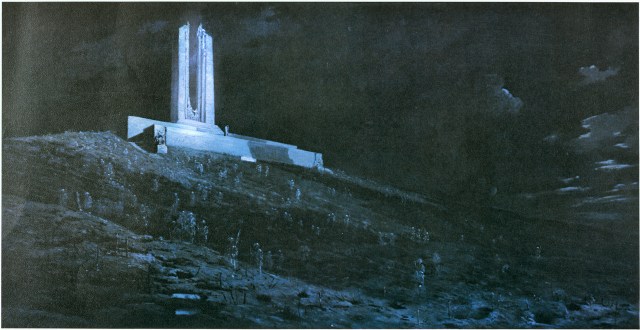
The Ghosts of Vimy Ridge painted by Australian artist William Longstaff c. 1929. It hangs in the Railway Committee Room of the Hose of Commons in the centre block of the Parliament Buildings, Ottawa.

If you know me you will know that I am a great reader of history books. I have spent many hours reading about wars and conflicts around the world. Ever since the approach of the 100th anniversary of the beginning of the Great War – what is now known as World War I – I’ve been mulling over a number of issues related to them. Of course, it is more than four years later, and we have now marked the 100th Anniversary of the end of that war. Most people look back at it as a remarkable waste of humanity, an unresolved mess that only led to the even worse Second World War. It was a disillusioning time when the vision of unending progress was shown to be false, and people became skeptical of the ability of leaders to manage diplomacy or armed conflict.

Have we learned anything? I suggest that there are some important lessons to be learned from the events of 100 years ago, but we are in danger of forgetting them. To know what these lessons are, though, we need to ask a few basic questions. In the coming weeks I will use these questions as jumping off points for my thoughts.

First, what were the causes of the First World War? By cause I do not mean the presenting causes, beginning with the assassination in Sarajevo, and ending with the UK deciding it needed to defend the neutrality of Belgium, but rather the underlying causes – trajectories of policy, errors of judgment, long-held beliefs, prejudices, and so forth.  I want to talk about those.

Second, why did the nations persist in the war instead of reaching some kind of peace, particularly when the battles seemed to resolve little and the costs were so high?

Third, what caused the end of the war?  All the contemporary accounts describe the participants as being surprised at how quickly the end came. Also, was there a winner?

Fourth, how is the First World War connected and not connected to the Second World War?

46230779_1009005189301464_5198615362672787456_o.jpg

Senior Officers of the US, UK, and Greek forces at the Remembrance Day Service 2018 at the Souda Bay War Cemetery.

Sig short

Posted in War | Tagged | 1 Comment

It’s All Greek to Me: Preface

clay_tablet_inscribed_with_linear_b_script

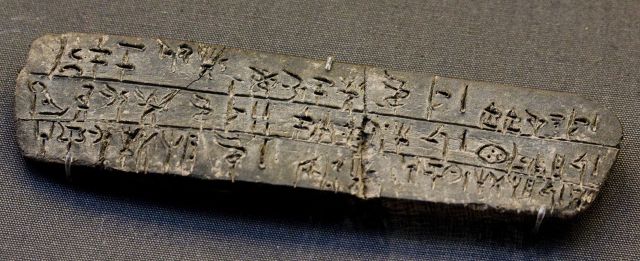
The clay tablet KN Fp 13, dated to 1450-1375 BC, is Minoan and was found at Knossos by Arthur Evans. It records, in Greek written in Linear B, quantities of oil apparently offered to various deities. This image, which was originally posted to Flickr, was uploaded to Commons using Flickr upload bot on 21 November 2011, 13:30 by NotFromUtrecht. On that date, it was confirmed to be licensed under the terms of the license indicated. w:en:Creative Commons attribution This file is licensed under the Creative Commons Attribution 2.0 Generic license.

If you know me you will know that I am interested in languages. Not that I am a linguist – I am fluent in English, but for someone born in a town that is 95% francophone I speak French terribly, and while I have studied German in university I was not very good at that, either. I seem to do better with dead languages, as I don’t have to have conversations in them, but just be able to read it and translate texts into English. I did two years of high school Latin, a year of New Testament/Koiné Greek, and two years of Biblical Hebrew. I did the Greek and Hebrew over thirty years ago, but a remarkable amount of it has stuck with me, and I can usually make some sense of texts from the Bible, especially if I have a concordance and grammar handy.

greekcretan

Ancient Cretan form of the Greek alphabet. They don’t use this anymore. It also appears they wrote from right to left.

I now live in Greece. I am studying modern Greek, in an hour-long lesson twice a week. The focus is on being able to have a conversation, which makes it, for me, much more difficult than the New Testament Greek I did in 1985-86. As well, back then I was taught to pronounce words in ways that had a limited relationship to how Paul might have actually said things when dictated his letters. A lot has changed in the past 2000 years, and the pronunciation of Greek letters is one of them. British residents here in Greek who read Classics in their youth and taught it in schools confirm that it is not that much help to know ancient Greek, and really gets in the way sometimes.

greek_alphabet_modern_pronunciation_omniglot-595x232

Greek Alphabet with modern pronunciation

Studying Greek has made me want to do a series on the Greek language. It is a rather large topic, but perhaps to begin with I should talk about types of Greek in a historical vein. Just as English has changed over the years, so has Greek. My impression is that Classical Greek – the Greek spoken by Herodotus, Plato, and Euripides – is not as different from modern Greek as Old English (aka Anglo-Saxon) is from modern English. However, there are over three thousand years of Greek writing extant, which makes for a long time line. In due course I will try to address each type, and topics within each.

The chart below is the consensus understanding of the evolution of Greek. Enjoy!

Sig short

1600 – 1100 BCE Mycenaean Greek


Linear B
1100 – 800 BCE


“Greek Dark Age” no writing or inscriptions
800 – 420 BCE Ancient/Classical Homeric Greek (Archaic Greek)


420 – 330 BCE Classical Greek


330 BCE – 300 CE Hellenistic Greek (Koiné or

New Testament)


300 – 1452 CE Byzantine Greek


1452 CE – present Modern Greek


Demotic Dimotiki
Learned Katharevousa
Standard Modern Greek
Posted in Uncategorized | 1 Comment

The Epiphany (Yesterday’s Sermon)

church with a view

The White Mountains (Λευκά Όρη) from St. Thomas’s. Photo by David Hurley.

A Sermon preached at the Anglican Church of St. Thomas, Kefalas, Crete, Greece
11:00 am January 6, 2018

So, have you taken down the Christmas tree? Have you got all your Christmas decorations put away? The tradition is, of course, that Christmas ends with Twelfth Night, last night. My father insisted that the decorations had to be down by this day, Epiphany. Some say the end of today is just as good. Regardless, if you do not get it down in time – whatever that time is, you will have Very Bad Luck. This is very important, obviously.

queen

“Happy Christmas”

But, if you haven’t got them all down, well, you’re in good company. Perhaps you have heard that our Sovereign Lady, Queen Elizabeth,  doesn’t take the Christmas decorations down (or rather, instruct the servants to take them down – she is in her nineties, after all) until February 6, and, according to that authority on all things royal, Hello Magazine, the reason is heartbreaking. For the date is an important one for the Queen, as it marks the anniversary of her father’s death. King George VI passed away on 6 February 1952 at Sandringham House, and she stays there each year to mark the anniversary in private before returning to Buckingham Palace. So, if you leave them up, as I say, you are in good company.

three kingsToday we move into the celebration of Epiphany. We leave the twelve days of Christmas and enter a new season, in which Christ is manifested to the world. The word Epiphany comes from Greek, of course, and is ἐπιφάνεια. Interestingly, in modern Greek, it means “surface”, what is visible. In the Greek of the Gospel of Matthew it means manifestation or appearance, and is about how Christ is shown to the world, primarily to the Magi, or Wise Men. But over the coming weeks we will hear of other showings forth, mostly from the Gospel according to Luke:

  • The Baptism of Jesus next week – which our brothers and sisters in the Orthodox churches heard of in church today, and which is why there is a procession to water and the blessing of the sea by throwing a cross into it (followed by young men diving into the water to find the cross and return it to the Papas, and thereby receive a special blessing).
  • The changing of water into wine at the Wedding in Cana of Galilee (that’s from John 2).
  • The Presentation of the infant Jesus in the Temple and his welcome by Simeon and Anna
  • The miracle of the Catch of Fish.
  • The teaching of the Sermon on the Plain, Luke’s version of the Sermon on the Mount, and finishing with
  • The Transfiguration.

What strikes me as I look at the gospel readings over the next few weeks, between now and Lent, is how God is in charge. The showing forth of Jesus Christ is mediated by some human beings, of course, such as Mary and Joseph at the Presentation, or John the Baptist at the Baptism of Jesus, but for the most part Jesus is the one who acts, who instigates something. God acts, we react.

This is often how grace works. We think we are in control, that we are autonomous, but we are mostly reacting to circumstances and situations beyond our control. You did not get to choose your parents. We did not choose where we were born, or what faith we were presented with. It is really only in the past hundred years or so that children had the option of doing something different from their parents. You probably think you chose your mate, but if we think about it, many of us met by accident and it is not hard to imagine that if circumstances were different, we would not have met – if we had chosen to study in a different city, or did not go to the pub that particular night, chose to work somewhere else. I know of two young people whose parents would never have met if a friend of their father had not lost a wallet and if it had not been found by a friend of their mother.  And we can look at these things and coldly assert that it was just chance, mere happenstance – but others perceive grace in this. Grace is God’s favour and blessing being shown to us. We are not always consciously aware of it, but God is present and active in our lives.

unveiling

Another photo of Her Majesty, this time being apocalyptic.

My theology of blessing is about epiphany and it is apocalyptic. Epiphany means showing forth. Apocalyptic has negative connotations in English, but in Greek it is simply the ordinary word for revelation, or exposure. Think of the unveiling of a plaque or a statue – that is an apocalypse, a revelation. Blessing is like that. We bless food, houses, people, and sneezes, but we also bless God – the psalmist sings, “Bless the Lord, O my soul, and all that is within me bless God’s holy name”. So blessing is not about adding something to a situation. It is about recognizing God’s action in a situation.

The Eucharist, this great Thanksgiving in which we take bread and wine and bless it, is an epiphany and a revelation of God working here among us. It is not magic, it is not hocus pocus, but recognizing the spiritual reality of God’s presence. When I bless a marriage, I am not adding something to the relationship, but simply recognizing on behalf of the church that God is acting in the couple.

There is this thing called prevenient grace, a major point in both ancient Catholic theology and the more recent Methodism of John and Charles Wesley. It is the belief that God is acting in us and for us before we are aware of it. Prevenient or preceding grace prepares in our hearts a place for God – it’s what makes that God shaped hole in our souls that only God can fill, that desire that only the divine can satisfy.

My hope and my prayer is that we become aware of how the God in Christ is working in us by the Holy Spirit, that we not pack it all away now that Christmas is over, but see it. May we join with the psalmist and say,

Blessed be the Lord, the God of Israel,
who alone does wondrous things.
Blessed be his glorious name for ever;
may his glory fill the whole earth. Amen and Amen.

Posted in Epiphany, Sermons | Tagged , , , , , , , | 4 Comments

Some Resolutions for 2019

books

I follow a number of Canadian writers on Twitter, and one of them is Amanda Reaume. She reads an astonishing number of books, and knows the Canadian Literary scene as well as anyone.  Way back in 2018, on December 29, she tweeted:

Are we talking resolutions already? I have New Year’s Resolutions! Only they’re not focused on ACHIEVEMENTS or SELF-IMPROVEMENT but on doing more things that bring me joy. Instead of making resolutions that make you feel bad about yourself, make some that will make you HAPPIER.

She then listed the things that will help to make her happy. That got me thinking about some of the things that will make me happy in 2019. So here is what I tweeted back as my resolutions (Trigger Warning!!! – it involves a lot of books):

senate house

Senate House, University of London, where I will likely defend the dissertation.

Once I have submitted my PhD dissertation . . .


1933docsavage

1) I will write that pot-boiler novel that’s been rolling around in my head. It will be awful and unpublishable, but I’ll have fun and learn a lot.

brothers karamazov

2) I will read The Brothers Karamazov.

esi edugyan

3) I will read books by Anne Michaels, Richard Wagamese, Esi Edugyan and other Canadians.

greek short stories4) Now that I am in Greece, I will read a short book in modern Greek.
odyssey

The beginning of an old Greek story, translated into modern English by Prof. Wilson

5) I will finish reading Emily Wilson’s translation of The Odyssey, and then I’ll reread James Joyce’s Ulysses.

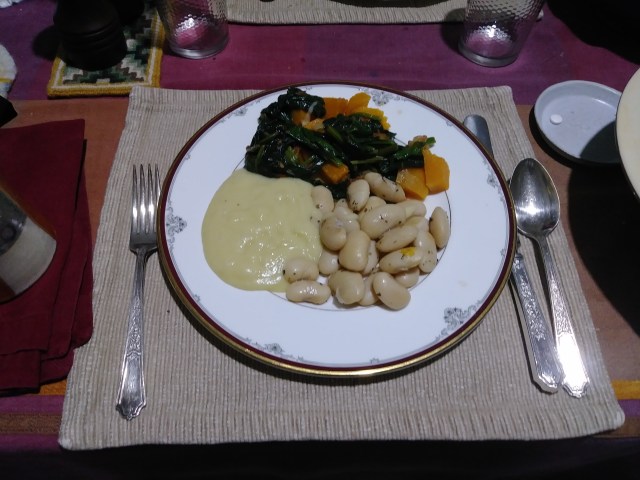
20190105_1842306) I will eat more Greek food (and keep losing weight).

kalyves-01

7) I will swim in the Mediterranean Sea on a weekly basis.

rethymno taverna8) I will make a host of new friends here in Greece , and we will go to tavernas and breaking bread together.

20190101_143053_hdr9) I will go for more walks and hikes with the love of my life.

20181227_093218

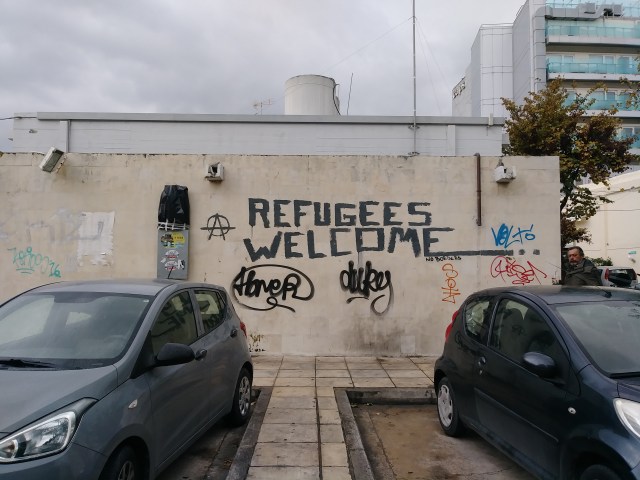
Graffiti in Heraklion, Crete, Greece

10) I will work to empower those who are oppressed, whether with refugees, survivors of sexualized violence, or some other group.

indigenous authors11) Finally, I will read some CanLit authors recommended by @a_h_reaume in her tweets, because they are undoubtedly good!

Sig short
Posted in Poetry and Novels, Random Personal Notes | Tagged , , , | Leave a comment