Christ on the Cross, made in Tirol or Salzburg (Austria), ca. 1125-1150, now in the the Fuentiduena Chapel in the Cloisters, Metropolitan Museum of Art, New York NY
Read/Listen
In the western Christian tradition (Catholic, Anglican, Lutheran, and others) the core of the Good Friday Liturgy is the reading or chanting of the Passion according to John.
The Passion is chanted in English by Kevin Vogel, a Roman Catholic priest in Nebraska, in this Youtube video.
St. Thomas Church (Thomaskirche), Leipzig
If you want a musical version in German you might listen in to Bach’s St. John’s Passion, which is being live-streamed from Bach’s church in Leipzig where it premiered in 1724. Details are on this page, and the live stream will be on their Facebook page. It starts at 3:00 PM CEST, which, of course, is 4:00 PM EEST in Greece, 9:00 am EDT in Ottawa, and 6:00 am PDT in Victoria.
Arvo Pärt set the Passion in Latin translation to music in 1989. I find it particularly powerful.
From the Stations of the Cross by artist Chris Woods, originally in St. David of Wales Anglican Church in Vancouver.
Pray
After the reading of the Passion according to John, the next most important part are the prayers, which come in two parts. First, the Reproaches, or an anthem of penitence, punctuated by the Trisagion. Common Worship from the Church of England has a form of it here, but I confess I prefer the version used by the Anglican Church of Canada in my old Diocese of British Columbia. Here it is:
Is it nothing to you, all you who pass by? Look and see if there is any sorrow like my sorrow which was brought upon me, which the Lord inflicted on the day of his fierce anger. Holy God, holy and mighty, holy and immortal one, have mercy upon us.
O my people, O my Church, What have I done to you, or in what have I offended you? Testify against me. I led you forth from the land of Egypt, and delivered you by the waters of baptism, but you have prepared a cross for your Saviour. Holy God, holy and mighty, holy and immortal one, have mercy upon us.
I led you through the desert forty years, and fed you with manna. I brought you through tribulation and penitence, and gave you my body, the bread of heaven, but you have prepared a cross for your Saviour. Holy God, holy and mighty, holy and immortal one, have mercy upon us.
What more could I have done for you that I have not done? I planted you, my chosen and fairest vineyard, I made you the branches of my vine; but when I was thirsty, you gave me vinegar to drink, and pierced with a spear the side of your Saviour. Holy God, holy and mighty, holy and immortal one, have mercy upon us.
Celebrant: I went before you in a pillar of cloud, and you have led me to the judgement hall of Pilate. I scourged your enemies and brought you to a land of freedom, but you have scourged, mocked, and beaten me. I gave you the water of salvation from the rock, but you have given me gall and left me to thirst. Holy God, holy and mighty, holy and immortal one, have mercy upon us.
I gave you a royal sceptre, and bestowed the keys to the kingdom, but you have given me a crown of thorns. I raised you on high with great power, but you have hanged me on the cross. Holy God, holy and mighty, holy and immortal one, have mercy upon us.
My peace I gave, which the world cannot give, and washed your feet as a sign of my love, but you draw the sword to strike in my name, and seek high places in my kingdom. I offered you my body and blood, but you scatter and deny and abandon me. Holy God, holy and mighty, holy and immortal one, have mercy upon us.
I sent the Spirit of truth to guide you, and you close your hearts to the Counsellor. I pray that all may be as one in the Father and me, but you continue to quarrel and divide. I call you to go and bring forth fruit, but you cast lots for my clothing. Holy God, holy and mighty, holy and immortal one, have mercy upon us.
I grafted you into the tree of my chosen Israel, and you turned on them with persecution and mass murder. I made you joint heirs with them of my covenants, but you made them scapegoats for your own guilt. Holy God, holy and mighty, holy and immortal one, have mercy upon us.
I came to you as the least of your brothers and sisters; I was hungry and you gave me no food, I was thirsty and you gave me no drink, I was a stranger and you did not welcome me, naked and you did not clothe me, sick and in prison and you did not visit me. Holy God, holy and mighty, holy and immortal one, have mercy upon us.
The second part of the prayers are the Solemn Intercessions, which can be found here; you’ll need to scroll down to The Prayers of Intercession.
Ο Νιπτήρ O Niptir The Washbasin – the Icon of Maundy Thursday, when Jesus served his disciples by washing their feet. This icon hangs in our kitchen, and was a gift to me from my Beloved.
Maundy Thursday (from mandatum, ‘commandment’, because of the use of John 13.34 in the Antiphon) contains a rich complex of themes: humble Christian service expressed through Christ’s washing of his disciples’ feet, the institution of the Eucharist, the perfection of Christ’s loving obedience through the agony of Gethsemane.
On this Maundy Thursday 2020 I planned to meet with members of the congregation and visitors around a dinner table at the Tabernacle, where we normally gather for worship. Last year we did this, and it looked like this:
Well, not this year. In its place here are some resources you may wish to use to mark the day.
Readings
The readings for Maundy Thursday may be found here.
Prayers
Home Liturgies
The Diocese in Europe has sent us this resource, which can be downloaded and used as an agape liturgy over bread and wine. It is not communion, but it is an echo of it. Agape Order of Service Alternatively, one might use this order for a Spiritual Communion. spiritual-communion-2.
The Collect Let us pray that we may love one another as Christ has loved us. Silence is kept.
God our Father,
you have invited us to share in the supper
which your Son gave to his Church
to proclaim his death until he comes:
may he nourish us by his presence,
and unite us in his love;
who is alive and reigns with you,
in the unity of the Holy Spirit,
one God, now and for ever. Amen.
(or)
God our Father,
your Son Jesus Christ was obedient to the end
and drank the cup prepared for him:
may we who share his table
watch with him through the night of suffering
and be faithful. Amen.
Prayers of Intercession In the power of the Spirit let us pray to the Father
through Christ the saviour of the world.
Father, on this, the night he was betrayed,
your Son Jesus Christ washed his disciples’ feet.
We commit ourselves to follow his example of love and service.
Lord, hear us and humble us.
On this night, he prayed for his disciples to be one.
We pray for the unity of your Church.
Lord, hear us and unite us.
On this night, he prayed for those who were to believe through his disciples’ message.
We pray for the mission of your Church.
Lord, hear us and renew our zeal.
On this night, he commanded his disciples to love,
but suffered rejection himself.
We pray for the rejected and unloved.
Lord, hear us and fill us with your love.
On this night, he reminded his disciples
that if the world hated them it hated him first.
We pray for those who are persecuted for their faith.
Lord, hear us and give us your peace.
On this night, he accepted the cup of death
and looked forward to the new wine of the kingdom.
We remember those who have died in the peace of Christ.
Lord, hear us and welcome all your children into paradise.
Reflections
Father Leonard Doolan of St Paul’s, Athens has recorded a meditation for Maundy Thursday:
In modern times Maundy Thursday has been a day during which clergy would gather with their bishop and renew their ordination vows; we in the Diocese in Europe will be doing this this year via Zoom with Bishop Robert Innes. Last year on Maundy Thursday I reflected on being a priest in this blog on George Herbert’s poem The Priesthood.
These are resources meant mainly for The Anglican Church of St Thomas the Apostle, Kefalas, on the island of Crete in Greece, but others may find them helpful!
The Diocese of Europe featured us in their website news this past week – you can read all about it here.
Being alone on Sundays is becoming the short-term normal. It feels strange not to gather for Holy Week. But we are still the Church, so what can we do? We can still read, reflect, pray, and share.
The Collects for Palm Sunday
Almighty and everlasting God,
who in your tender love towards the human race
sent your Son our Saviour Jesus Christ to take upon him our flesh
and to suffer death upon the cross:
grant that we may follow the example of his patience and humility,
and also be made partakers of his resurrection;
through Jesus Christ your Son our Lord,
who is alive and reigns with you, in the unity of the Holy Spirit,
one God, now and for ever. Amen.
(or)
True and humble king,
hailed by the crowd as Messiah:
grant us the faith to know you and love you,
that we may be found beside you on the way of the cross,
which is the path of glory. Amen.
You can read the text of the Passion here, or listen to it below,
In the Lutheran Church in Germany in the 18th century people gathered in churches to listen and participate in musical versions of the Passion. This is the origin of one of the greatest pieces of classical music, Johann Sebastien Bach’s St Matthew’s Passion (1727), and you can listen to it below (it is about three hours long). The text, in German with an English translation, can be found here.
Reflect
Our curate and deacon, the Rev’d Julia Bradshaw, has written a sermon for this Palm Sunday, and you can download a copy by clicking at the right. With palms and scattered garment strowed.
Fr Leonard Doolan of St Paul’s Athens has made available his sermon in both text and audio.
Text: Palm Sunday 2020 Sermon
Audio:
We stand with Christ in his suffering.
For forgiveness for the many times we have denied Jesus,
let us pray to the Lord. Lord, have mercy.
For grace to seek out those habits of sin which mean spiritual death,
and by prayer and self-discipline to overcome them,
let us pray to the Lord. Lord, have mercy.
For Christian people,
that through the suffering of disunity there may grow a rich union in Christ,
let us pray to the Lord. Lord, have mercy.
For those who make laws, interpret them, and administer them,
that our common life may be ordered in justice and mercy,
let us pray to the Lord. Lord, have mercy.
For those who still make Jerusalem a battleground,
let us pray to the Lord. Lord, have mercy.
For those who have the courage and honesty to work openly for justice and peace,
let us pray to the Lord. Lord, have mercy.
For those in the darkness and agony of isolation,
that they may find support and encouragement,
let us pray to the Lord. Lord, have mercy.
For those who, weighed down with hardship, failure, or sorrow,
feel that God is far from them,
let us pray to the Lord. Lord, have mercy.
For those who are tempted to give up the way of the cross,
let us pray to the Lord. Lord, have mercy.
That we, with those who have died in faith, may find mercy in the day of Christ,
let us pray to the Lord. Lord, have mercy.
The Trisagion Holy God, holy and strong, holy and immortal, have mercy upon us.
Prayers in a Time of Pandemic
There are liturgies and prayers on the Coronavirus pages of the Church of England, and also the Diocese in Europe. This one is very good, and was borrowed by Bishop David Hamid from the Jesuits USA.
Jesus Christ, you travelled through towns and villages “curing every disease and illness.” At your command, the sick were made well. Come to our aid now, in the midst of the global spread of the coronavirus, that we may experience your healing love.
Heal those who are sick with the virus. May they regain their strength and health through quality medical care.
Heal us from our fear, which prevents nations from working together and neighbours from helping one another.
Heal us from our pride, which can make us claim invulnerability to a disease that knows no borders. Jesus Christ, healer of all, stay by our side in this time of uncertainty and sorrow.
Be with those who have died from the virus. May they be at rest with you in your eternal peace.
Be with the families of those who are sick or have died. As they worry and grieve, defend them from illness and despair. May they know your peace.
Be with the doctors, nurses, researchers and all medical professionals who seek to heal and help those affected and who put themselves at risk in the process. May they know your protection and peace.
Be with the leaders of all nations. Give them the foresight to act with charity and true concern for the well-being of the people they are meant to serve. Give them the wisdom to invest in long-term solutions that will help prepare for or prevent future outbreaks. May they know your peace, as they work together to achieve it on earth.
Whether we are home or abroad, surrounded by many people suffering from this illness or only a few, Jesus Christ, stay with us as we endure and mourn, persist and prepare. In place of our anxiety, give us your peace. Amen.
Share
In this chaplaincy (i.e. parish, congregation) we are sharing by e-mail, social media, and the telephone. Please keep doing so!
We also may gather with others outside the chaplaincy by video and live-streaming. Here are some options:
Facebook Video Stream at 11:00 am EEST Greek time (9:00 am BST): Building on the Archbishop of Canterbury and Archbishop of York’s weekly broadcasts which have engaged a large audience, the Palm Sunday broadcast has been recorded by the Bishop of Manchester, David Walker, and the Archdeacon of Manchester, Ven Karen Lund, with Lucy Hargraves from St Peter’s Church in Bolton leading prayers, all from their own homes.
The Venerable Dr. Leslie Nathaniel, Archdeacon of the East and of Germany and Northern Europe, has passed on these simple service for prayer During Holy Week; they were devised by Fr Louis Darrant, Chaplain to St Christopher’s Anglican Church on the Costa Azahar in Spain. It is a downloadable PDF: Praying at home in Holy Week.
Just as Wolfgang the Wolf wondered if the olive tree would come back, so the prophet Ezekiel is asked if the dry bones would live again. The dry bones are a metaphor for the people of Judea who were in exile in Babylon. Would the people of Israel would ever return home to Jerusalem and Judea? Would they ever rebuild the Temple? Would the Judeans survive as a distinct people?
Ezekiel lived in the first half of the 6th century BCE. He was an adult and a priest in Jerusalem when the Neo-Babylonians came and besieged it in 597 BCE. King Nebuchadnezzar of Babylon conquered the city, and King Jehoiakim of Judah appears to have died in the siege. His son and heir, Jeconiah, along with the elite and perahps some ten thousand other Judeans were deported to Babylon. as well, the Temple of Solomon was emptied of its treasures. Jehoiakim’s brother and Jeconiah’s uncle, Zedekiah, was appointed king by Nebuchadnezzar, although he ruled over only the poorest of the people who remained. While in exile in Babylon Ezekiel began to have his visions. Ten years after the first seige and conquest Zedekiah revolted, and Nebuchadnezzer again came and took Jerusalem by force. This time he destroyed the Temple, tore down the walls, and ravaged the city, driving out the survivors from the city. Zedekiah watched as his sons were executed, and then he was blinded and taken as a prisoner to Babylon, where he eventually died. Even more people were taken into exile in Babylon. The House of David and Judea seemed to come to an end.
It was reasonable for Ezekiel to despair. The practice of moving populations around, and cutting a people off from their educated upper class, was common in the ancient Middle East. The Assyrians had done the same with the northern Kingdom of Israel, removing the people from Samaria and placing them in various centres far to the east, in what is now Iraq and Iran. We hear of Israelites being recruited by the Assyrians for their armies after their deportation, but after that they disappear from history, presumably being assimilated into the peoples surrounding them.
The Judeans, the last of the people of Israel, seemed as good as dead. They were suffering, And yet Ezekiel had hope, a hope that was given to him in the vision of the Valley of the Dry Bones. “Can these bones live?”
“Prophesy to these bones, and say to them: O dry bones, hear the word of the Lord. Thus says the Lord God to these bones: I will cause breath to enter you, and you shall live. I will lay sinews on you, and will cause flesh to come upon you, and cover you with skin, and put breath in you, and you shall live; and you shall know that I am the Lord.”
So I prophesied as I had been commanded; and as I prophesied, suddenly there was a noise, a rattling, and the bones came together, bone to its bone. I looked, and there were sinews on them, and flesh had come upon them, and skin had covered them; but there was no breath in them. Then he said to me, “Prophesy to the breath, prophesy, mortal, and say to the breath: Thus says the Lord God: Come from the four winds, O breath, and breathe upon these slain, that they may live.” I prophesied as he commanded me, and the breath came into them, and they lived, and stood on their feet, a vast multitude. Ezekiel 37.4-10
Ezekiel is told that “these bones are the whole house of Israel”. Just as they came together and lived and breathed, so would Israel live again – a hope that was later fulfilled after the Babylonians were defeated by the Persians and Cyrus the Great told the Judeans they could go home.
Of course, the vision of bones coming to life may also be a vision of the Resurrection – the coming to life of the dead to receive judgement from God. This feeds into the Gospel reading, where Jesus raises Lazarus from the dead as a preliminary to his own resurrection. We are not given the sense that Lazarus is raised to eternal life – but that he was dead and now lives is a prefiguring of Jesus and a witness to who he is.
Dem Bones
This vision was interpreted as hope by another people who were also suffering a long passion. In the 1920s an African-American writer and songwriter namedJames Weldon Johnson recalled how the Black preachers of his youth preached on Ezekiel 37, not just as a text about the resurrection, but about the rebirth and rising of a people sore oppressed; what the Judeans were in the 6th Century BCE the African-Americans were from the 17th to 20th century in America. He wrote the lyrics and melody which then went through various interpretations. While often reduced to being a child’s tune and stripped of any deep meaning, Gospel singer Albertina Walker took it back to its inspiring roots in the version here from 1972.
Her (perhaps improvised) lyrics at the end are fascinating:
We got some deacons in our church, sure ain’t nothin’ but a dry bone.
We got some mothers in our church, sure ain’t nothin’ but a dry bone.
We got some preachers in our church, sure ain’t nothin’ but a dry bone.
Come on and hear the word, hear ye! C’mon and hear ye the word of the Lord!
A Vast Multitude
Today we are required, under penalty of fine and possible arrest, not to gather in our churches, and to remain in our homes except for essential reasons. We might feel we are in a kind of exile, forbidden to meet for meals and coffee, prohibited from our usual activities, needing a permit just to walk the dog, and required even to refrain from gathering for worship. For many of us this raises all kinds of concerns for our church here and beyond. In an era when church attendance is already in decline, this is all quite inconvenient.
Of course, for some, it is more than an inconvenience. Those of us with health issues or are above a certain age are more likely to become very ill, and the mortality rate is frightening. The pandemic does not spare prime ministers and princes, and even the healthy can succumb to it. Many of our friends and relatives are incapable of working, or have to find new ways of accomplishing their tasks; people are spending all their time on internet video conferences, trying to teach, meeting with students, and carrying on as if this is all quite usual. People’s investments are in freefall, and the value of pensions, paid in sterling but spent in euros, is going down. Children are home from school, and families are spending more time together than they are used to, and not surprisingly, tensions are rising. Frontline workers are stressed, wondering if they are overexposed to infection.
Can these bones live? Even in this exile we can still have some hope. In the United Kingdom people are applauding the NHS. In my home country of Canada people are practicing radical “caremongering”, a spontaneous effort to ensure that everyone is alright and has what they need. The Church has rediscovered the fact that it exists even when it is not in the building or carrying on its liturgies.
Dave Walker’s Cartoon in this week’s Church Times
Just as an olive tree recovers from a severe pruning, so we will come back. The pandemic will end. The economy will roar back. Greece will get back to tourism and great food. And the Church will come together, and these dry bones will once again stand up and put on flesh.
As we suffer the indignities of this pandemic, let us not forget the promises of God. Hear the word of the Lord!
A Note on the Calendar: In the liturgical tradition of the Western Church (Roman Catholic, Anglican Lutherans, and others) this was commonly known from Medieval times as “Passion Sunday“. It was a time in Lent when various practices began, such as veiling the crosses in the church. In the liturgical renewal that began of the 1960s, and was implemented in the reforms of Vatican II in the Catholic Church, and in many provinces of the Anglican Communion, it was felt that this name properly belonged to the Sunday before Easter, as it was the traditional day on which one of the synoptic gospelpassions would be read. In the Anglican Church of Canada and The Episcopal Church in the United States this Sunday, then, is simply called “The Sunday of the Passion”. In the Church of England there is a desire to adhere to the older tradition, and this time is known as Passiontide – the week leading to and including Holy Week. There is a consequence shift in the practices in Lent in the resources of Common Worship.
The Raising of Lazarus (after Rembrandt) by Vincent van Gogh 1890 Van Gogh Museum, Amsterdam, Netherlands. According to the wikipedia article, “In The Raising of Lazarus (after Rembrandt), van Gogh drastically trimmed the composition of Rembrandt’s etching and eliminated the figure of Christ, thus focusing on Lazarus and his sisters. It is speculated that in their countenances may be detected the likenesses of the artist and his friends Augustine Rouline and Marie Ginoux. Van Gogh had just recovered from a lengthy episode of illness, and he may have identified with the miracle of the biblical resurrection, whose “personalities are the characters of my dreams.””
Good Saturday afternoon from the village of Gavalohori, on the island of Crete, in the beautiful Republic of Greece. While we are under lockdown the Anglican Church of St Thomas the Apostle, Kefalas, will not be able to meet, so I will be presenting a variety of resources for prayer the day before each Sunday or Holy Day. Some of these are written in full here, others are links to other websites that look useful.
I am working my way through the congregational list, checking in on folk and seeing how you are all doing. I am joined in this by our deacon and curate, Julia Bradshaw. If you have any concerns or prayer requests, please let us know. You can reach me by phone at +30 69855 70353 or by email at bbryantscott@gmail.com .
My sermon for today – what I would have preached in church on this Sunday – can be found here.
A Hymn
When Jesus Wept, The Falling Tear is a lovely old hymn, new to me, which is connected to the gospel reading.
Live Stream
This Sunday I will join the people of Holy Trinity, Geneva, and the live stream via Zoom of their liturgy there. Remember that clocks go forward this weekend. They will have their service at 10:30 am CEST, which is 11:30 am EEST. The Zoom link is https://zoom.us/j/864442942 Meeting ID: 864 442 942. One click should get you in. Depending on your platform – computer, tablet, or smartphone – you may need to download the Zoom app. As well, you will need to enable audio and video on your computer. They request that you download the service sheet by going to the Holy Trinity website here.
Audio Files
Father Leonard Doolan of St. Paul’s, Athens has prepared an audio version of a short service of Morning Prayer, and a sermon for this Passion Sunday.
MORNING PRAYER:
SERMON:
Prayers For Passion Sunday
The Collect for the Fifth Sunday of Lent, commonly called Passion Sunday
Most merciful God,
who by the death and resurrection of your Son Jesus Christ
delivered and saved the world:
grant that by faith in him who suffered on the cross
we may triumph in the power of his victory;
through Jesus Christ your Son our Lord,
who is alive and reigns with you,
in the unity of the Holy Spirit,
one God, now and for ever. Amen.
(or)
Gracious Father,
you gave up your Son
out of love for the world:
lead us to ponder the mysteries of his passion,
that we may know eternal peace
through the shedding of our Saviour’s blood,
Jesus Christ our Lord. Amen.
Intercessions from Common Worship, Times and Seasons:
H1
Let us bring to the Father our prayers of intercession
through Christ who gave himself for the life of the world.
For forgiveness for the many times we have denied Jesus,
let us pray to the Lord. Lord, have mercy.
For grace to seek out those habits of sin which mean spiritual death,
and by prayer and self-discipline to overcome them,
let us pray to the Lord. Lord, have mercy.
For Christian people, that through the suffering of disunity
there may grow a rich union in Christ,
let us pray to the Lord. Lord, have mercy.
For those who make laws, interpret them, and administer them,
that our common life may be ordered in justice and mercy,
let us pray to the Lord. Lord, have mercy.
For those who still make Jerusalem a battleground,
let us pray to the Lord. Lord, have mercy.
For those who have the courage and honesty to work openly for justice and peace,
let us pray to the Lord. Lord, have mercy.
For those in the darkness and agony of isolation,
that they may find support and encouragement,
let us pray to the Lord. Lord, have mercy.
For those who, weighed down with hardship, failure, or sorrow,
feel that God is far from them,
let us pray to the Lord. Lord, have mercy.
For those who are tempted to give up the way of the cross,
let us pray to the Lord. Lord, have mercy.
That we, with those who have died in faith, may find mercy in the day of Christ,
let us pray to the Lord. Lord, have mercy.
Holy God, holy and strong, holy and immortal, have mercy upon us.
H2
Let us pray to the Father through his Son
who suffered on the cross for the world’s redemption.
Fill with your Spirit Christ’s broken body, the Church …
Give to Christian people everywhere a deep longing
to take up the cross and to understand its mysterious glory.
By the Saviour’s cross and passion, Lord, save us and help us.
Bless those who lead the Church’s worship at this solemn time …
In the preaching of the word and the celebration of the sacraments
draw your people close to you.
By the Saviour’s cross and passion, Lord, save us and help us.
Strengthen those [among us] who are preparing for baptism,
together with their teachers, sponsors and families …
Teach them what it means to die and rise with Christ
and prepare them to receive the breath of his Spirit.
By the Saviour’s cross and passion, Lord, save us and help us.
Look in your mercy upon the world you loved so much
that you sent your Son to suffer and to die …
Strengthen those who work to share
the reconciliation won at such a cost upon the cross.
By the Saviour’s cross and passion, Lord, save us and help us.
Bring healing by the wounds of Christ
to all who are weighed down by pain and injustice …
Help the lonely and the betrayed, the suffering and the dying,
to find strength in the companionship of Jesus,
and in his passion to know their salvation.
By the Saviour’s cross and passion, Lord, save us and help us.
Welcome into paradise all who have left this world in your friendship …
According to your promises,
bring them with all your saints
to share in all the benefits of Christ’s death and resurrection.
By the Saviour’s cross and passion, Lord, save us and help us.
Holy God, holy and strong, holy and immortal, have mercy on us.
H3
Let us pray to the Father,
who loved the world so much that he sent his only Son to give us life.
Simon from Cyrene was forced to carry the cross for your Son.
Give us grace to lift heavy loads from those we meet
and to stand with those condemned to die.
Lord, hear us. Lord, graciously hear us.
Your Son watched the soldiers gamble to share his clothes.
Transform the hearts of those who make a profit from their victims,and those whose hearts are hardened by their work.
Lord, hear us. Lord, graciously hear us.
The thief, who was crucified with Jesus,
was promised a place in your kingdom.
Give pardon and hope, healing and peace
to all who look death in the face.
Lord, hear us. Lord, graciously hear us.
From the cross Jesus entrusted Mary his mother
and John his disciple to each other’s care.
Help us also to care for one another and fill our homes with the spirit of your love.
Lord, hear us. Lord, graciously hear us.
In Mary and John your Son created a new family at the cross.
Fill our relationships, and those of new families today,
with mutual care and responsibility, and give us a secure hope for the future.
Lord, hear us. Lord, graciously hear us.
The centurion was astonished to see your glory in the crucified Messiah.
Open the eyes of those who do not know you
to see in your Son the meaning of life and death.
Lord, hear us. Lord, graciously hear us.
Joseph of Arimathaea came to take your Son’s body away.
Give hope and faith to the dying and bereaved,
and gentleness to those who minister to them.
Lord, hear us. Lord, graciously hear us.
Simon and Joseph, Mary and John became part of your Church in Jerusalem.
Bring into your Church today a varied company of people,
to walk with Christ in the way of his passion
and to find their salvation in the victory of his cross.
Lord of the Church, hear our prayer, and make us one in heart and mind to serve you in Christ our Lord. Amen.
In the Prayer Diary of the Diocese in Europe, Church of England we are asked to: Pray for the Church of Sweden. Pray for the Ecumenical Patriarchate of Constantinople (Turkey), for Patriarch Bartholomew and the autocephalous Orthodox Churches and their leaders. Pray for threatened Syrian Orthodox communities in Turkey.
Today, the fifth Sunday in Lent, is the focus of the Primates’ Task Group’s call for a period of prayer and repentance in the Anglican Communion. The Bishop of West Malaysia, Moon Hing, is a member of the Task Group and has written this prayer, which the Task Group offers to the Anglican Communion for use today.
Almighty God,
Father of our Lord Jesus Christ, Sovereign Lord of the universe, Creator of humankind,
we, your unfaithful children, are truly sorry for our sins and the lives that we have lived.
We sincerely believe and confess in our hearts that only through the precious blood of our Lord Jesus Christ on the cross at Calvary,
can we obtain Your forgiveness.
We repent that:
In thought, word or deed, we have committed serious offences against You and our neighbours;
In laziness, despair and lust for power, we have provoked hatred, division and hurt within our communities;
In greed, deceit and indifference, we have caused serious damage, unnecessary conflict and aggravated destruction to our
refugee and migrant brothers and sisters;
In selfishness, insensitivity and bias, we have encouraged and emboldened those who inflict hurt, pain and sorrow on our
loved ones and families;
In the name of religion, doctrine and even of Christ himself, we have wounded believers and pursuers of holiness and faith;
In stubbornness, pride and arrogance, we have caused division and strife within Your church and among Your children;
Mercifully send Your Holy Spirit – the Spirit of order and comfort –
and cleanse us from all unrighteousness;
restore in us true faith in Christ which brings truth, peace and harmony;
and help us to walk together with our brothers and sisters
in the peace of our Lord Jesus Christ to the glory of Your name. Amen.
You may want to use some of the prayers from last week’s resources blog. Some great prayers written by Jewish rabbis may be found here. Here are two more from Christian sources.
A ‘New’ Prayer from Rev’d Dr Sam Wells (Vicar of St Martin-in-the-Fields, London) A Prayer as Things Get Harder:
God of gentle presence,
you knew the ultimate separation
when on the cross Christ felt he was forsaken;
be with all who feel their Good Friday has come today.
Comfort those who have the virus.
Empower all who care for those in distress,
through medicine, acts of kindness or imaginative communication.
Be present to any who feel utterly alone,
without companion or health or hope.
Show us your face amid grief and bewilderment.
Inspire us to find new ways to be one with one another and with you.
And bring this time of trial to an end.
In Christ our Lord. Amen.
A Prayer to Combat the Coronavirus Pandemic
Most merciful and Triune God,
We come to you in our weakness.
We come to you in our fear.
We come to you with trust.
For you alone are our hope.
We place before you the disease present in our world.
We turn to you in our time of need.
Bring wisdom to doctors.
Give understanding to scientists.
Endow caregivers with compassion and generosity.
Bring healing to those who are ill.
Protect those who are most at risk.
Give comfort to those who have lost a loved one.
Welcome those who have died into your eternal home.
Stabilize our communities.
Unite us in our compassion.
Remove all fear from our hearts.
Fill us with confidence in your care.
Jesus, I trust in you.
Jesus, I trust in you.
Jesus, I trust in you.
Amen.
—The author of this beautiful prayer is unknown, except to the Lord. If you know who the author is, please let us know so we can give proper acknowledgement. If a temporary attribution is needed, you are welcome to say: “Author unknown. Posted on AscensionPress.com“.
Fr Leonard Doolan of Athens has prepared a simple format for Daily Worship, which you can download by clicking here: MP&EP Booklet(1)
“. . . the power of the Most High will overshadow you” Luke 1.35
The Annunciation and the Greek Revolution
March 25 is a national holiday in Greece, and not simply because it is 95% Greek Orthodox and highly values Mary as ΘεοτόκοςTheotokos “God-bearer” or “Mother of God. No, Greece also remembers this as the day 199 years ago when the War of Independence began. While the revolt against the Ottoman Turks actually started some weeks before this in different places, and the War carried on for nine long years, this is the day on which Revolution was declared by Metropolitan Germanos of Patras. As Greeks used the Julian calendar still, it was actually April 6 in the Gregorian calendar, but even though Greece now uses the “New Style” one, they keep the commemoration on March 25. Normally there would be parades and such, but not this year, Still, flags are out at peoples homes, so we have our Greek flag out, with the Canadian one to keep it company.
There is something somehow appropriate about this. The Angel Gabriel brought a message to Mary of Nazareth that she would conceive and bear a child, despite the fact that she did not “know a man”. Mary is told that
. . . the Lord God will give to him the throne of his ancestor David. He will reign over the house of Jacob forever, and of his kingdom there will be no end. Luke 1.32-33
Of course, at the time there was no one on the throne of David. Herod, King of Judea, was not of the House of David, and his family were viewed as Idumeans that had converted to Judaism only for political reasons. Herod the Great was a client king of the Roman Empire, and when in the judgement of the Romans his heirs were not as suitable for rule as he, they did not hesitate to divide up his kingdom into lesser principalities and provinces. Thus, the birth of Jesus, and his proclamation by Gabriel that he would be a king, is a revolutionary challenge to the imperial power of Rome and those who collaborate with it. If Jesus was acclaimed later, as an adult, as the King of the Jews, the Romans rightly saw this as a challenge to their rule.
We who live in the west sometimes forget this. We see Jesus’s kingdom as purely spiritual, putting aside the eschatology of the Second Coming and the dominion that would be established. As modern people we try to spiritualize the meaning of Christ’s reign, perhaps putting it in existentialist terms, as Rudolf Bultmann did.
But the Greeks in 1821 understood the coming of the Word into flesh as an anti-imperialistic act. Of course, Jesus in his life, death, and resurrection was non-violent and one who emptied himself, whereas the Greek revolutionaries were used to being violated and did not hesitate to justify the use of violence. But the desire for freedom is the same.
Rowan Williams on the Three-Fold Nature of the Word
In his recent book, Christ, The Heart of Creation (2018), Rowan Williams reflects on how the Word is presented in scripture and theology. He affirms the pre-incarnate Word, through which the world is made. In Jesus born of Mary that divine nature is united to a human nature in a single person. Because there is a single hypostasis in that person Jesus we are entitled, as affirmed by the Council of Chalcedon, to call Mary the Mother of God, or God-bearer. She freely accepts the role offered to her by God through Gabriel, and so becomes the model of obedience that Christ shows in his own life, and is shown in the lives of his followers. Williams also notes that Christ is present in the church, as the Body of Christ; by the Holy Spirit Christ is present among us. Jesus is bound to the visible community insofar as it is constituted by turning and returning to the foundational and sustaining act of Christ, which is memorialized and made present in communion. Thus, Christ is the unifying and identifying ground of an individual human existence.
Williams calls on Dietrich Bonhoeffer to remind us that we cannot think Christ without his “for the other” nature; therefore, the church must exist for the other, for the world’s reconciliation with God. This is a kenotic action, the pouring out of God in Christ for the world. This is not the way of the world, but it is the way God acts for the world. This anti-worldly attitude is seen in Jesus’s conversation with the disciples:
Jesus called them to him and said, “You know that the rulers of the Gentiles lord it over them, and their great ones are tyrants over them. It will not be so among you; but whoever wishes to be great among you must be your servant, and whoever wishes to be first among you must be your slave; just as the Son of Man came not to be served but to serve, and to give his life a ransom for many.” Matthew 20:25-28
This is the true revolution which is announced to Mary in the Annunciation. She does not understand it, but knows that the pregnancy she will have will undermine the seemingly powerful norms of her society. It is a turning of the lazy-susan of the cosmos so that humanity can return to what God created it to be, the image of God.
The Word in Us
So how is Christ present in the Church? Not through its many failings as a human institution, but in the times and ways in which it has let go of power and turned to others. And the Word is united to the humanity of the Church in the same way that the Word is made flesh in Mary – by the overshadowing of the Holy Spirit. The way in which the Word is made flesh in us is no less a miracle than the Incarnation and a virgin birth. So on a day in which a revolution is remembered, let us remember the great Revolution inaugurated by the Annunciation, and may it continue in us today.
A Sermon that was NOT preached on Mothering Sunday (The Fourth Sunday of Lent) during The Great Pandemic of 2020, at
The Anglican Church of St. Thomas the Apostle, Kefalas, Crete
on March 22, 2020 11:00 am
“St John Leading Home his Adopted Mother”, painted between 1842–60 by William Dyce. From the Tate Museum.
When Jesus saw his mother and the disciple whom he loved standing beside her, he said to his mother,
‘Woman, here is your son.’ Then he said to the disciple, ‘Here is your mother.’ And from that hour the disciple took her into his own home.John 19.26-27
The Church as Family
As I said to Athanasius the Alpaca and Mla the Raven, some commentators suggest that the church was born at the cross. Why is that? Jesus, in giving the care of his mother to the Beloved Disciple, and identifying him as her son, creates a new family. The church is a family into which we are adopted, and it is characterised by care for one another. When we are baptised, we become part of that family. Insofar as we do the will of the Father, we are his brothers and sisters, and mother (Matthew 12:50).
The Beloved Disciple is never named in the Fourth Gospel. By the Second Century CE he was identified as John, the brother of James, a fisherman from Galilee – but the gospel itself does not have this identification. Below I have a scholarly note about this, but here I just want t mention that the anonymity of the Beloved Disciple allows us to project ourselves into that person (and it may not be insignificant that the mother of Jesus is also not named in this passage). At the foot of the cross the Beloved Disciple – and perhaps all of us who follow Jesus – are given responsibility for the other person. The cross is about atonement, which is not just having sins washed away and ransom paid, but it is also about being entrusted and empowered by God to carry on the ministry of care of Jesus of Nazareth.
The Idea of Home as the Place of Church
Now, I misspoke when I talked to Athanasius and Mla. I said Jesus told them to go home, and that’s not correct. But that is what the Beloved Disciple interpreted Jesus’s words to mean – he took Mary into his own home. By the 4th century pious tradition asserted that John brought his adopted mother to Ephesus, in what is now south-west Anatolia in Turkey, near the city of Selçuk, and tourists can go to the tomb of John and the House of Mary. But I think we can put another spin on it beyond the historical or legendary.
Home is the place of the Church, no less than the church buildings. Walk into any Greek home and almost invariably there are icons, and people will reverence them. While we may be in church for a couple of hours on a Sunday morning, most of us spend a third or more of our time in our houses or flats. If our faith means anything to us, then the home is also a place of prayer, of meditation, of study of the scriptures, of learning, and of action. we remain the church even when we are home and dispersed.
Home is, ideally, a place of care and retreat. We have been told by the Greek government Μένουμε σπίτι, σωζουμε ζωες – “We stay home, we save lives”. As we stay home now, let us be that church that cares for others by, ironically, not interacting with others in person. Let us be the church that enters into a desert of isolation, not as a deprivation, but as a moment in time to focus on the blessings of food and shelter. Slow down and enjoy what you are eating. Read a poem, perhaps one by George Herbert. Crack open that old, dusty copy of the Bible and read it for yourself. Go to YouTube and watch a video of someone chanting prayers, or a choir singing a beloved hymn. If you are in quarantine with someone else, ask them how they are doing, and invite them into a discussion of the important things in life.
Take time to pray.
Let us not forget to remember those who cannot retreat to their homes, but must put themselves at risk and work.
And so we remember the physicians, nurses, and all health care workers in hospitals and clinics.
Let us remember the people whose labour is essential – the people in supermarkets and pharmacies, delivery services, transportation, police, and so forth.
Let us pray for the leaders in government and bureaucracies who have the responsibility for making decision for the common good, not just the ones we support and vote for, but especially those whom we do not particularly like.
Let us pray for children and their parents as they spent an unexpected amount of time together without the assistance of schools and daycares.
Let us remember all who have lost their jobs, or are facing economic ruin because their sector of the economy has closed down; here in Greece we think of the tourist industry especially, and our friends who run tavernas and kafenios.
Let us remember those who are most at risk – the disabled, the elderly, the immunity-compromised. Let us remember those who are sick at home and those who are receiving intensive care in hospitals.
Let us pray for all those who are anxious for themselves and others, for those whose mental health programs have been shut down.
Let us give thanks for those who have died, that they may rest in peace and rise in glory.
Today is Mothering Sunday. In England this was a day when servants were given the day off, and so they would often go home to visit their mothers. They homecoming servants might attend their “mother parish”, the place where they were baptised, and so it was also a time of reunion. While there are not too many households now that still have a staff of servants, the Church of England still commemorates Mothering Sunday with special readings, a respite from the supposed rigours of Lent. As we mark it today let us return to our homes and be reminded that the Church is there as well.
A Note on the Beloved Disciple
The Fourth Gospel, known as “The Gospel according to John” does not identify the Beloved Disciple by name, nor does the text identify the author of the gospel by name. At the very end of the gospel we are told (John 21:24) that the book was written by or based on the preaching of the Beloved Disciple. Christian tradition from the 2nd Century CE on claimed that this person was none other than John the son of Zebedee, the brother of James and a fisherman. Therefore they assumed that John wrote it, and so it became known as the Gospel according to John. Modern scholarship treats it as anonymous, despite the ancient attribution.
The late, great Biblical scholar Raymond Brown, who wrote a two volume commentary on John and a one volume commentary on the Johannine Epistles, also wrote a book called, “The Community of the Beloved Disciple“. In this book Brown reconstructed some of the characteristics of the community out of which the Gospel and the Epistles emerged. The first readers/hearers of these texts would have known who the Beloved Disciple was, but we have lost that information.
In summary, the Beloved Disciple appears to have been someone who stood apart from the inner circles of the early Christians, for he is usually described in parallel to Peter but somehow different. The stories common to the four gospels suggest a degree of common origin, but the stories that are told in John that are different from those in the synoptics (Matthew, Mark, and Luke) suggest that there was a separate development relatively early in the growth of the church. The Beloved Disciple had a community grow around him, and either he or a close disciple wrote down what he was preaching in narrative form. This was later expanded by the same person, or perhaps another, which explains why passages in John sometimes seem to come to a natural conclusion, and then start up again and discuss the same thing in a slightly different way. This led to the Gospel of John in the form we have today (we have no material evidence of this two-edition development of the gospel – this is all based on inferences from the text). Still later we read in the three Epistles of John – also all anonymous – of a split in the Community of the Beloved Disciple. Finally, the Revelation to John – which is not anonymous but written by a man named John – appears to have been written by one individual who was part of, or deeply influenced by, this Community. Since ancient times, and based on the style and fluency of the Greek, it has been felt by many that this is not the same person as the Beloved Disciple, or John the Apostle, although many have asserted just that. For that reason the author of Revelation is sometimes called “St John the Divine” to distinguish him from the Apostle.
The Cross surmounts the screen in St Birinus‘ Roman Catholic Church in Dorchester-on-Thames, Oxfordshire, England. Jesus is at the centre. Mary the Mother of God and the Beloved Disciple (usually identified with John the Evangelist) and are to the left and right. Rood screens were created to separate the choir from the nave of the church, supposedly to keep down drafts. Up until the 17th century most Anglican churches with screens had a “rood” or cross on them. Most of these were destroyed during the Commonwealth by iconoclastic puritans. The one above dates from the 19th century.
We cannot meet this Sunday, and likely for many Sundays to come. We may even not be able to meet for Holy Week and Easter. But we are still the Church, and although to not meet is a burden, it does not mean that we cease to be the Body of God. Whether gathered in one place or dispersed as leaven in dough, we continue to follow Jesus and radiate God’s love on this island and beyond.
I will be writing a sermon for this Sunday and it will be the next post on this weblog. It has been suggested to me that Athanasius the Alpaca, Mla the Raven, and all their friends should make an appearance – maybe not this Sunday, but in Sundays to come, eh?
Our Diocesan Bishop, the Right Reverend Dr Robert Innes, has videoed a message to the Diocese in Europe, and you can see it by clicking here (this may open a new window on your internet browser).
If you wish to watch a church service, the Archbishop of Canterbury, the Most Reverend and Right Honorable Justin Welby, will be live-streaming at 9:00 am GMT – which is, conveniently, exactly our regular worship time at 11:00 am EET. You can find it by clicking here.
Alternatively, for those of you on Facebook, the Reverend Christine Saccali, deacon and Assistant Chaplain at St Paul’s, Athens, will be leading a livestream of the Order for Morning Prayer at 10:15 am EET.
Or, again, you can join the Reverend Smitha Prasadam, Chaplain at St. Alban’s, Copenhagen, for a virtual service of the Holy Eucharist at 10:30 am CET (which is 11:30 am EET our time).
The readings for Mothering Sunday are: Exodus 2: 1-10 Psalm 34: 11-20 Colossians 3: 12-17 John 19: 25b- 27
The highlighted text indicates that it is also a hyperlink, and if you click on it you will open a new window with that bible reading from the New Revised Standard Version translation.
Mothering Sunday is a practice unique to the Church of England, and is otherwise unknown to many parts of the Anglican Communion. Therefore, some churches will be using the readings for the Fourth Sunday of Lent, which can be found here.
The Church of England website has a host of resources. Those of you who want to say Morning Prayer or Evening Prayer may wish to download the app to your smartphone; there is a link on this page.
Simple-Acts-of-Worship-V4 By clicking on the link at left you can download a PDF of “Simple Acts of Worship & Prayers For Those Unable to Attend Church” from the Diocese of Exeter.
I was sent a copy of a “Word of Consolation for the Pandemic” from Archimandrite Zacharias Zacharou, an Orthodox priest and monk of the Stavropegic Monastery of St John the Baptist in Tolleshunt Knights, Essex. I can send the full text to anyone if you wish (email me at bbryantscott@gmail.com), but some of his words are worth sharing:
If they ask us to stop our Church services,
let us simply surrender and bless the Providence of God.
Besides, this reminds us of an old tradition that the Fathers had in Palestine:
they would go out in the desert for forty days without Liturgy;
they would only continue in fasting and prayer
so as to prepare and return on Palm Sunday
to celebrate in a godly way the Passion and the Resurrection of the Lord.
And so, our present circumstances force us to live again
that which existed of old in the bosom of the Church.
That is to say, they force us to live a more hesychastic life, with more prayer,
which will however make up for the lack of the Divine Liturgy
and will prepare us to celebrate with greater desire and inspiration
the Passion and Resurrection of the Lord Jesus. . . .
If we shall not have Easter in the Church, let us remember that every contact with Christ is Easter.
Here are some prayers:
A Prayer for Cheerfulness Lord, give us at all times a cheerful spirit and a joyful sense of our blessings.
Help us to look on the bright side of life and
save us from despondency and dejection, especially when the going is hard.
Increase our faith in your boundless and unchangeable love
and help us to remember at all times that the joy of the Lord is our strength. Amen.
From the Great Litany (1544) From lightning and tempest, from plague, pestilence, and famine, from battel, and murder, and from sudden death, Good Lord deliver us.
Prayer for a Pandemic by Cameron Bellm, Seattle 2020
May we who are merely inconvenienced
Remember those whose lives are at stake.
May we who have no risk factors
Remember those most vulnerable.
May we who have the luxury of working from home
Remember those who must choose between preserving their health or making their rent.
May we who have the flexibility to care for our children when their schools close
Remember those who have no options.
May we who have had to cancel our trips
Remember those that have no safe place to go.
May we who are losing our margin money in the tumult of the economic market
Remember those who have no margin at all.
May we who settle in for a quarantine at home
Remember those who have no home.
As fear grips our country,
Let us choose love.
During this time when we cannot physically wrap our arms around each other
Let us yet find ways to be the loving embrace of God to our neighbors. Amen.
Gather your little ones to you, O God,
as a hen gathers her brood to protect them.
1 Jesus, like a mother you gather your people to you; ♦
you are gentle with us as a mother with her children.
2 Often you weep over our sins and our pride, ♦
tenderly you draw us from hatred and judgement.
3 You comfort us in sorrow and bind up our wounds, ♦
in sickness you nurse us and with pure milk you feed us.
4 Jesus, by your dying, we are born to new life; ♦
by your anguish and labour we come forth in joy.
5 Despair turns to hope through your sweet goodness; ♦
through your gentleness we find comfort in fear.
6 Your warmth gives life to the dead, ♦
your touch makes sinners righteous.
7 Lord Jesus, in your mercy heal us; ♦
in your love and tenderness remake us.
8 In your compassion bring grace and forgiveness, ♦
for the beauty of heaven may your love prepare us.
Glory to God, Source of all being,
Eternal Word and Holy Spirit;
as it was in the beginning is now
and shall be for ever. Amen.
Gather your little ones to you, O God,
as a hen gathers her brood to protect them.
Prayers for Mothers (from Common Worship)
Praise God who loves us. Praise God who cares.
For the care of mothers; Thanks be to God.
For their patience when tested; Thanks be to God.
For their love when tired; Thanks be to God.
For their hope when despairing; Thanks be to God.
For their service without limit; Thanks be to God.
Thank you God for the love of our mothers: thank you God for their care and concern; thank you God for the joys they have shared with us; thank you God for the pains they have borne for us; thank you God for all that they give us; through Jesus Christ our Lord. Amen.
Praise God who loves us. Praise God who cares.
May God, who gave birth to all creation, bless us:
may God, who became incarnate by an earthly mother, bless us:
may God, who broods as a mother over her children, bless us.
May almighty God bless us, Father, Son and Holy Spirit,
now and for ever. Amen.
Call one another. If you are able to help, ask others how you can be of assistance. Seek justice, love kindness, walk humbly with God. God be with you all,
Since we are justified by faith, we have peace with God through our Lord Jesus Christ, through whom we have obtained access to this grace in which we stand; and we boast in our hope of sharing the glory of God. And not only that, but we also boast in our sufferings, knowing that suffering produces endurance, and endurance produces character, and character produces hope, and hope does not disappoint us, because God’s love has been poured into our hearts through the Holy Spirit that has been given to us.Romans 5.1-5
The Effects of Covid-19
Well, how are we all doing? Is anyone here really suffering from Covid-19? Of course not, you’d be home in isolation, right? But this shouldn’t blind us to the fact that many are suffering:
People have had to change travel plans or cancel them. Some individuals cannot travel to the United States.
Many churches have chosen to not have services. While religious services are going on in Greece, they have been suspended by government order in Italy. Some of the larger congregations in the Diocese in Europe, where they get more than a couple of dozen people, have also suspended church services. This is also the case across Canada and the United States. And as for us, while we are here with strict precautions, we may decide not to meet next week.
I am doing a funeral tomorrow, and three of the children cannot travel from the UK to Crete.
The tourist industry has ground to a halt. Tours are cancelled, hotels are shuttered, and restaurants and cafés can only do delivery and take-out — and not all of them are set up for this kind of thing.
Some of us may be in a state of shock as we watch our net worth drop twenty percent and the exchange rate lessen the value of our income.
Teachers and children have had their school year suspended. University students are getting their courses online, if at all.Parents are scrambling to figure out how to provide childcare or home school.
Live entertainment venues such as sports arenas, theatres and cinemas are closed, putting not just the athletes and actors on hiatus, but all the people who work behind the scenes.
Doctors, nurses, and others in the health care system, already almost at full capacity, may be overwhelmed if things get out of control, as they have in Wuhan, Iran, and Italy. In Italy physicians are making decisions according to triage, because resources cannot be allocated to those who only have a slim chance of recovery; this sort of this normally only happens in battlefields or civil disasters.
And then, there are those who will die, many of them seemingly before their time. Even those who recover from major complications will have been through traumatic situations. And it is not just the elderly or immunity compromised. A story in the New York Times describes two health care workers in Wuhan, China, one a nurse and the other a doctor, who fell ill. One survived, and the other died, but both were healthy, vigorous people.
This is all going to get worse before it gets better. So how do we approach such suffering?
A Taxonomy of Suffering
In my dissertation I consider the problem of suffering, and I suggest that there are a variety of ways of categorizing them.
The first is useless suffering. This is the suffering experienced by the innocent – children, animals, the “collateral damage” of war and terrorism. There may be people causing the suffering and they have their reasons for inflicting it, but usually the objects of their malice and hate do not deserve it. The millions murdered by the Nazis fall into this category, as well as the millions taken into slavery between the 15th to the 19th century (and, under other forms, into the present). Suffering may be caused unintentionally, as when diseases spread among the indigenous peoples of North and south America, and killed off between 50 and 90 per cent of the population. This suffering confronts us as injustice, to which the only answer can be that, however caused ,we need to help mitigate and end it.
The second type might just be the ordinary suffering of life and growing up, the suffering that we freely accept because of the ultimate end. A woman who knows the inconvenience of pregnancy and the pain of childbirth may quite willingly accept it because of the joy of having a child. Likewise, an athlete will push themselves to build up their cardiovascular system, and their muscles in order to become faster, stronger, more able. A student will endure the monotony of memorizing times tables to learn arithmetic, or flash cards to memorize the lexicon of another language. We endure the suffering because of the payoff. This is the kind of suffering which Paul may be alluding to, when he describes the suffering that produces endurance, and endurance that produces character, and character that produces hope, and hope that does not disappoint us. Being called by God, Paul willing accepts the suffering that he experiences from others, knowing that in doing so he is following in the footsteps of Jesus, and that through it and despite it he will experience peace with God, grace and hope, and the glory of God, as well as the love of God given through the Holy Spirit. So that is ordinary suffering, which we freely accept or voluntarily seek out.
A third category is a hybrid of the two. It is what African-American theologians such as Martin Luther King, Jr., called “unearned suffering”. As a black man in the middle of the 20th century King knew that he was going to suffer discrimination and hatred, and quite possibly violence. His response was that if he was going to have to suffer, he may as well make the suffering count for something. In his practice of civil disobedience, of non-violent action against unjust laws and governments, he transformed that suffering into a challenge to the principalities and powers of the United States: “Do your worst, and your hypocrisy and your sins will be exposed to the light”. His “food”, and that of all who in the name of Jesus Christ challenge the seemingly fixed boundaries of culture and society, is to do the will of God who sent him and to complete God’s work.
In our gospel reading Jesus reaches across those boundaries to the Samaritan woman – someone a proper Jew of his time would not normally speak to because she was a) a woman and b) part of what, for the Jews, was a heretical group. As well, she had c) been married multiple times. Rather than blaming the victim Jesus undoubtedly saw her as a woman who had been divorced summarily by a succession of men, and deserving of compassion and care. Despite these three boundaries, Jesus reaches over to take her as she is and allow her to see the salvation of God.
Showing Love and Care
This is where we have the opportunity to act. We do not deserve this pandemic (despite the wild musings of some extremists). But in the midst of it we have the opportunity to help others, to cross boundaries. It can be simple things.
We can telephone those who need to quarantine or isolate.
We can pray for those who are working directly with the sick in the healthcare system.
We can offer to get groceries and pharmaceuticals for those who cannot go out.
We can buy gift certificates at restaurants or businesses that are closed.
We can venture out into social media and BE POSITIVE, suggesting creative ways to engage each other, like virtual potlucks, streaming videos, or amusing Tik Toks.
We can practice social distancing and only undertake essential activities in public places.
We can check on our neighbours and friends.
We can even sing across alleys and courtyards!
I suspect this is all going to take longer than any of us can imagine. But when the question is asked, “Is the Lord among us or not?” let us answer with a resounding, “Yes!” as we reach out to others and do the simple things, just as Jesus did by asking for some water from the Samaritan woman. May God bless us in the days, weeks, and months to come.
Jesus was led up by the Spirit into the wilderness to be tempted by the devil. Matthew 4.1
Shock
Has anyone here not heard this story before?
The story of the Temptation in the Wilderness is so familiar that we miss its shock value. Because shocking it is. Jesus rejects demonstrating his power, he refuses to show who he is. He rejects the authority of the Great Tempter, but he does not assert his own dominion over the world. He refuses to show his divine superiority to Satan by casting himself of of a height, instead choosing remain in his human weakness.
Let me as you another question. Have any of you read Fyodor Dostoevsky’s The Brothers Karamazov, and in particular, the chapter in which Ivan Fyodorovich Karamazov tells his younger brother Alexei the story of the Grand Inquisitor? If you were Russian you would have read it. Dostoevsky, along with Pushkin, Tolstoy, and Chekov, is to Russians what Shakespeare is to we who speak English. The Grand Inquisitor is one of the great passages of Russian literature, as central to them as Hamlet is to us.
The Brothers Karamazov is a great long book, with deep discussions of philosophy and theology. The ostensive hero, Alexei Fyodorovich Karamazov, is a young man of about twenty years of age, the youngest of three brothers, birthed by two different mothers. Their father is Fyodor Pavlovich Karamazov, a perfect buffoon of a man whose neglect of his sons leads them to be raised by various relatives. His only concern is with wealth and his own enjoyment. Alexei is testing whether he should become an Orthodox monk, and we encounter him in a monk’s habit. His spiritual father is the Elder Zosimus, who is gravely ill but is sought out for his prayers. The book describes the life of the three sons – Dmitri, Ivan, and Alexei, their servants and neighbours, and their love interests. About halfway through the book a shocking murder takes place, and so it also becomes a murder mystery of sorts.
The Grand Inquisitor
A quarter of the way through the book Ivan tells Alexei a story. He has not finished it, and it seems he intends to write it as a poem. Ivan is the most educated and philosophical of the three brothers. The story goes like this (and the quotations are from the brilliant Pevear/Volokhonsky English translation of 1990):
We are in Spain, in the early 16th century. The scene is Seville, not yet famous for its Barber. The Spanish Inquisition was all too expected in that era. The square before the Cathedral is still scorched from the burning of one hundred heretics the day before, and the smell lingers in the air. Jesus arrives, but this is not the great second coming, but just a momentary visit. He comes “quietly, inconspicuously, but, strange to say, everyone recognized him.”
People are drawn to him by an invincible force, they flock to him, surround him, follow him. He passes silently among them with a quiet smile of infinite compassion. The sun of love shines in his heart, rays of Light, Enlightenment, and Power stream from his eyes and, pouring over the people, shake their hearts with responding love. He stretches forth his hands to them, blesses them, and from the touch of him, even only of his garments, comes a healing power. Here an old man, blind from childhood, calls out from the crowd: ‘Lord, heal me so that I, too, can see you,’ and it is as if the scales fell from his eyes, and the blind man sees him. People weep and kiss the earth he walks upon. Children throw down flowers before him, sing and cry ‘Hosanna!’ to him. ‘It’s he, it’s really he,’ everyone repeats, ‘it must be he, it can be no one but he.’ He stops at the porch of the Seville cathedral at the very moment when a child’s little, open, white coffin is being brought in with weeping: in it lies a seven-year-old girl, the only daughter of a noble citizen. The dead child is covered with flowers. ‘He will raise your child,’ people in the crowd shout to the weeping mother. The cathedral padre, who has come out to meet the coffin, looks perplexed and frowns. Suddenly a wail comes from the dead child’s mother. She throws herself down at his feet: ‘If it is you, then raise my child!’ she exclaims, stretching her hands out to him. The procession halts, the little coffin is lowered down onto the porch at his feet. He looks with compassion and his lips once again softly utter: ‘Talitha cumi’—‘and the damsel arose.’ The girl rises in her coffin, sits up and, smiling, looks around her in wide-eyed astonishment. She is still holding the bunch of white roses with which she had been lying in the coffin. There is a commotion among the people, cries, weeping, and at this very moment the Cardinal Grand Inquisitor himself crosses the square in front of the cathedral. He is an old man, almost ninety, tall and straight, with a gaunt face and sunken eyes, from which a glitter still shines like a fiery spark. Oh, he is not wearing his magnificent cardinal’s robes in which he had displayed himself to the people the day before, when the enemies of the Roman faith were burned—no, at this moment he is wearing only his old, coarse monastic cassock. He is followed at a certain distance by his grim assistants and slaves, and by the ‘holy’ guard. At the sight of the crowd he stops and watches from afar. He has seen everything, seen the coffin set down at his feet, seen the girl rise, and his face darkens. He scowls with his thick, gray eyebrows, and his eyes shine with a sinister fire. He stretches forth his finger and orders the guard to take him.
The Grand Inquisitor later comes to see Jesus in a jail cell. He says to Jesus,
‘Is it you? You?’ But receiving no answer, he quickly adds: ‘Do not answer, be silent. After all, what could you say? I know too well what you would say. And you have no right to add anything to what you already said once. Why, then, have you come to interfere with us? For you have come to interfere with us and you know it yourself. But do you know what will happen tomorrow? I do not know who you are, and I do not want to know: whether it is you, or only his likeness; but tomorrow I shall condemn you and burn you at the stake as the most evil of heretics, and the very people who today kissed your feet, tomorrow, at a nod from me, will rush to heap the coals up around your stake, do you know that? Yes, perhaps you do know it,’
The Grand Inquisitor goes on for many pages, ranting rationally at his silent prisoner. He recalls the story of the Temptation in the Wilderness, and says,
“‘Decide yourself who was right: you or the one who questioned you then? Recall the first question; its meaning, though not literally, was this: “You want to go into the world, and you are going empty-handed, with some promise of freedom, which they in their simplicity and innate lawlessness cannot even comprehend, which they dread and fear—for nothing has ever been more insufferable for man and for human society than freedom! But do you see these stones in this bare, scorching desert? Turn them into bread and mankind will run after you like sheep, grateful and obedient, though eternally trembling lest you withdraw your hand and your loaves cease for them.” But you did not want to deprive man of freedom and rejected the offer, for what sort of freedom is it, you reasoned, if obedience is bought with loaves of bread? You objected that man does not live by bread alone, but do you know that in the name of this very earthly bread, the spirit of the earth will rise against you and fight with you and defeat you, and everyone will follow him exclaiming: “Who can compare to this beast, for he has given us fire from heaven!” Do you know that centuries will pass and mankind will proclaim with the mouth of its wisdom and science that there is no crime, and therefore no sin, but only hungry men? “Feed them first, then ask virtue of them!”—that is what they will write on the banner they raise against you, and by which your temple will be destroyed.
Of course, some people do follow Jesus, and enjoy the perfect freedom which is the service of God. But the Grand Inquisitor says that they are a small minority, a few thousand.
You promised them heavenly bread, but, I repeat again, can it compare with earthly bread in the eyes of the weak, eternally depraved, and eternally ignoble human race? And if in the name of heavenly bread thousands and tens of thousands will follow you, what will become of the millions and tens of thousands of millions of creatures who will not be strong enough to forgo earthly bread for the sake of the heavenly? Is it that only the tens of thousands of the great and strong are dear to you, and the remaining millions, numerous as the sands of the sea, weak but loving you, should serve only as material for the great and the strong? No, the weak, too, are dear to us. They are depraved and rebels, but in the end it is they who will become obedient.
The logical and reasonable thing to do, says the Grand Inquisitor, would have been to take the Tempter’s offer:
Had you accepted the world and Caesar’s purple, you would have founded a universal kingdom and granted universal peace. For who shall possess mankind if not those who possess their conscience and give them their bread? And so we took Caesar’s sword, and in taking it, of course, we rejected you and followed him.
The Grand Inquisitor and people like him took the offer centuries before when they seized temporal power and began to govern like ordinary princes. In his mind he knew he was making a deal with the Devil, but it was worth it. The lofty ideal of freedom and the life of the Spirit was too abstract for humanity, which needed rulers who would offer them authority with demonstrations of “mystery” and “miracle”.
Ivan ends the story this way:
When the Inquisitor fell silent, he waited some time for his prisoner to reply. His silence weighed on him. He had seen how the captive listened to him all the while intently and calmly, looking him straight in the eye, and apparently not wishing to contradict anything. The old man would have liked him to say something, even something bitter, terrible. But suddenly he approaches the old man in silence and gently kisses him on his bloodless, ninety-year-old lips. That is the whole answer. The old man shudders. Something stirs at the corners of his mouth; he walks to the door, opens it, and says to him: ‘Go and do not come again … do not come at all … never, never!’ And he lets him out into the ‘dark squares of the city.’ The prisoner goes away.”
Who Is The Grand Inquisitor?
The temptation which Jesus overcomes in the desert is the temptation of power: of overwhelming the other by one’s ability, of gaining authority by the simple satisfaction of hunger and other basic needs. It is the way of the world, of goodness corrupted. It is the promise give to us by ideologies and economics, and it has led to totalitarianism and cruel, genocidal exploitation. It is the promise given to us in a fallen world by political ideologies.
And yet, these are the powers and principalities that humans have bowed down to in generation after generation. Indeed, at times we become the Grand Inquisitor. As Dostoevsky writes him he is very rational, very persuasive, and even if we disagree with him he nevertheless makes good points. And we are people of the world, even if we aspire for the way of Jesus. The way of the world is the way of power, which is very seductive. It justifies itself as doing the right thing. The Grand Inquisitor is persuasive, and believes that he is right to set fire to hundreds of lives and go on to do so again. This whole passage by Dostoevsky, written around 1880, is eerily prescient of the Bolshevik Revolution that killed millions in the name of the future happiness of the proletariat.
As Dostoevsky writes it, and as the gospels describe it, Jesus overcomes this rationalistic, evil folly with love. By rejecting power, by pouring the divine out into frail human flesh, Jesus shows that true divinity is to be found in sacrificial love, and not just brute power, a love which risked the creation of the world and possible rejection, a love which took on human form in order to serve others. And that, my friends, is how the Church has always persisted in the face of opposition, and how it thrived even when it was compromised. And today, when confronted with indifference, ridicule, and ignorance, it is how we continue: listening, understanding, probably disagreeing, and responding with care for the other.
This is brought home in a passage later in Matthew:
Jesus called them to him and said, ‘You know that the rulers of the Gentiles lord it over them, and their great ones are tyrants over them. It will not be so among you; but whoever wishes to be great among you must be your servant, and whoever wishes to be first among you must be your slave; just as the Son of Man came not to be served but to serve, and to give his life a ransom for many.’ Matthew 20.25-28
On this First Sunday of Lent, between the fourth day and the fifth, may we not be overcome by the powers that would tempt us, but become like the one who loves even those who persecute him.

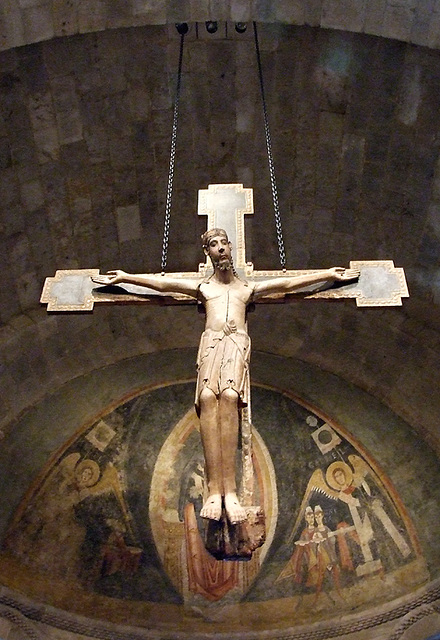

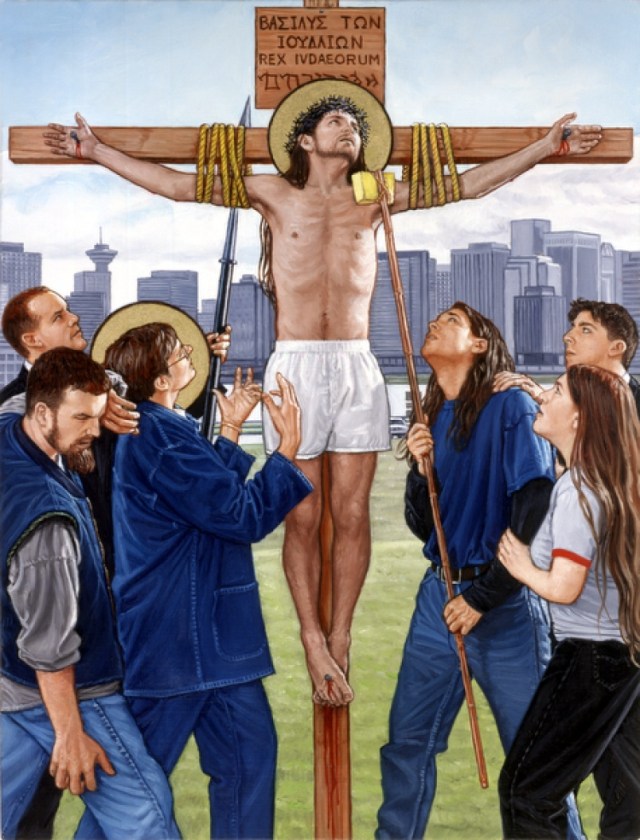





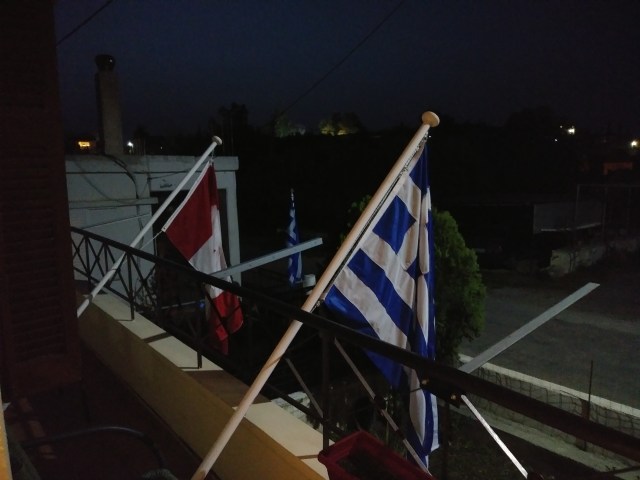
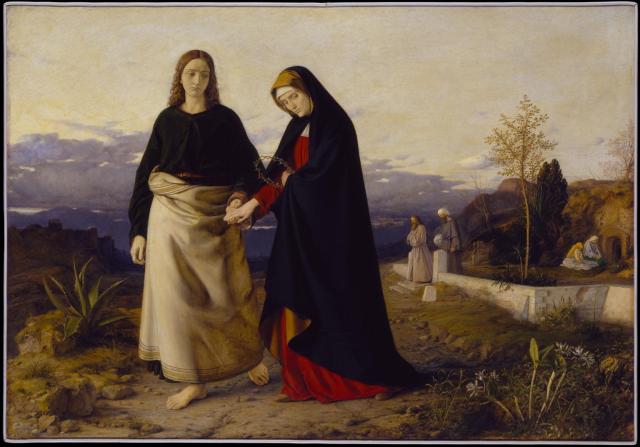
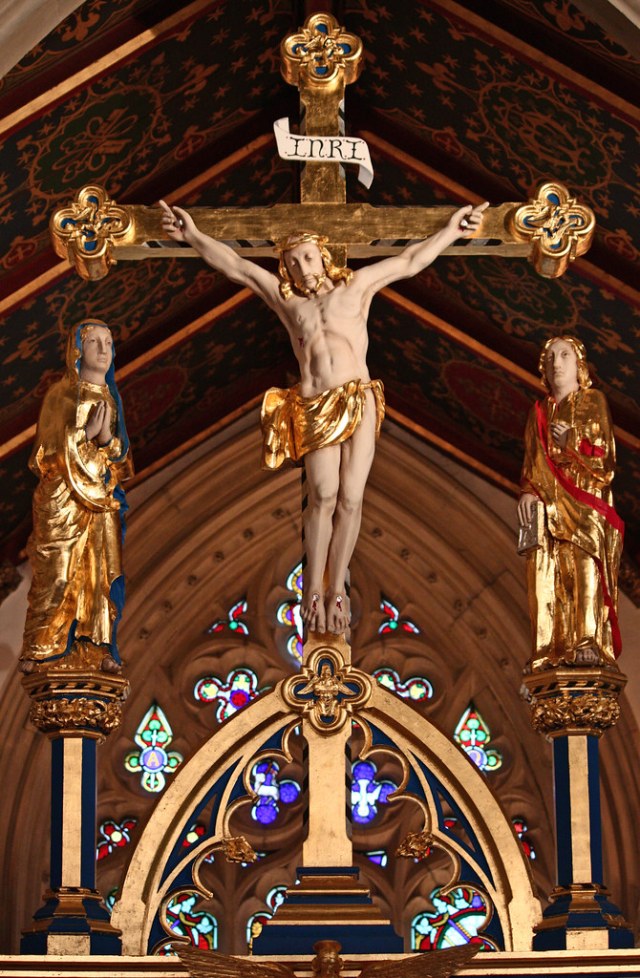


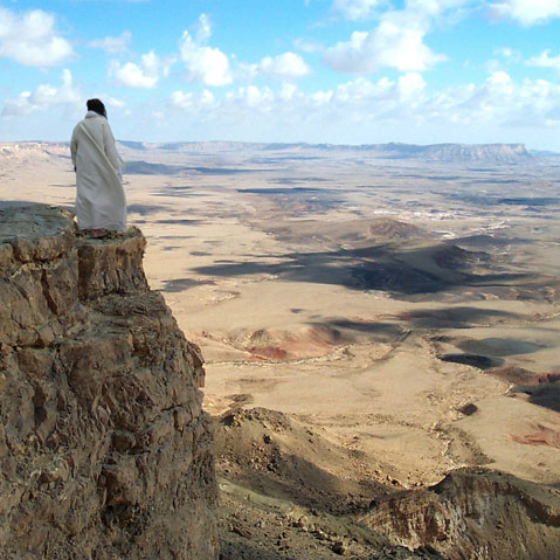

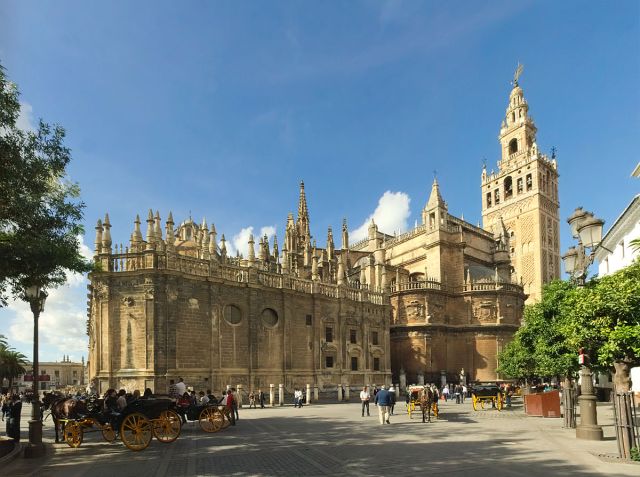
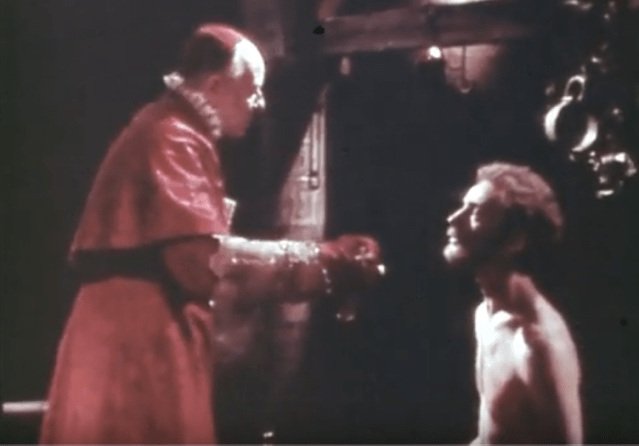


 The Island Parson