A Reflection based on the discussion that was held during the online worship of the Anglican Church of St Thomas, Kefalas, in the regional municipality of Apokoronas, on the island of Crete, in Greece on the Fourth Sunday of Easter, May 3, 2020, 11:00 am in the Year of the Great Pandemic of 2020.
Two ancient statues, one pagan, the other Christian. Left: Ancient Greek image of a shepherd carrying a sheep over his shoulders (3rd century BCE) Right: Statue from Rome, Italy, dated to the early period of Christianity, displaying the image of Jesus as the good shepherd.
Those who had been baptized devoted themselves to the apostles’ teaching and fellowship, to the breaking of bread and the prayers.
Awe came upon everyone, because many wonders and signs were being done by the apostles. All who believed were together and had all things in common; they would sell their possessions and goods and distribute the proceeds to all, as any had need. Day by day, as they spent much time together in the temple, they broke bread at home and ate their food with glad and generous hearts, praising God and having the goodwill of all the people. And day by day the Lord added to their number those who were being saved. Acts 2.42-47
Whoever enters by me will be saved, and will come in and go out and find pasture. . . . I came that they may have life, and have it abundantly. John 10.9-10
We gathered via the internet, and all told we were some sixteen souls gathered around by Zoom. We had an informal discussion about the texts, and these were some of the points made.
Sheep are a very common thing here on Crete, and we know by experience that different flocks will listen to the different voices of their shepherds and follow them.
In some places a shepherd will lie down at the opening to the fold, thereby becoming the “gate” to the fold, letting sheep in and keeping them in the pen.
Jesus is the Good Shepherd, who by his life and teaching, and especially in his death, demonstrates his care for all the people around him, for humanity, and for us.
The idea that God cares for us as a shepherd goes back ten centuries before Jesus, to the time of David, and the 23rd psalm.
As the Body of Christ, we in the church can be like the shepherd, caring for others.
This is shown in the passage from Acts, where Christians care for each other by sharing things in common. While this looks quite normal for us, this might be considered among the “many wonders and signs” in a society where such common concern was the exception rather than the norm.
While not intentional, this kind of care would have had an evangelistic result. Rodney Stark, in The Rise of Christianity, notes that the doctrine that Christians must care for each other and the stranger in need meant that in time of disease – such as a plague – Christians felt a divine moral obligation to do so; the traditional Greek and Roman temples and priesthoods did not have these teachings. Thus, in the time of a plague most non-Christians would get out of cities and take care of themselves but not others. Early Christian care – food, and very basic sanitation – appear to have increased (albeit, slightly) the survival rate of Christians and the non-Christians they cared for. This would have impressed the non-Christians , and increased the adherence of survivors to the Christian faith.
In the Fourth Century CE the Emperor Julian complained how Christians took care of all sick, regardless of religious adherence, and recommended that Roman and Greek priests begin to do the same. This did not happen, because the ancient religions had no dogmatic reason to teach such things.
This emphasis on care has been a part of Christian culture, and became a norm in our society, even when secularized. Medical care, especially for those who are not rich, was a central activity of churches through the medieval era and right into modern times.
Only since the rise of the national health care (in Britain in 1948; Canada in 1968; and in Greece, 1981) has there been an assumption that the whole of society has a care of duty towards the health of everybody, based on need and not ability to pay; while this is normal for us now, it was controversial in earlier times, and in the United States, still is.
Arguably, a modern Christian attitude must be concerned with the health of everybody, and whether by public or private means, or a combination of both, should consider how effectively medical care is provided, especially to the most vulnerable. This is part of what it means to “have life, and have it abundantly“.
May we, then, follow in the way of the Good Shepherd. As we have been cared for protected, as we have been led to green pastures and quiet waters that refresh us, and as we have feasted at abundant tables, so may we do the same for others.
Starting this Sunday, May 3rd, 2020 we invite members and friends of the Anglican Church of St Thomas, to join us for a Service of the Word on Zoom. Here is the information you need:
To maintain some order, there will be a “waiting room” and a password is required to get in. Please make sure that you fill in the option for naming yourself, so that I can know who is in the waiting room. I will be online at 10:40 am, and I ask that you try to log on and be ready at least five minutes before 11:00 am.
The Fourth Sunday of Easter always has as its gospel reading a portion from chapter ten of the Gospel according to John, in which Jesus describes himself as the Good Shepherd. As well, the psalm is always the 23rd, so shepherds abound. Thus, this Sunday is popularly known as Good Shepherd Sunday. The appointed readings according to the Revised Common Lectionary (Year A) are:
The Church of England allows one to omit the reading from 1 Peter, shift the reading from Acts to be the second reading, and have Genesis 7 as the first reading.
In our online worship tomorrow we will use Acts 2:42-47, Psalm 23, and John 10:1-10.
Reflect
I will be posting a brief homily after the online worship tomorrow, but in the meantime here is a link to last year’s sermon.
Pray
Collect Almighty God,
whose Son Jesus Christ is the resurrection and the life:
raise us, who trust in him,
from the death of sin to the life of righteousness,
that we may seek those things which are above,
where he reigns with you in the unity of the Holy Spirit,
one God, now and for ever. Amen.
(or)
Risen Christ,
faithful shepherd of your Father’s sheep:
teach us to hear your voice and to follow your command,
that all your people may be gathered into one flock,
to the glory of God the Father. Amen.
Intercessions H1 (modified) In joy and hope let us pray to the Father.
That our risen Saviour may fill us with the joy of his glorious and life-giving resurrection
we pray to the Father. Hear our prayer.
That the one who was a servant of all may grant us humility
to be subject to one another in Christian love
and we pray especially for those experiencing great stress as they stay at home,
we pray to the Father. Hear our prayer.
That the Good Shepherd may revives our souls,
and guide us along right pathways for his Name’s sake;
that the one who fed the multitudes
may provide for those who lack food, work or shelter,
remembering especially all those
who have been laid off or whose employment has been terminated,
and those who have little food security,
we pray to the Father. Hear our prayer.
That the one who did not strike back with violence may cause
wars and famines to cease through all the world,
remembering especially the peoples of Syria, Sudan, Iraq, Afghanistan, and Yemen,
we pray to the Father. Hear our prayer.
That the healer of the sick may reveal the light of his presence to the sick,
the weak and the dying, to comfort and strengthen them,
praying especially for those afflicted in this pandemic,
and for the nurses, physicians, and all health care staff who care for them;
though we walk through the valley of the shadow of death we shall fear no evil;
for the Lord is with us;
we pray to the Father. Hear our prayer.
That, according to his promises,
all who have died in the faith of the resurrection
may be raised on the last day,
and dwell in the house of the Lord for ever;
we pray to the Father. Hear our prayer.
That the fire of the Holy Spirit may descend upon us, his people,
so that we may bear faithful witness to the resurrection of Jesus,
we pray to the Father. Hear our prayer.
Heavenly Father,
you have delivered us from the power of darkness
and brought us into the kingdom of your Son:
grant that, as his death has recalled us to life,
so his continual presence in us may raise us to eternal joy;
through Christ our Lord. Amen.
Sing
We are still in Easteride, so there is this modern hymn:
We must sing this one, of course:
and this one!
Then there is this chorus from Handel’s Messiah:
26. Chorus All we like sheep have gone astray; we have turned every one to his own way. And the Lord hath laid on Him the iniquity of us all. (Isaiah 53: 6)
A Sermon that was NOT preached at the Anglican Church of St Thomas, Kefalas, in the regional municipality of Apokoronas, on the island of Crete, in Greece on the Third Sunday of Easter, April 26, 2020, 11:00 am because of the Great Pandemic of 2020.
The Road to Emmaus, from the Church of the Redeemer, Toronto.
Resurrection, Sheol, and the Temple
I am reading a fascinating book I picked up years ago but never got around to reading. It is Resurrection: The Power of God for Christians and Jews (New Haven CT & London UK: Yale University Press, 2008) and is coauthored by Kevin J. Madigan and Jon D. Levinson, who are both professors at Harvard Divinity School (“HDS”). What is interesting about this book is that Madigan is a Christian and a professor of Christian history, whereas Levinson is a Jewish scholar of the Hebrew Bible and Rabbinic Midrash. I regret that I did not study with either of them when I was at HDS for a quick one year Master of Theology back in 2002-2003.
HDS is a strange place. It is interdenominational and interfaith, and so I studied with Jews, Buddhists, Later Day Saints, Episcopalians/ Anglicans, Methodists, Muslims, Catholics, Greek Orthodox, Unitarians, and many other varieties of religion. Many of the students are preparing for ordination, but not all. HDS is also a graduate centre for the study of religion, and does not require any faith commitment from its students. Thus, many were examining the various world religions from a purely sociological or historical perspective, and were quite sceptical or agnostic about the claims of various faiths. That said, I found is fascinating to have this interfaith context, and to study Christian texts and history besides people from Buddhism and Judaism.
In Resurrection Madigan and Levinson examine the Jewish roots of resurrection. Christians celebrate the resurrection of Jesus Christ on Easter Sunday, but many of us forget that this event was unusual and unexpected. What was weird about the resurrection of Jesus was that it was just a single person. In the Judaisms of Jesus’s day most Jews believed in the Resurrection of the Dead, but understood it as something that would happen to all people of Israel at one time (as suggested in Ezekiel 37), or to the whole of humanity, followed by judgment by God (as in Daniel 12); the resurrection of a single person, as was the case with Jesus, was unexpected.
Madigan and Levinson discuss the older Jewish understanding and belief of שְׁאוֹלŠəʾōl Sheol. Sheol was a kind of shadowy after-life that came to those whose life was cut off early. In Sheol one was cut off from kith and kin, and one was not even able to raise the praise of God. Interestingly, the dividing line between life and Sheol was not so much death, but rather the beginning of a grave illness from which one does not usually recover, a kind of death in the midst of life. Our psalm today describes this situation; the word translated as “grave” here is, in fact, Sheol:
2 The cords of death entangled me; the grip of the grave took hold of me; * I came to grief and sorrow. 3 Then I called upon the Name of the Lord: * “O Lord, I pray you, save my life.” Psalm 116.2-3
What is the opposite of Sheol? The natural response for us today would probably be “heaven”, but this is a retroprojection of later ideas of heaven and hell on the Hebrew Bible understanding of Sheol. The Tanakh is vague on who goes to Sheol; some passages suggest everybody ends up in that shadowy existence, but more often it describes it as the fate of those who died early in life, or those who are gravely ill or wounded. Madigan and Levinson point out that Moses is not described as going to Sheol, and nor are Abraham, Isaac, Jacob, David, or Solomon. Rather, they are “gathered to their ancestors”, and most of them, like Jacob/Israel, get to see their children’s children. A full life with many children would seem to be the opposite of Sheol. Of course, on occasion there are some particular individuals who are taken into the presence of God in the sky – Enoch and Elijah, being most prominent – but they are the exception.
Levinson and Madigan argue that the opposite (or antipode, in their language) of Sheol is a full life, and nowhere is that life more full than at the Temple in Jerusalem. Thus the psalm for today concludes,
14 O Lord, I am your servant; * I am your servant and the child of your handmaid; you have freed me from my bonds. 15 I will offer you the sacrifice of thanksgiving * and call upon the Name of the Lord. 16 I will fulfill my vows to the Lord * in the presence of all his people, 17 In the courts of the Lord‘s house, * in the midst of you, O Jerusalem. Hallelujah! Psalm 116.14-17
A 1925 photogravure of the fountain on the Temple Mount in the Old City of Jerusalem, Israel. Now, as then, there were trees on Temple Mount. Photograph by Karl Gršber.
The Temple in Jerusalem is an intimation of immortality. This explains a line in Psalm 84:
1 How lovely is your dwelling place, O Lord of hosts! 2 My soul longs, indeed it faints for the courts of the Lord; my heart and my flesh sing for joy to the living God. . . . 10 For a day in your courts is better than a thousand elsewhere. Psalm 84.1-2, 10
The Temple was a place of sacrifice and the release of sins, feasting and of singing praise. It was where the people of God gathered, and where victory was celebrated. The courts of the Temple included gardens and trees, and it was intended to be an echo of Paradise, a recreation of Eden, and the closest thing to heaven on earth.
The Breaking of Bread
Where do we as Christians encounter the risen Jesus? When do we have our intimations of immortality, and receive our promises of heaven on earth? Our gospel reading today tells us:
“Were not our hearts burning within us while he was talking to us on the road, while he was opening the scriptures to us?” That same hour they got up and returned to Jerusalem; and they found the eleven and their companions gathered together. They were saying, “The Lord has risen indeed, and he has appeared to Simon!” Then they told what had happened on the road, and how he had been made known to them in the breaking of the bread.
We encounter Jesus when we gather, when the scriptures are opened to us, and he is made known to us in the breaking of bread. This is what we do in the Eucharist (Holy Communion, the Mass, the Liturgy, the Lord’s Supper). We do not have a Temple, but wherever we join together for the Eucharist, Christ is with us. It may be a home, it may be a field, it is perhaps in a cave, but more often it is in a building set aside for God’s people. And there we encounter the risen Christ, and there we have an echo of Paradise, a foretaste of God’s kingdom.
The view from the Anglican Church of St Thomas, Kefalas, looking more or less south towards the Lefka Ori, the White Mountains of Crete.
Of course, here in Crete we of St Thomas’s have the Tabernacle – a permanent tent over a patio, with views of gardens, olive trees, and mountains beyond, with the bleating of sheep and goats not far away. It is perhaps one of the loveliest places on Earth, a reminder of the Garden of Eden. It is here we normally gather and where Jesus is made known to us in the breaking of the bread.
This is one reason (among many) why this time is so difficult for us. We are separated from the Body of Christ, the Church, even though we can talk to each other by phone and see each other over the internet. But that cannot replace the reality of being in the presence of each other, which allows us to know the presence of Jesus. We are cut off from the sacrament, a kind of fasting from the Divine. We might know Jesus through the scriptures and in prayer on our own, but it is not the same. It feels like we are in some kind of shadowy existence, closer to Sheol than the Temple.
This will end. We do not know when, and we do not know how. Things will not be exactly the same. My hope and prayer is that, when we gather again, we will experience the same power that raised Jesus from the dead, that our hearts will burn within us, and we will say, “Praise God – Hallelu Yah!”
Collects Almighty Father,
who in your great mercy gladdened the disciples with the sight of the risen Lord:
give us such knowledge of his presence with us,
that we may be strengthened and sustained by his risen life
and serve you continually in righteousness and truth;
through Jesus Christ your Son our Lord,
who is alive and reigns with you, in the unity of the Holy Spirit,
one God, now and for ever. Amen.
or
Risen Christ,
you filled your disciples with boldness and fresh hope:
strengthen us to proclaim your risen life and fill us with your peace,
to the glory of God the Father. Amen.
Intercessions H3 Jesus, our exalted Lord, has been given all authority.
Let us seek his intercession that our prayers may be perfected by his prayer.
Jesus Christ, great high priest, living for ever to intercede for us,
pray for the Church, your broken body in the world.
Remember Justin Welby and John Sentamu, Archbishops of Canterbury & York, and Robert Innes & David Hamid, our Bishops here in the Diocese in Europe.
at the Diocesan Office in London: the Safeguarding team and their leadership in our care for children and vulnerable adults: Grace Fagan, Lisa Welch, Bridgett Fenton, Laura O’Brien, Majean Griffith, Katherine Harris.
Lord, hear us. Lord, graciously hear us.
Jesus Christ, King of righteousness,
enthroned at the right hand of the majesty on high,
pray for the world, and make it subject to your gentle rule.
Στην Ελλάδα προσευχόμαστε Αικατερίνη Σακελλαροπούλου, Πρόεδρος, και Κυριάκος Μητσοτάκης, Πρωθυπουργός (In Greece we pray for Aihaterini Sakellaropoulou, President, and Kyriakos Mitsotakis, the Prime Minister).
In the UK we remember our Sovereign Lady Elizabeth II, Governor of the Church of England, and her government led by the Prime Minister, Boris Johnson.
In Canada we also pray for Elizabeth II, Queen of Canada, Her Excellency Julie Payette, the Governor General, and Justin Trudeau, the Prime Minister.
In the European Union we pray for Ursula von der Leyen, President of the European Commission; Charles Michel, President of the European Council; and Josep Borrell, High Representative of the Union for Foreign Affairs & Security Policy.
Lord, hear us. Lord, graciously hear us.
Jesus Christ, Son of Man,
drawing humanity into the life of God,
pray for your sisters and brothers in need, distress, or sorrow.
All those infected by the Coronavirus, and those in intensive care.
Health care workers, and all essential workers.
Those who are mourning the recently dead, in the midst of the lockdown.
Those who have been laid off and have lost income, and whose futures are in peril.
Teachers, students, and parents, struggling to learn from home.
Families overcome by stress.
Refugees, immigrants, migrants, the homeless, and other vulnerable populations.
Lord, hear us. Lord, graciously hear us.
Jesus, pioneer of our salvation,
bringing us to glory through your death and resurrection,
surround with your saints and angels those who have died trusting your promises.
the 200,000 who have died from the Covid-19 pandemic.
Among the dead, the physicians, nurses, and health care workers.
Lord, hear us. Lord, graciously hear us.
Jesus Christ, Lord over all things,
ascended far above the heavens and filling the universe,
pray for us who receive the gifts you give us for work in your service.
for the Seven Gifts of the Holy Spirit: wisdom, understanding, counsel, fortitude, knowledge, piety, and fear of the Lord (Isaiah 11.1-2).
for the cardinal virtues of prudence, justice, fortitude, and temperance.
for the theological virtues of faith, hope, and love. (1 Corinthians 13.13).
Jesus Christ,
keep the Church in the unity of the Spirit and in the bond of peace,
and bring the whole created order to worship at your feet;
for you are alive and reign with the Father and the Holy Spirit,
one God, now and for ever. Amen.
A Sermon that was NOT preached at the Anglican Church of St Thomas, Kefalas, in the regional municipality of Apokoronas, on the island of Crete, in Greece on the Second Sunday of Easter, April 19, 2020, 11:00 am because of the Great Pandemic of 2020.
“Unless I see the mark of the nails in his hands, and put my finger in the mark of the nails and my hand in his side, I will not believe.” John 20.25b
The Valorization of Thomas the Sceptic
Thomas has become, I think, more popular in the past few centuries than he might have been before, and that is because he is seen a First Century sceptic (skeptic in the US spelling). “Sceptic” has several meanings, as the Oxford English Dictionary makes clear. The first is a reference to a philosophical school:
1.Philosophy. One who, like Pyrrho [365/360 BCE – 275/270 BCE] and his followers in Greek antiquity, doubts the possibility of real knowledge of any kind; one who holds that there are no adequate grounds for certainty as to the truth of any proposition whatever. Also, often applied in a historically less correct sense, to those who deny the competence of reason, or the existence of any justification for certitude, outside the limits of experience. Emphasis added.
However, it has a broader, more popular sense:
2.One who doubts the validity of what claims to be knowledge in some particular department of inquiry (e.g. metaphysics, theology, natural science, etc.); popularly, one who maintains a doubting attitude with reference to some particular question or statement. Also, one who is habitually inclined rather to doubt than to believe any assertion or apparent fact that comes before him; a person of sceptical temper. Emphasis added.
In discussions of Christian beliefs and teachings, it is used as the equivalent of an agnostic, or even an atheist:
3.spec. One who doubts, without absolutely denying, the truth of the Christian religion or important parts of it; often loosely, an unbeliever in Christianity, an infidel. Emphasis added.
Since the Seventeenth Century we have viewed scepticism more positively thing than in earlier eras. It became a tool of the scientific method, in which physical evidence for facts was required and tested.
René Descartes (1596-1650) his First Meditation decided to doubt everything he knew, and determined that the one thing he could not doubt was his own existence: cogito ergo sum, “I think, therefore I am.” This approach to philosophy, emphasised pure reason and certainty over sensations and acting on common sense. This was a radical breach with medieval philosophy, and while Descartes in his Third Meditation concluded that there was a God, philosophers who followed afterwards felt no such need to do so.
The great Scottish Empiricist David Hume (1711-1776) was deeply sceptical about any claims to knowledge that went beyond experience and sensations, and so called into question miracles and all religious claims.
During the Age of Enlightenment many challenged the Church’s teachings and took refuge in Deism, believing in a God but not necessarily in anything like the Christian God.
New Testament scholars in 19th Century Germany began to treat Holy Scripture as if it was any other ancient text, and distinguished between the historical Jesus and the Christ of faith, arguing that “the preacher became the preached.”
In the wake of the development of geology, archaeology, Darwin’s theory of evolution by natural selection, it became obvious to many that the narrative of the Bible could not be taken literally.
Whereas religion had been seen as necessary to political life, by the end of the 19th Century it was seen by many as irrelevant, and perhaps an impediment (at least by the ruling classes), something that had led to the Thirty Years War in Germany and the Civil War in England.
With the rise of individualism and personal economic power, religion was seen as a personal think, a kind of hobby, like gardening or stamp collecting.
Thomas, then, is sometimes held up as an Christian prototype of the sceptic among us. “You say you cannot believe in everything we teach in the Church? Well, that’s okay – neither did Thomas the Apostle!” But this is not what the story about doubting Thomas is about.
The Incredulity of Thomas
“The Incredulity of Saint Thomas” 1601–1602, by Caravaggio (1571-1610). From the Picture Gallery at Park Sanssouci, Potsdam, Brandenburg, Germany.
While researching the resources for the second Sunday of Easter I came across this hymn by Thomas Troeger (music is on the previous post):
These things did Thomas count as real: The warmth of blood, the chill of steel, The grain of wood, the heft of stone, The last frail twitch of flesh and bone.
The vision of his skeptic mind Was keen enough to make him blind To any unexpected act Too large for his small world of fact.
His reasoned certainties denied That one could live when one had died, Until his fingers read like Braille The marking of the spear and nail.
May we, O God, by grace believe And thus the risen Christ receive, Whose raw, imprinted palms reached out And beckoned Thomas from his doubt.
Both the painting above by Carravaggio and the hymn suggest that Thomas touched Jesus’s wounds, but I am not sure that he did so. The passage in John reads:
But Thomas (who was called the Twin), one of the twelve, was not with them when Jesus came. So the other disciples told him, “We have seen the Lord.” But he said to them, “Unless I see the mark of the nails in his hands, and put my finger in the mark of the nails and my hand in his side, I will not believe.”
A week later his disciples were again in the house, and Thomas was with them. Although the doors were shut, Jesus came and stood among them and said, “Peace be with you.” Then he said to Thomas, “Put your finger here and see my hands. Reach out your hand and put it in my side. Do not doubt but believe.” Thomas answered him, “My Lord and my God!” John 20:24-28.
The passage does not actually say that Thomas touched Jesus, much less put his hand in his side. Rather, upon being invited to do so by Jesus, Thomas realizes he was wrong, and was overcome by his presumption. His response is one of faith: “My Lord and my God” – an affirmation that bookends the beginning of the gospel which affirms Jesus as divine: “In the beginning was the Word, and the Word was with God, and the Word was God.”
The passage carries on:
Jesus said to him, ‘Have you believed because you have seen me? Blessed are those who have not seen and yet have come to believe.’
Now Jesus did many other signs in the presence of his disciples, which are not written in this book. But these are written so that you may come to believe that Jesus is the Messiah, the Son of God, and that through believing you may have life in his name. John 20:29-31
This would be a great place to end the gospel – the reader, who presumably has not seen the resurrected Jesus, has faith in Jesus as the Messiah, the Son of God, and is living the life of Jesus in her or his own body by the power of the Holy Spirit. A blessing is given by Jesus: “Blessed are those who have not seen and yet have come to believe.” This is a blessing for the reader and those who hear the good news – and it suggests that they have greater faith than Thomas. From a reader response perspective, we are supposed to identify not with Thomas or the other Apostles who are witnesses, but with those in the community who have not seen Jesus. Presumably this was the situation when and where this gospel was written – which would be mainly second generation Christians, and not witnesses to Jesus in his risen state.
“Blind to Any Unexpected Act”
Even though I am not sure that Thomas’s fingers read like Braille / The marking of the spear and nail, I still like the hymn by Thomas Troeger. The earthly quality of the death of Jesus is caught masterfully in The warmth of blood, the chill of steel, / The grain of wood, the heft of stone, / The last frail twitch of flesh and bone. There is an appeal to reasoned certainties that are so much a characteristic of the modern age in which we have lived.
But the old certainties are now not so solid. “Reason” itself has been pulled off of its pedestal. We live in a society where the GDP and the freedom of the markets was everything, but now as we suffer through a lockdown we know that some things – life, health care, friends – are far more important. Covid-19 seems to hit people without warning, killing here on Crete a 48 year-old professor visiting from Germany, afflicting the Prime Minister of the United Kingdom and several of his his aides, infecting the heir to the throne, and working its way, despite precautions, into vulnerable nursing staff and physicians, janitors and stock clerks. The usual reasoning around the economy no longer suffices, and years of austerity in health services are being questioned. What is most important to us?
In the midst of mourning, solitude, and boredom, some of us find ourselves turning to the divine, so that we, O God, by grace believe. Denied entry into churches, many find the Body of Christ over the internet and by quiet prayer. We may not have been to church during the past Holy Week, but Holy Week came to us by various media and in the silence of of the days and nights. We may not have certainty, but we have faith.
My hope and prayer is that in the midst of this strange time, you, by grace, may have belief, and that through believing you may have life in his name.
“Doubting Thomas” by an Unknown English Artist, about 1190–1200, Norfolk [perhaps] (written), East Anglia, England; York [perhaps] (illuminated), Northern, England (Place Created).Tempera colors and gold leaf on parchment.
Read
The readings appointed for the Second Sunday of Easter are:
The Church of England also allows for a reading from the Tanakh (Old Testament), and for this Sunday it is Exodus 14.10-31; 15.20,21. This reading would come first, and the Acts reading would become the second reading, and the reading from 1 Peter would not be used.
Fr Leonard Doolan of St Paul’s Athens has recorded a sermon:
Pray
Collect
Almighty Father, you have given your only Son to die for our sins
and to rise again for our justification:
grant us so to put away the leaven of malice and wickedness
that we may always serve you in pureness of living and truth;
through the merits of your Son Jesus Christ our Lord,
who is alive and reigns with you, in the unity of the Holy Spirit,
one God, now and for ever. Amen.
(or)
Risen Christ, for whom no door is locked, no entrance barred:
open the doors of our hearts,
that we may seek the good of others
and walk the joyful road of sacrifice and peace,
to the praise of God the Father. Amen.
Intercessions
H2 We pray to Jesus who is present with us to eternity.
Jesus, light of the world,
bring the light and peace of your gospel to the nations …
Jesus, Lord of life, in your mercy, hear us.
Jesus, bread of life,
give food to the hungry …
and nourish us all with your word.
Jesus, Lord of life, in your mercy, hear us.
Jesus, our way, our truth, our life,
be with us and all who follow you in the way …
Deepen our appreciation of your truth and fill us with your life.
Jesus, Lord of life, in your mercy, hear us.
Jesus, Good Shepherd who gave your life for the sheep,
recover the straggler, bind up the injured, strengthen the sick
and lead the healthy and strong to new pastures.
Jesus, Lord of life, in your mercy, hear us.
Jesus, the resurrection and the life,
we give you thanks for all who have lived and believed in you …
Raise us with them to eternal life.
Jesus, Lord of life, in your mercy, hear us, accept our prayers, and be with us always. Amen.
Cycles of Prayer
In the Prayer Diary of the Diocese in Europe:
Pray for the Lusitanian Church, Bishop Jorge Pina Cabral.
Pray for the Church of Denmark and the Evangelical Lutheran Church of Estonia.
Pray for the Diocesan Office in London: Pray for the Operations and Finance functions: Diocesan Secretary (COO): Andrew Caspari; Office Manager: Bron Panter; Finance: Susan Stelfox, Nick Wraight; Board of Finance Chair: Mike Fegan. Pray for the financial needs of the Diocese (and give thanks for God’s provision).
In the Anglican Cycle of Prayer today:
Pray for the Church of Ireland, the clergy and people of its twelve dioceses, and its Primate, Michael Jackson, the Archbishop of Dublin and Bishop of Glendalough.
St Paul’s Athens invites you to a Zoom conference for Sunday worship. They ask that people sign in shortly after 10:00 am. The service itself begins at 10:15 am. Click on this link: https://zoom.us/j/227360090?pwd=eWY5bmp4SHU2T0VHQWhIalFkdDRLQT09.
Meeting ID: 227 360 090 Password: 422061
Hymns
A hymn from Tanzania. In translation the lyrics are:
Jesus is risen, alleluia!
Worship and praise him, alleluia!
Now our Redeemer bursts from the grave:
lost to the tomb, Christ rises to save. Come let us worship him, endlessly sing; Christ is alive and death loses its sting. Sins are forgiven, alleluia! Jesus is risen, alleluia!
There are not many hymns written about Thomas and his doubts – but this is one of them, by Thomas Troeger, one of my favourite modern Christian lyricists.
This is a good hymn about the power of faith.
Last night having been the Orthodox celebration of Easter, normally this Paschal Troparion would have been sung repeatedly by our Greek sisters and brothers, and especially as the the Holy Fire, the light of Christ, was given out.
If we had been meeting in the Tabernacle in Kefalas today we would have used the second set of readings, from Jeremiah, Psalm 118, Acts, and Matthew.
Here is the Gospel of the Resurrection according to Matthew:
After the sabbath, as the first day of the week was dawning, Mary Magdalene and the other Mary went to see the tomb. And suddenly there was a great earthquake; for an angel of the Lord, descending from heaven, came and rolled back the stone and sat on it. His appearance was like lightning, and his clothing white as snow. For fear of him the guards shook and became like dead men. But the angel said to the women, “Do not be afraid; I know that you are looking for Jesus who was crucified. He is not here; for he has been raised, as he said. Come, see the place where he lay. Then go quickly and tell his disciples, ‘He has been raised from the dead, and indeed he is going ahead of you to Galilee; there you will see him.’ This is my message for you.”
So they left the tomb quickly with fear and great joy, and ran to tell his disciples. Suddenly Jesus met them and said, “Greetings!” And they came to him, took hold of his feet, and worshiped him. Then Jesus said to them, “Do not be afraid; go and tell my brothers to go to Galilee; there they will see me.” Matthew 28.1-10
A tomb near Nazareth, probably similar to the one in which Jesus was buried.
Reflect
I have posted the sermon I might have preached this year. You can find it here.
We are not gathering for a Sunrise Service this year, but perhaps this video from 2019 will have to do. Next year, in Kefalas!
Share
The Archbishop of Canterbury, the Most Reverend Justin Welby, will lead an Easter Sunday service at 9:00 am BST, which is 11:00 am EEST here in Crete. You can find it here.
The Right Rev’d Dr Robert Innes, our Diocesan Bishop, will lead an Easter Sunday service tomorrow morning at 10:00 am EEST here in Crete (9:00 am CEST); the video will be available on the Diocese in Europe YouTube Channel.
A Church Near You, a service of the Church of England, lists over a thousand possible live streams of services, including the ones provided by churches in the Diocese in Europe.
The Episcopal Church (“TEC”) based in the United States has a set of live streamed services, including an Easter Vigil. Grace Cathedral in San Francisco starts its Vigil at 9:00 PM PDT Saturday, which is 7:00 am EEST on Sunday morning here in Greece.
If you feel like braving Zoom, Father Leonard Doolan will hold an Easter Liturgy at 10:15 am EEST (but sign in around 10:00 am). You may need to download the Zoom app to your computer, tablet, or smartphone, and you will need to enable your microphone and camera. If this seems overwhelming, download A User’s Guide, prepared by the clever folk at the Diocese in Europe office: Zoom – A User Guide – Apr 2020
The service leaflet for St Paul’s Athens can be downloaded here: Easter Sunday 2020 Here are the details for logging in:
Leonard Doolan is inviting you to a scheduled Zoom meeting.
Please join us in Athens (God and technology willing) for our Easter Sunday worship. You can join the ‘meeting’ from 10.00am but the service will begin at 10.15 which is our normal service time here. Afterwards we can make a coffee and have a chat.
You will see that this facility is available each Sunday until the end of May by which time I hope we will be able to meet together in ‘social proximity’. Please also see attached the order of service that you might like to print out before Sunday.
Just click on Join Zoom Meeting which you will see just below, and follow a couple of easy clicks to join with us. Don’t worry about the other info, but if you have trouble joining you can find at the bottom of this message the meeting number and password. Hopefully you won’t need it.
Lord of all life and power,
who through the mighty resurrection of your Son
overcame the old order of sin and death
to make all things new in him:
grant that we, being dead to sin
and alive to you in Jesus Christ,
may reign with him in glory;
to whom with you and the Holy Spirit
be praise and honour, glory and might,
now and in all eternity. Amen.
(or)
God of glory,
by the raising of your Son
you have broken the chains of death and hell:
fill your Church with faith and hope;
for a new day has dawned
and the way to life stands open in our Saviour Jesus Christ. Amen.
Intercessions
H1 In joy and hope let us pray to the Father.
That our risen Saviour may fill us with the joy of his glorious and life-giving resurrection
we pray to the Father. Hear our prayer.
That isolated and persecuted churches
may find fresh strength in the good news of Easter,
remembering at this time to pray:
for the Peace of Jerusalem and thepeoples of the Holy Land,
including the people of the Episcopal Diocese of Jerusalem
and its Archbishop Suheil Dawani;
our own bishops in Europe, Robert Innes and David Hamid,
and the Archbishops of the Church of England, Justin Welby and John Sentamu;
giving thanks for the Lutheran Churches of the Porvoo Agreement in Europe;
and grateful for our partnership with the USPG (“United Society Partners in Gospel”):
we pray to the Father. Hear our prayer.
That the one who was a servant of all may grant us humility
to be subject to one another in Christian love
and we pray especially for those experiencing great stress as they stay at home,
we pray to the Father. Hear our prayer.
That the one who fed the multitudes
may provide for those who lack food, work or shelter,
remembering especially all those
who have been laid off or whose employment has been terminated,
and those who have little food security,
we pray to the Father. Hear our prayer.
That the one who did not strike back with violence may cause
wars and famines to cease through all the world,
remembering especially the peoples of Syria, Sudan, Iraq, Afghanistan, and Yemen,
we pray to the Father. Hear our prayer.
That the healer of the sick may reveal the light of his presence to the sick,
the weak and the dying, to comfort and strengthen them,
praying especially for those afflicted with Covid-19,
and for the nurses, physicians and all health care staff who care for them,
we pray to the Father. Hear our prayer.
That, according to his promises,
all who have died in the faith of the resurrection
may be raised on the last day,
we pray to the Father. Hear our prayer.
That the fire of the Holy Spirit may descend upon us, his people,
so that we may bear faithful witness to the resurrection of Jesus,
we pray to the Father. Hear our prayer.
Heavenly Father,
you have delivered us from the power of darkness
and brought us into the kingdom of your Son:
grant that, as his death has recalled us to life,
so his continual presence in us may raise us to eternal joy;
through Christ our Lord. Amen.
A Sermon that was NOT preached at the Anglican Church of St Thomas, Kefalas, in the regional municipality of Apokoronas, on the island of Crete, in Greece on Easter Sunday, April 12, 2020, 11:00 am because of the Great Pandemic of 2020.
“Behold, I tell you a mystery; we shall not all sleep, but we shall all be changed in a moment, in the twinkling of an eye, at the last trumpet. (I Corinthians 15: 51-52) The trumpet shall sound, and the dead shall be raised incorruptible, and we shall be changed. For this corruptible must put on incorruption and this mortal must put on immortality. (I Corinthians 15: 52-53) From Messiah by G. F. Handel. Philippe Sly: Bass-Baritone. Julian Wachner: Conductor. Trinity Wall Street Baroque Orchestra. Performed December 26 2015,
Trinity Church, Wall Street, New York City
Alleluia. Christ is risen. He is risen indeed. Alleluia. Praise the God and Father of our Lord Jesus Christ. He has given us new life and hope. He has raised Jesus from the dead. God has claimed us as his own. He has brought us out of darkness. He has made us light to the world. Alleluia. Christ is risen. He is risen indeed. Alleluia.
“Do not be afraid; go and tell my brothers to go to Galilee; there they will see me.”Matthew 28.10
An Age of Anxiety
We live in a time when we are justified in being afraid.
Although we here on Crete seem to have been spared the worst of the Covid-19 pandemic in Greece – Athens and Attica seems to be worse off – we are not yet through this. We do not know when and how this will end.
When I read the reports written by people who have had the disease and recovered, I get the impression the symptoms are far worse than any influenza.
Young and old are both being killed. Here on Crete a 48 year-old German man died of it, and he had no “underlying conditions.” I hear of the very sick being put into induced comas so that they may be intubated, and I shudder. We wonder, “Will this happen to me? To someone I love?”
And, of course, it is worse elsewhere. We hear of numbers in the upper hundreds dying each day in other countries; over two thousand people people died of Covid-19 in the USA on Friday, and over 900 in the United Kingdom.
Our friends and families back in these home countries are more exposed, and many of them are unemployed. Almost all of them are confined to their flats and houses. Some are struggling with working from home. Many are providing child care, and suffering under expectations that somehow children will receive an education over the computer.
Here in Greece the economy, barely recovered from the financial crisis of 2008, has screeched to an utter halt.
Those of us with investments and properties have watched as their value dropped, and the change in exchange rates is reducing our income from investments and pensions.
Whether we may agree with him or not, it is a shock to hear of the Prime Minister of the UK being so ill that he needed to go into intensive care.
And we all know people in essential services – medicine, delivery services, supermarkets, and pharmacies – who are now those most at risk of becoming ill.
Even if we personally are doing all right, the fear and concern across the globe is palpable.
A tomb near Nazareth, Israel, dating from the first century. Similar to Christ’s tomb with the stone rolled over the entry.
“Do Not Be Afraid”
And in the midst of this, in what one wag has called “the season of Coronatide”, we hear the old Good News of the resurrection of Jesus. An angel at the empty tomb – a messenger from God – tells the two Marys:
“Do not be afraid; I know that you are looking for Jesus who was crucified. He is not here; for he has been raised, as he said. Come, see the place where he lay. Then go quickly and tell his disciples, ‘He has been raised from the dead, and indeed he is going ahead of you to Galilee; there you will see him.’ This is my message for you.”
And then, as if to underline it, Jesus himself appears to these women, and says to them:
“Greetings! Do not be afraid; go and tell my brothers to go to Galilee; there they will see me.”
The Destructive Power of Modern Skepticism
The resurrection of Jesus is not a rational, scientific proposition. It is a proposition of faith. Human beings do not die, and then come back to life – this must be admitted. So obviously the claim that Jesus rose from the dead, in a new transformed body, is an exceptional claim that does not fit our modern notions of scientific method, historical methodology, and repeatable results. So, if we want to be properly modern and skeptical, we can explain the resurrection away in naturalistic terms. For example:
Someone stole the dead body. This was already being rumoured in the early days of Christianity, according to Matthew 28.11-15, given credence by some modern scholars, and it plays a part in the plot of the novel A Time for Judas (1983) by Morley Callaghan.
Kirsopp Lake (1872-1946) suggests the women went to the wrong tomb, an empty one. In time their mistake was transformed into the story of meeting an angel there, and even Jesus.
Hugh Schonfield, in The Passover Plot (1965), proposes an elaborate conspiracy that went wrong. Jesus intended to fake his death, and only involved certain disciples sworn to secrecy, including Joseph of Arimathea. He was merely drugged (from the sponge of hyssop) when he appeared to die on the cross. It was planned that Joseph would place Jesus in the tomb, and emerge after three days as the Risen Messiah. Unfortunately, a soldier pierced his side. He lived until the Sunday, appeared to a few of his disciples with his wounds, but ultimately succumbed to his wounds.
The New Testament scholar and theologian Rudolf Bultmann (1884-1976) said that the historical Jesus – and thus the facts of his death and resurrection – was largely unrecoverable by historical methods. Maybe Jesus said “Amen” and “Abba”, but he would not affirm much else. He believed that the proclamation of Jesus needed to be demythologized and understood in existential terms. The resurrection of Jesus only has a meaning insofar as we accept it as a reality for ourselves – that we have died to death and sin, have overcome our natural dread of suffering, and are detached from the world.
The NT scholar Gerd Lüdemann suggested in his 1994 book Resurrection of Jesus: History, Experience, Theology that
Peter, having denied Christ, was so consumed with guilt that he found psychological release in projecting a vision of Jesus, which led him to believe that Jesus was risen from the dead. Thereby the crucified Jesus showed himself to be the living Jesus, so that Peter could once again apply to himself and this time with profound clarity God’s word of forgiveness present in Jesus’s work.” Peter’s experience was infectious in the early Christian community, and soon others, too, who did not share Peter’s trauma, also saw hallucinations of the Risen Lord. From William Lane Craig’s Critique of Lüdemann.
One cannot disprove these skeptical theories. However, there is a problem with all of them. They are rational, yes, but they fail to explain the power of Christianity. In the minds of modern skeptics the disciples are conspirators, fools, or hallucinators. However, we know them as the founders of a faith that has somehow lasted for twenty centuries and inspired peoples and cultures around the world. How can this be?
The Power of Resurrection Hope
A pre-modern perspective, in which the world is shot through with the Divine, has no problem with the resurrection. Interestingly, a post-modern Christian perspective can accept the literal resurrection as well. Objective rationalism is seen as one narrative, and a very powerful one, but its supposed objection to resurrection is a category mistake. It is like asking what causes gravity. We might answer with Newtonian mechanics and Einsteinian Relativity, but these only address the “how” and not the “why”; we still do not have an understanding as to why the universe is the way it is. Faith might answer that something beyond the universe, which we might call metaphorically “The Creator” or “God” is somehow responsible, but this is an unproveable thesis – like the theory of the multiverse, or string theory. Likewise, when we acknowledge the resurrection of Jesus as a fact, we are doing so on the basis of faith.
I believe in the resurrection of Jesus because I can find no other explanation for the growth and resilience of the Church, which is called the Body of Christ. Without a doubt the early disciples experienced something they called the resurrection of Jesus. Paul lists the witnesses in 1 Corinthians 15:
3 For I handed on to you as of first importance what I in turn had received: that Christ died for our sins in accordance with the scriptures, 4and that he was buried, and that he was raised on the third day in accordance with the scriptures, 5and that he appeared to Cephas [i.e. Simon Peter], then to the twelve. 6Then he appeared to more than five hundred brothers and sisters at one time, most of whom are still alive, though some have died. 7Then he appeared to James, then to all the apostles. 8Last of all, as to someone untimely born, he appeared also to me. 9For I am the least of the apostles, unfit to be called an apostle, because I persecuted the church of God.
As well, of course, he appeared to the women at the tomb, including Mary Magdalene, as well as to the two disciples on the road to Emmaus.
These are a lot of people. Paul, in that letter to the Corinthians, is essentially saying, “Look, don’t just take my word for it, here are a whole bunch of other people who have also seen the resurrected Jesus.” While the resurrection accounts are diverse, there is enough commonality that the witnesses affirm the same thing, that Jesus had been resurrected. The resurrection of humanity was hoped for by most Jews at the time. The unusual thing was that Jesus was raised first and alone, “the first fruits of those who have died” as Paul puts it later in Chapter 15. His resurrection was not expected. His death was thought to be the end, a complete failure. The death of Jesus on the cross did not have any meaning of sacrifice, ransom, debts being paid, dying for sins – that kind of thinking only came in the light of the resurrection. The Messiah was not supposed to die, so the thinking went, he was supposed to restore the Kingdom of Israel. But God had other plans that could only be understood in the context of the resurrection.
Christianity should not have carried on. It should have died shortly after Jesus died. The resurrection was a preposterous idea. Indeed, as the Romans in the first few centuries found, it was a subversive faith, disrespectful of the Emperor and Rome itself. It was, in our modern terms, a cult in tension with society. It was, as Nietzsche later observed, a faith of slaves, of weakness. The Romans persecuted the early church. But still, it persisted.
Indeed, it grew, so much so that by the time Constantine converted to Christianity in the early Fourth Century this perverse faith may have already have become the largest religion in the Empire. With the decriminalization of the Christian faith, and later its establishment as the official religion, Christian leaders were released from persecution, and gained powers that earlier Christians could only have dreamed of. This power was at times a corrupt force, and yet time and again it called emperors, kings, and princes to repentance.
When the church went down the wrong path, it constantly reformed itself.
As Christianity became the social norm as early as the Fourth Century, and began to lose its radical character, men and women heard the words of Jesus and retreated into the desert, to let go of possessions and devote themselves to prayer. Thus began the monastic movements.
When these monastic movements became corrupted, God brought forth teaching orders, and a return to the basics of the Sermon on the Mount with the life of St Francis.
When the medieval church became consumed with temporal power and grand buildings, selling the remission of sins for cash donations, the reformers of the Sixteenth Century called Christians to a simpler faith and the Bible.
When the reformed liturgies became dull and intellectual the Pietist movement in Germany and the Wesley brothers brought back emotion and experience into faith, using powerful preaching, the “methodism” of meeting in small groups, and hymn singing.
Across Eastern Europe, as Greeks, Romanians, Bulgarians, and Russians groaned under oppression and violence, the Eastern Orthodox churches became the rallying place of safety for Christians.
When European powers became complacent about the oppression of slaves, God raised up radicals such as William Wilberforce.
Church of England clergy rediscovered the heritage of the English Church before the reformation and all that was good about it, and began the Anglo-Catholic Movement, focussed on the dignity of worship and serving the marginalized people in the slums. Similarly, the Church of Ireland reclaimed pre-Roman Catholic Celtic spirituality.
When people forgot about the Holy Spirit God created a revival in the Apostolic Faith Mission on Asuza Street in Los Angeles, that became known as Pentecostalism and the Charismatic Movement.
God raised up prophets such as Martin Luther King, Jr and Desmond Tutu to speak the truth of the gospel to those in power.
When Communist China expelled the foreign Christian missionaries in 1949 it seemed that the faith would be extinguished in that land, yet when the veil lifted in the 1980s it was discovered that Christianity there had returned to the ways of the early church, meeting in small groups in homes – and it had not only survived, but grown many times over.
While Christianity seems to be in decline in Europe and North America, it has grown in Asia and especially in Africa. While the human institution of the church is far from perfect, as a means of God’s grace it now claims the adherence of over two billion persons.
And I have seen the power of the resurrection in the lives of ordinary people around me, as well as my own.
Time and again faith in Jesus Christ and a knowledge of the faithfulness of Christ has spoken to peoples of every land and nation. It is not merely a faith of the elite or the opiate of the masses, but something which constantly works within people to change and transform themselves, and to hope for things that seem impossible, to which no reasonable person could aspire.
This is why I believe in the resurrection – because I have seen the same power which raised Jesus from the dead at work in so many of God’s people.
The Cross of Flowers 2020, decorated with flowers by David & Mary Hurley from Jan Lovell and Jo Cheslyn-Hall.
“Do Not Afraid: Go and Tell My Brothers to go to Galilee; There They Will See Me.”
On this Easter Sunday in “Coronatide”, let us not deny our justified fears, but let us not be overcome by them. Let us have hope that, in the midst of so much suffering and death, and for most of us, experiencing simple anxiety and boredom, that God is with us, and that the Creator of the Cosmos is making all things new.
As Twenty-First century people we are not normally blessed with resurrection appearances of Jesus, as the early disciples were. But we can go to our modern Galilees and see the resurrection in the good deeds of people around the world. We see it in the health care workers as they challenge the powers of sickness and death. We see it in the novel ways people are finding to connect with each other through technology. We see it in the kind deeds that people are doing for one another.
As the resurrection of Jesus empowered Mary Magdalene, the other Mary, and the disciples to spread the good news of God’s coming kingdom in Jesus of Nazareth, as it convinced them of the forgiveness of sins and raised them up to do more than they could ask or imagine, may we all be changed, and live the resurrection today.
Alleluia. Christ is risen. He is risen indeed. Alleluia.
This is from a first version of my PhD dissertation, which was submitted for examination last year. The examiners requested a major revision, and specifically said I could do without the chapter on the Swiss Catholic theologian Hans Urs von Balthasar, so it has been cut. I still think it says some important things, so here it is.
The Apostles Creed, unlike the Nicene Creed, describes what happens to Jesus upon his death: descendit ad inferos. This has been translated in the English Book of Common Prayer (1549) as “he descended into hell” and by the International Consultation on English Texts (“ICET”)(1975) as “He descended to the dead.” These words are derived from two passages in scriptures:
He was put to death in the flesh, but made alive in the spirit, in which also he went and made a proclamation to the spirits in prison. 1 Peter 3.19-20
When it says, ‘He ascended’, what does it mean but that he had also descended into the lower parts of the earth?” Ephesians 4.9
Since the Eighth Century this has been depicted in Orthodox icons of the Resurrection as The Harrowing of Hell, where Jesus destroys the gates of hell, tramples down Satan, and releases the Old Testament saints, typically Adam and Eve, and David and Solomon. Dante in the Inferno Canto IV.52-63 has the Roman poet Virgil (70 BC – 19 BC) describe the arrival of Jesus:
I was still new to this estate of tears
when a Mighty One descended here among us,
crowned with the sign of His victorious years.
He took from us the shade of our first parent,
of Abel, his pure son, of ancient Noah,
of Moses, the bringer of law, the obedient.
Father Abraham, David the King,
Israel with his father and his children,
Rachel, the holy vessel of His blessing,
and many more He chose for elevation
among the elect. And before these, you must know,
no human soul had ever won salvation.[1]
Balthasar is wary of such a concrete imaging. In Chapter 4 of Mysterium Paschale (English translation 1970; first published in German as Theologie der Drei Tage in 1969), “Going to the Dead: Holy Saturday”, he takes a minimalist approach to the dogma. He describes the “descent” as a “being with the dead,” a continuation of the solidarity with humanity found in the Incarnation in that Jesus was truly dead as much as any other human.[2]
He discusses 1 Peter 3.19-20 and Ephesians 4.9 in the context of a multitude of New Testament texts, concluding that,
it is neither a question of a ‘struggle’ nor of a ‘descent’, but of absolute, plenary power, due to the fact that the Lord was dead (he has experienced death interiorly) and now lives eternally, having vanquished death in itself and for all, making it something ‘past’.[3]
After discussing the relevant New Testament passages he reviews the theological tradition. The first thing he does is argue that inferos should be understood as שְׁאוֹל (Sheol), the shadowy underworld to which all the dead go, in most of the Tanach/Old Testament. It is less than full existence, a place of passivity and inaction where one cannot even praise God.
This idea of Sheol appears inconsistent with later Jewish beliefs in which people are rewarded with going to heaven and others condemned to hell, such as in the story of Lazarus and the Rich Man (Luke 16.19-31); these understandings are undoubtedly influenced by contact with Persians and early Zoroastrian beliefs, and fit uncomfortably with the early beliefs about Sheol. Balthasar discusses Augustine’s attempt to harmonize the account, so that Lazarus was in a higher level of Hell than the Rich Man.[4] This is complicated even more by the emergence of the belief in the general resurrection, and Jesus’s own resurrection. Balthasar reviews the theological opinions about the reality of Hell, but ultimately concludes that these theological speculations diminish the import of death. “It tells us nothing about a ‘descent’, much less a ‘combat’ and least of all a ‘triumphant victory procession’ across Hades.”[5] For Balthasar, death is about being cut off from the living, and the dead do not communicate even with each other. They do not “wait” for Christ, because they are not really in time, and they are deprived of the vision of God. It is this otherwise indefinite state that Balthasar sees Christ entering upon death, in solidarity with all humanity.
Balthasar develops this understanding of the “descent” as a kenotic passion that continues and goes beyond what happened on the cross. He challenges the Reformation belief of Luther, Calvin, and Melanchthon that “Jesus experienced on the Cross Hell’s tortures in place of sinners”[6] and places against it Nicholas of Cusa’s belief that Christ was obedient even to death, and that, “Christ’s suffering, the greatest one could conceive, was like that of the damned who cannot be damned any more.”[7] Christ experiences a second death, a vision of death, which is nothing less than “the pure substantiality of ‘Hell”, which is ‘sin in itself’.”[8] It is through this suffering in Hell that Jesus becomes the apocalyptic figure in Revelation 1.18: “I was dead, and see, I am alive for ever and ever; and I have the keys of Death and of Hades.”[9] Sheol, Hades, Hell – whatever one calls it – the fact that Christ has entered into it means that he has “transformed what was a prison into a way.”[10]
The “descent” thus becomes a moment of salvation. Even in death a human being is not cut off from the divine; within eternal death a manifesto of eternal life is planted.[11] Balthasar reads the Orthodox icons of “Anastasis” as a conflation of the Three Days into one moment, and the Medieval Mystery Plays, which have Christ preaching to the dead, as anticipations of Easter.[12] Icons and Mystery Plays go beyond what theology can affirm, and the theologian must follow at a distance, even while contemplative imagination strides forward.
And so, riffing on Hegel’s description of his own thought as a “speculative Good Friday” Henri de Lubac called Balthasar’s theology “a contemplative Holy Saturday.”[13]
[1] Dante Alighieri, The Inferno translated by John Ciardi (New York NY: Mentor/New American Library, 1954), p. 51.
[2] Balthasar, Mysterium Paschale: The Mystery of Easter translated by Aidan Nichols (San Francisco CA: Ignatius Press, 1990, p. 150.
[13] Quoted in Aidan Nichols, A Key to Balthasar: Hans Urs von Balthasar on Beauty, Goodness, and Truth (Grand Rapids MI: Baker Academic, 2011), p. 44.
I have been struggling with the cross of Jesus for over thirty years.
I have accepted the Resurrection. The radical idea that God did not abandon Jesus, but raised him from the dead, and that through him all things were being made anew – including you and me – is something I have never had a problem with. It is hopeful. And, likewise, I have never had much problem with the Incarnation, that Jesus is the Word made flesh, and that if we want to understand who the Creator is, and what our destiny as human beings is supposed to be, Jesus is that revelation from the Divine. I can take both of these theological propositions “literally” and in that sense I am very orthodox. The more theology I read about the Resurrection and the Incarnation the more I think I understand, and paradoxically I also know how little I comprehend (which is fine).
The cross has been a stumbling block for me.
I have read Anselm of Canterbury and I understand his Satisfaction Theory of Atonement. I had the evangelical Bridge diagram and penal substitution explained to me. I understand that Christ died for our sins. In the Doctrine of Original Sin I am told that, in Augustine‘s words, we are a massa damnata, and that all have sinned and fallen short of the glory of God. In Calvin’s language, we are subjects of total depravity. In this theology of atonement nothing that I can do could possibly merit forgiveness – I deserve death and damnation – and yet forgiveness is given, despite my unworthiness. In certain Augustinian thought even the faith that I have in Jesus is a gift from God; it only appears that I have willed my faith. Anything right that I do is due to God working in me, and anything wrong that I do is my own fault and deserves eternal damnation. Jesus has paid a ransom for us, Jesus was sacrificed for us, he paid a debt, and, most importantly, he suffered on our behalf. Jesus, who is wholly innocent, is able to take on the punishment due to all the rest of humanity, and thus release us from the effects of sin and death. As a result, we have been justified in the sight of God by what Jesus has done. Righteousness is imputed to us, even though we remain active in our sins.
This theology leaves me cold.
It is all very legalistic. It presents the Divine as an outraged judge, a righteous ogre who demands an eternal penalty for our temporal sins. Whether we have told a small lie or whether we are a mass murderer, it is all the same in God’s eyes – we deserve the second death, the lake of burning oil. God, as a just being, is angry and repelled by our sinful nature.
Further, what does this say about the Father and Jesus? The Father demands that the Son die for others, a form of filial murder, it seems.
Some would say that it was all preordained, in which case the death of Jesus upon the cross is nothing but the payment of accounts, a kind of supernatural balancing trick. Jesus, while genuinely suffering, foreknew the result, so he just had to bear down and get through it. But the problem with this is that the cross comes across as unnecessary fussing; Jesus did not have to die – could the Father as judge not simply forgive, without all the suffering and the blood? Recall that, in the Parable of the Prodigal Son, the father in the story welcomes the son back even before the child makes his confession of sin, and he does not demand that the wayward son suffer, or that someone else suffer on his behalf. So why, in Atonement theology, does God require that the Son suffer on behalf of the rest of humanity?
All of these theological issues are tied up in the theory of substitutionary atonement – the idea that the preeminent metaphor for understanding the cross is that Jesus died on our behalf, that his death was required by the father on account that someone human needed to be punished for humanity’s sins. The seemingly infinite sins could only be paid by a human who was also divine, the infinite joined to the finite in the person of Jesus Christ. His undeserved suffering overflows the deficit of sins.
I know that this is a powerful theology throughout history, and there are many millions of Christians for whom it is deeply meaningful. But for me it is deeply problematic. It reduces Jesus to a mere sacrifice, and ignores his teachings, his healings, and other parts of his life. If all that mattered that Jesus die, why not let Herod the Great kill him as an infant, along with all the other little boys massacred?
Further, is there no discriminating among sins? The sins of a small child cannot be compared to that of a mass murderer. A person who sexually abuses children is surely worse than someone who occasionally gets angry, or steals a pen from work. What is worse, someone who lies habitually, or someone who launches a war of aggression that kills millions? As someone who has lived a fairly dull life I will admit to my sins before God and a confessor, but I wonder if they are deserving of death and eternal damnation, and that they are on the same level as Stalin, Hitler, or a Dr Harold Shipman.
There must be more going on. Fundamentally, God is presented by Jesus as a loving father, not as an angry judge. Recognizing that substitutionary atonement really only dominated western Christian thought for the second half of the two millennia of Christian faith, what other approaches might there be?
Christus Victor
Another approach was discerned and recovered by Gustav Aulen, a Swedish Lutheran. In his book Christus Victor (1931) he discerned three types of Atonement theology over the course of history. One was the theology of penal substitution, or satisfaction theology, described above. He also noted that there was a reaction in Medieval Theology to Anselm of Canterbury. Peter Abelard promoted what is now called “the moral influence theory of atonement”, in which Christ’s obedience to the Father – “Not my will but yours be done” – influencing believers to become likewise obedient. Abelard’s theology is better for me that substitutionary atonement, as God’s love is paramount, but it is rather weak. It just points to Jesus and says, “Be like that”. It stresses obedience to a higher authority without explaining why the Father requires the death of the Son.
Aulen believed that there was a theology of atonement that was older than these two, and in his book he demonstrated its biblical roots and use in the first millennium. He saw the narrative not in legal terms, but as an epic struggle between Christ and the forces of evil. For example, in the Gospel of Mark we see the battle in three stages: first, the temptation in the desert; then the challenges to Jesus by demons whenever he would exorcise them; and finally on the cross, when the powers and principalities worked through the Sanhedrin and the Roman Imperium to have Jesus crucified. Of course, with the resurrection, Jesus is shown to be the winner (hence the title, Christus Victor), and the powers of sin and death are defeated. Jesus will come again, not so much to act as a judge on sinners, but to complete the work begun in his earthly life, and destroy every spirit that warps God’s creation.
I like this approach. While it does not account for all the metaphors used to describe the cross, it seemed to encompass the whole narrative of Christ’s life and teachings, and expands to include the eschatological vision of Jesus returning and transforming creation into a new heaven and a new earth.
The problem with this is that human beings seem to be reduced to being spectators. It is not clear what I, as a follower of Jesus Christ, am supposed to do. Applaud and rejoice, yes, and challenge the powers and principalities of my time, but as part of the mainstream of western society, what does that mean?
The Cross in Black Theology
To understand the real meaning of the cross, and to get at a real theology of atonement, we need to listen to those who have suffered. In the United States African-Americans have suffered greatly. Four hundred years ago they were captured and sold into slavery, transported across the Atlantic, and made to work in forced labour camps called “plantations”. Even after Emancipation and the Reconstruction Amendments to the Constitution they suffered, under the Jim Crow laws and segregation. As the late theologian James Cone pointed out in The Cross and the Lynching Tree African-Americans were subject to terror unmitigated by law. The Ku Klux Klan paraded at night and burned crosses on the lawns of Blacks, and frequently beat those they considered “uppity”. The homes, businesses, and churches of African-Americans were burned as a warning.
The worst form of violence was that of lynching, the summary murders of Black men and women by hanging them on a tree, usually accompanied by torture, and the burning of the corpse as it still hung. These lynchings, some 5000 of them over the period from the Civil War down to the 1950s, were not private affairs. Indeed, it was not uncommon to have them advertised in the newspapers, and thousands of white folk – men,women, and children – would show up to watch and jeer. Food would be sold as if at a fair, and photographs would be taken and reproduced as post cards. And all of those involved in these lynchings were Christians. The lynchings were a warning and a threat to Blacks: “We Whites are in power and we will never let go, and we can do whatever we want with you.”
Rebellion was not an option; the use of violence in defense would only engender a worse response (the Second Amendment only seemed to apply to White folk). In the first half of the 20th Century many Blacks travelled north, to get jobs working in factories, to get away from the sharecropping of the South. However, even in the North they encountered much discrimination. The sufferings of the Blacks found expression in two places. One was the Juke joint on Saturday nights, the places men and women could dance to Jazz and listen to performers sing the Blues. The other was the historic Black Church, where they sang about a Saviour who had suffered like them. Thus we got music like this:
While the African-Americans received Christianity from the Whites, they could not stay in their churches, sitting in the back or in the galleries, for the hypocrisy was too great. So they founded their own churches. While many of their pastors were educated, just as many were not. This resulted in a faith that grew out of experience in dialogue with scripture. They saw Jesus as one of them – someone unjustly suffering, betrayed and executed by a foreign power.
While the churches did not sing directly of lynching – it was just too painful – popular music did. Thus Billie Holiday sang Strange Fruit as a protest song. When she began singing it in the 1940s people walked out, but ultimately it became her signature song, always sung last in her performances, as a reminder to her audiences of the outrages of White Americans upon Blacks.
The catalyst for the Civil Rights movement of the 1950s and 1960s was one of the last of the lynchings, that of fourteen year-old Emmet Till in Mississippi. The atrocity was exacerbated by the subsequent trial of his killers and the verdicts of “Not Guilty” delivered by the all White jury. Shortly thereafter, Rosa Parks attended a rally protesting Till’s murder, in Montgomery, Alabama, led by a young newly ordained pastor named Martin Luther King, Jr. A few weeks later she got on a bus, and sat down. When she was told to give up her seat to a White person, she refused. “I thought of Emmett Till and I just couldn’t go back” she later said. This began a boycott of bus system by African-Americans, which launched the Civil Rights movement. It seems that Black Americans decided that if they were going to suffer, they should suffer in the attempt to achieve something.
In Black Theology it is not so much that Jesus suffers for us, it is that Jesus suffered with us. This reveals the love of God, which is for the downtrodden and abused. The ultimate vindication is found in the resurrection, which seems impossible – but, then, equal rights for Blacks seemed impossible in the 1950s. Yes, it may be that Jesus died for sins, too, but far more important was that God was on the side of justice for the oppressed.
I want Jesus to walk with me
I want Jesus to walk with me
All along my pilgrim journey
I want Jesus to walk with me
In my trials, Lord, walk with me
In my trials, Lord, walk with me
When the shades of life are falling
Lord, I want Jesus to walk with me
In my sorrows, Lord walk with me
In my sorrows, Lord walk with me
When my heart is aching
Lord, I want Jesus to walk with me
In my troubles, Lord walk with me
In my troubles, Lord walk with me
When my life becomes a burden
Lord, I want Jesus to walk with me
Standing at the Foot of the Cross
So where does this leave us?
We are not Black or African-Americans, and not many of us have suffered as they have suffered. Speaking for myself, I am, if anything, recovering from generations of unconscious low-level racism and bigotry, and quite surprised when I find it in myself, thinking that I was more enlightened than I actually was. I am the product of a settler society in Canada which benefited from taking the land of the indigenous peoples living there and forcing them onto marginal reserves, and sought to assimilate them into settler society, extinguishing their languages, economies, and identities. If I was prone to feeling guilt (which I am not), I could wallow in the past injustices and weep. Or I could move on, as if a Stoic philosopher, and just continue to live my life.
But today, Good Friday, we stand at the foot of the cross. Jesus, a colonized indigenous man, not a citizen but a man with no real “rights” as we would understand them, belonging to a people who were considered by Roman authorities to be suitable for slavery, is being put to death by the Romans, at the instigation of their collaborationists among the elite of Jerusalem. We watch his death, and this forces us to a decision.
Whose side are we on?
Do we ally ourselves with the oppressors, or with those who are suffering? Do we respond to Immanuel, “God with us”, by settling into the satisfaction that we are saved because Jesus has died in our place? Or are we stirred by outrage at the powers and principalities that continue to murder and execute? Are we willing to let go of power and privilege, as Jesus emptied himself out into human form, so that we might have more just institutions and a righteous society? As Reinhold Niebuhr said, Love in its public form is justice – can we love with the same love that God had in Jesus?
Eternal God,
in the cross of Jesus
we see the cost of our sin
and the depth of your love:
in humble hope and fear
may we place at his feet
all that we have and all that we are,
through Jesus Christ our Lord. Amen.

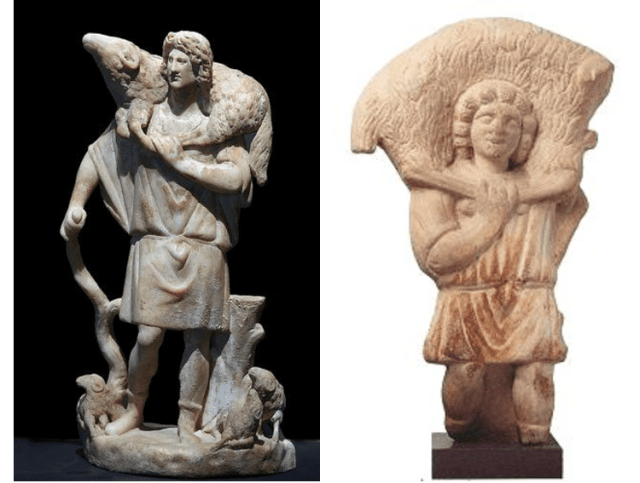


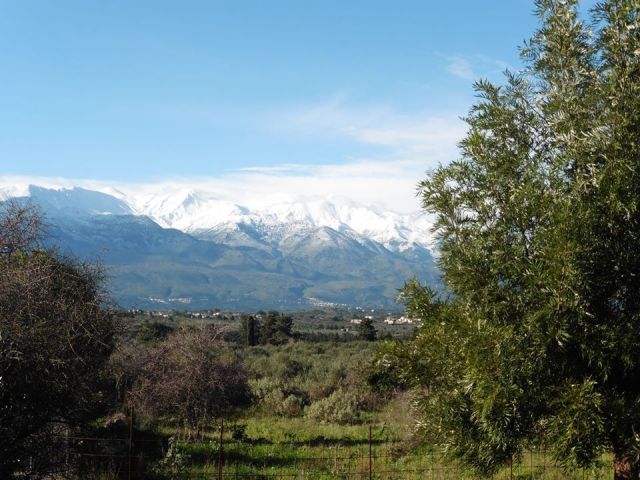
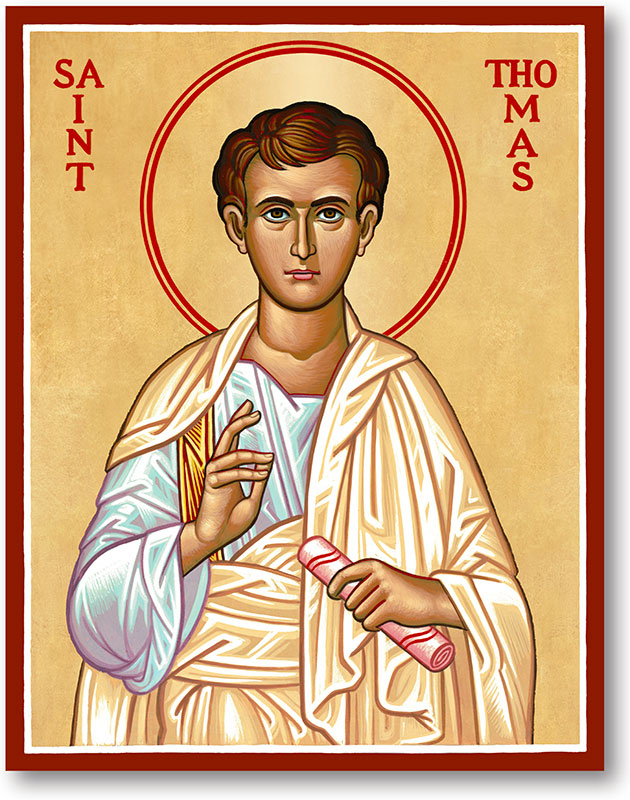

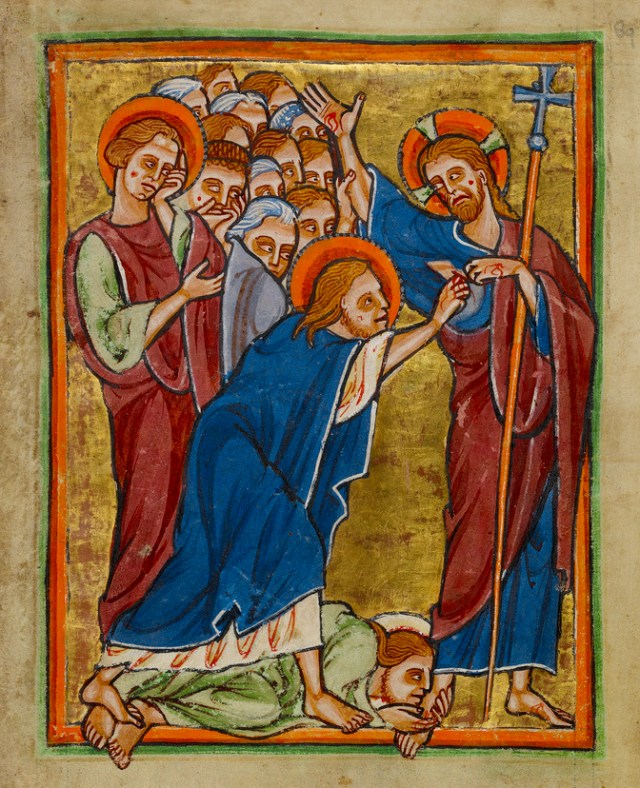
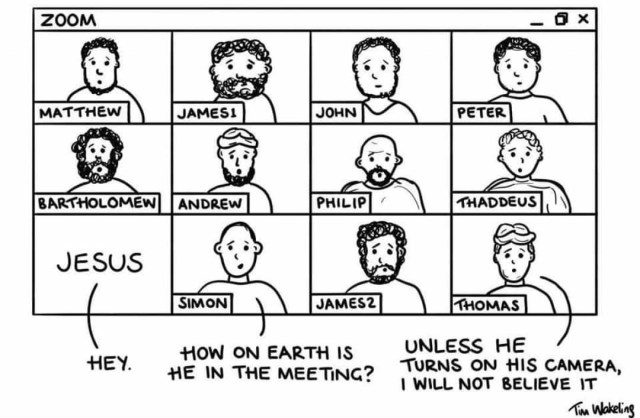

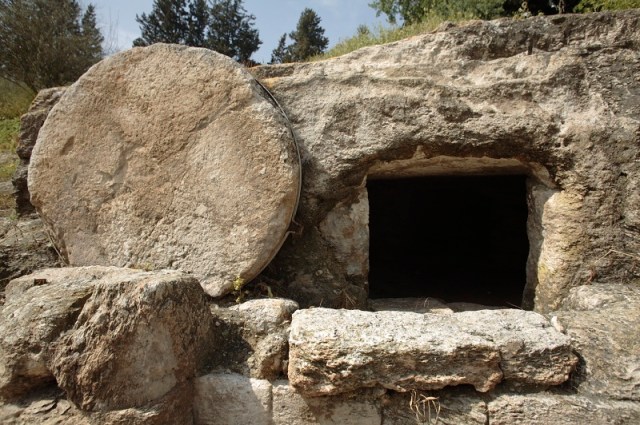
 An Age of Anxiety
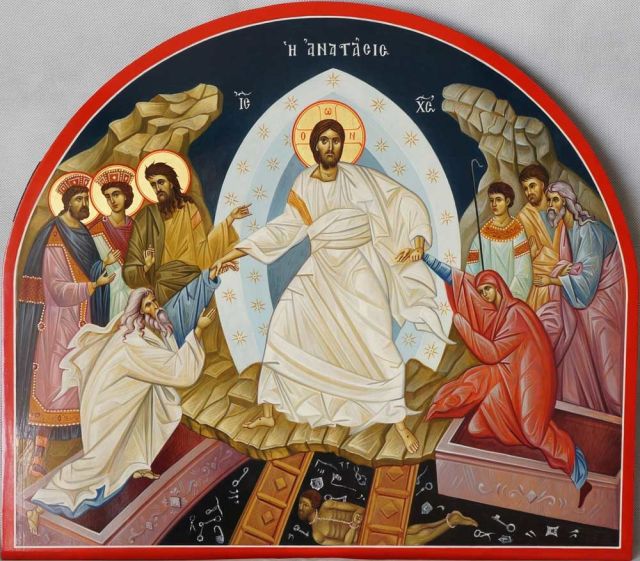 The Power of Resurrection Hope
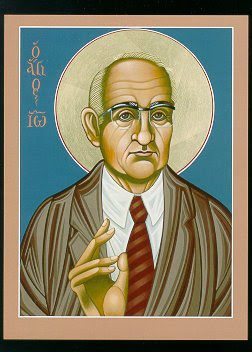 This idea of Sheol appears inconsistent with later Jewish beliefs in which people are rewarded with going to heaven and others condemned to hell, such as in the story of Lazarus and the Rich Man (Luke 16.19-31); these understandings are undoubtedly influenced by contact with Persians and early Zoroastrian beliefs, and fit uncomfortably with the early beliefs about Sheol. Balthasar discusses Augustine’s attempt to harmonize the account, so that Lazarus was in a higher level of Hell than the Rich Man.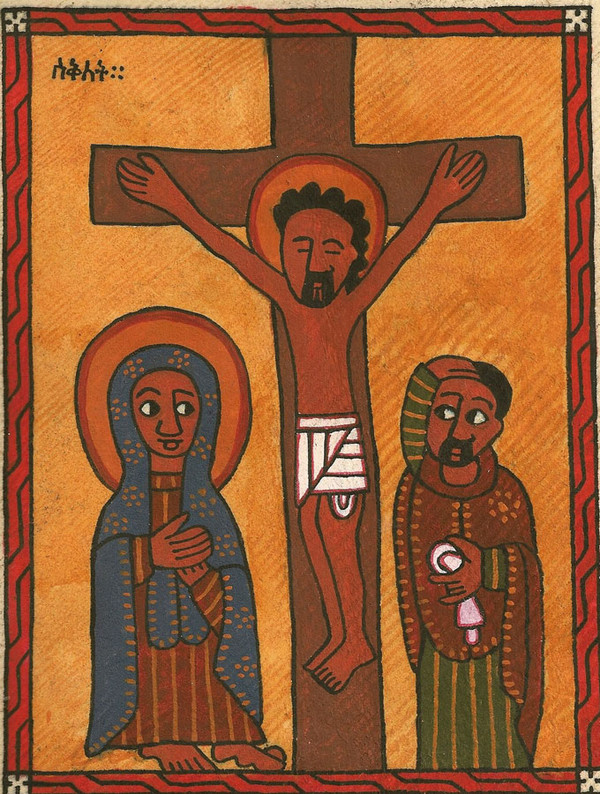
 I have read
 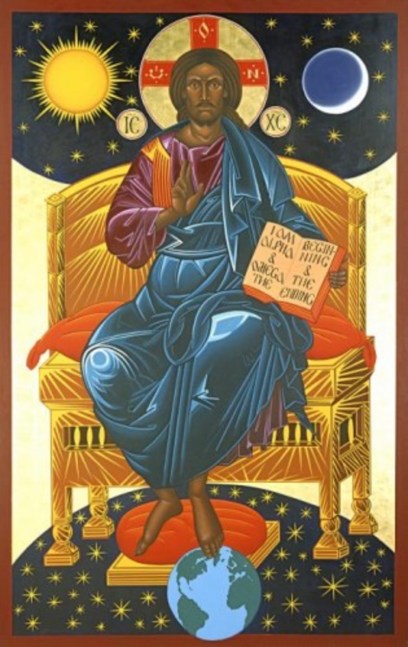 Another approach was discerned and recovered by
  To understand the real meaning of the cross, and to get at a real theology of atonement, we need to listen to those who have suffered. In the United States African-Americans have suffered greatly. Four hundred years ago they were captured and sold into slavery, transported across the Atlantic, and made to work in forced labour camps called “plantations”. Even after Emancipation and the Reconstruction Amendments to the Constitution they suffered, under the Jim Crow laws and segregation. As the late theologian


 The Island Parson