
These are resources for the Sixth Sunday after Trinity (the Seventh Sunday after Pentecost) on Sunday, July 19, 2020. The resources are gathered from a variety of sources and, while assembled mainly for The Anglican Church of St Thomas the Apostle, Kefalas, on the island of Crete in Greece, others may find them useful.

Marc Chagall (Russia, 1887-France, 1985). The Dream of Jacob, 1960-1966. Oil on canvas, 195 x 278 cm. National Museum of the Marc Chagall Biblical Message, Nice-France. ©ADAGP, Paris, 2012
Share
We had more problems last week with the Zoom live stream. The picture was freezing, the sound was distorted, some of the worship leaders could not be heard, and then, after an hour, Zoom stopped functioning. *sigh* As I wrote to a couple of people:
Currently we are working with one phone as an internet hotspot, another as a camera, and a computer as the control. This may not be the most efficient system in terms of data, nor does it necessarily give it the best sound and video. I am hoping that I will be able to have a conversation with consultant very soon about how we can improve the live stream.
One idea is to have a more stable internet connection, and whether Zoom is the best platform. Another is that we use microphones for readers and whoever is leading the service, all connected into some sort of a mixer that maintains sound quality, without being overwhelmed by the ambient sound of the cicadas.
For those who are willing to bear with us, you can join us via Zoom by clicking the link below, or enter the information at right into your Zoom app: Meeting ID: 850 4483 9927 Password: 010209:
https://us02web.zoom.us/j/85044839927?pwd=TkQ1cHEzNUNjSjVCNTNJVUJwSkZaQT09
If you are in Crete you can join us in person. We meet this coming Sunday, July 19, 2020 at 11:00 am EEST at the Tabernacle of the Church of St Thomas, Kefalas. People recently arrived in Greece should wear a mask and take care to be social distanced.
If you are unable to join us in person, or cannot join us via Zoom, then you can simply do it all yourself – read the lessons and pray the prayers below, as well as listen to the recorded sermon, and intersperse it all by clicking on the links to the hymns.
Read
The readings appointed for this coming Sunday according to the Church of England’s Common Worship lectionary and the Revised Common Lectionary are Genesis 28:10-19a, Psalm 139: 1-11, 23-24, Romans 8:12-25, and Matthew 13:24-30,36-43. As has been our practice, at St Thomas. Kefalas we will omit the reading from Romans and focus on the passage from Genesis.
Reflect
I will be posting my sermon again soon after I preach it. If I get it in time, I will post the pre-recorded sermon from Fr Leonard Doolan’s from St Paul’s, Athens.
Pray
Collect
Merciful God,
you have prepared for those who love you
such good things as pass our understanding:
pour into our hearts such love toward you
that we, loving you in all things and above all things,
may obtain your promises,
which exceed all that we can desire;
through Jesus Christ your Son our Lord,
who is alive and reigns with you,
in the unity of the Holy Spirit,
one God, now and for ever. Amen.
(or)
Creator God,
you made us all in your image:
may we discern you in all that we see,
and serve you in all that we do;
through Jesus Christ our Lord. Amen.
A Form of Intercession (From Litany 31, Common Worship Daily Prayer)
Save your people, Lord, and bless your inheritance.
Govern and uphold them now and always.
Day by day, we bless you.
We praise your name for ever.
Keep us today, Lord, from all sin.
Have mercy on us, Lord, have mercy.
We long for your salvation, O Lord:
grant us understanding, that we may live.
Lord, show us your love and mercy,
for we put our trust in you.
In you, Lord, is our hope:
let us not be confounded at the last.
I bid your further prayers and thanksgiving.
- I bid your prayers for the Church.
- For Robert Innes & David Hamid, our bishops;
- for Justin Welby our archbishop, Stephen Cottrell the Archbishop of York, and the General Synod of the Church of England;
- for the churches and peoples of Burundi, Democratic Republic of Congo, and Rwanda (World Council of Churches Ecumenical Prayer Cycle);
- for the Pray for the Episcopal Church in the Philippines and its Prime Bishop, The Most RevdJoel Atiwag Pachao (Anglican Cycle of Prayer); and
- (from the Prayer Diary of the Diocese in Europe) give thanks for:
- the Lusitanian Church, Bishop Jorge Pina Cabral.
- the Church of Denmark and the Evangelical Lutheran Church of Estonia.
- at the Diocesan Office in London remember the Operations and Finance functions:
- Diocesan Secretary (COO): Andrew Caspari;
- Office Manager: Bron Panter;
- Finance: Susan Stelfox, Nick Wraight;
- Board of Finance Chair: Mike Fegan; and
- pray for the financial needs of the Diocese (and give thanks for God’s provision).
- I bid your prayers for those in leadership:
- For Katerini Sakellaropoulou, President of Greece, and
- Kyriakos Mitsotakis the Prime Minister of Greece;
- for Elizabeth, Governor of the Church of England,
- and Boris Johnson, the Prime Minister of her British government;
- for the leaders of all the nations, and for all in authority.
- For Katerini Sakellaropoulou, President of Greece, and
- I bid your prayers for this village of Kefalas and all the villages and homes in the Demos of Apokoronas here on the island of Crete;
and for the cities, towns, and villages from which we come. - I bid your prayers for those who travel by land, air, or water,
and for all medical staff testing and tracing tourists;
for the sick and the suffering,
remembering the approximately 5 million active cases of the novel coronavirus;
for prisoners and captives,
especially the over one million Uigers being held in detention in China;
for refugees and migrants,
especially those on Lesvos and in other camps in Greece;
for their safety, health and salvation.
Almighty God, you have given us grace at this time with one accord to make our common supplication to you; and you have promised through your well-beloved Son that when two or three are gathered together in his Name you will be in the midst of them: Fulfill now, O Lord, our desires and petitions as may be best for us; granting us in this world knowledge of your truth, and in the age to come life everlasting. Amen.

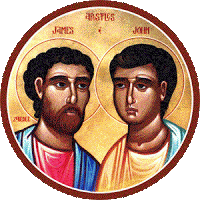 Even among his disciples there was conflict. James and John jockeyed for position in the kingdom of heaven. Peter contradicted Jesus about the necessity of his death, and was told. “Get behind me Satan!” Judas betrayed him.
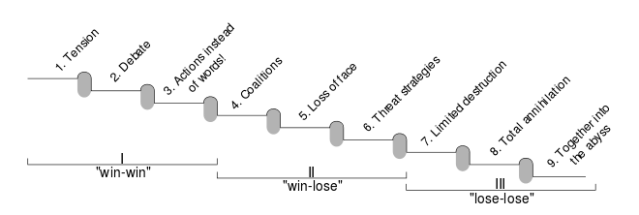
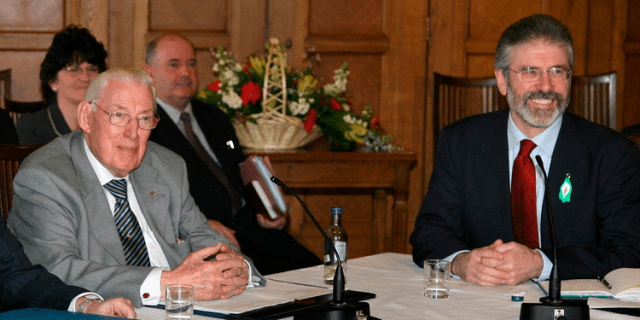
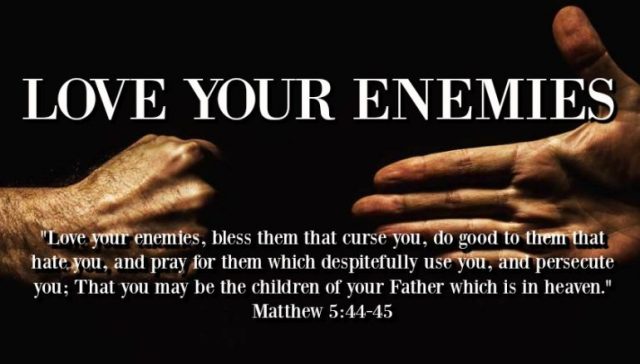
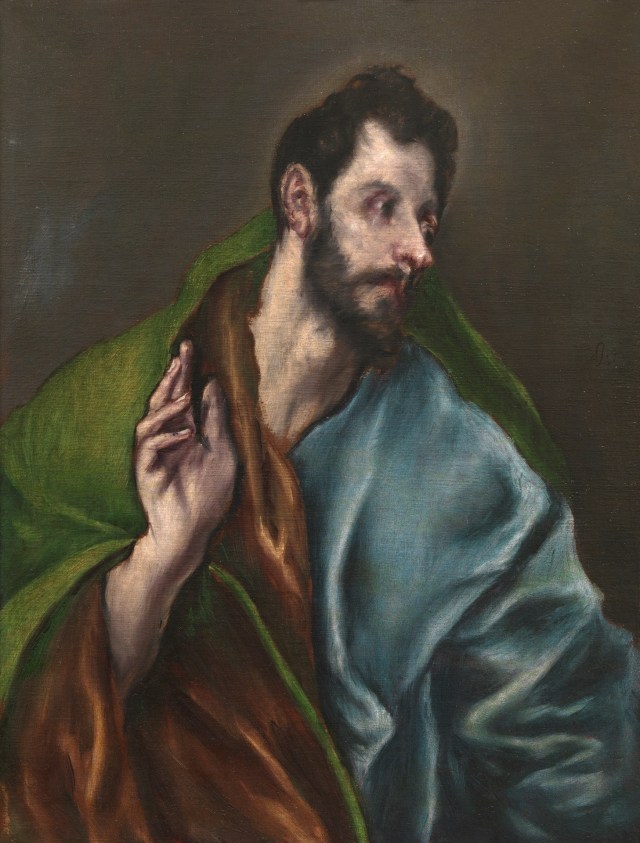
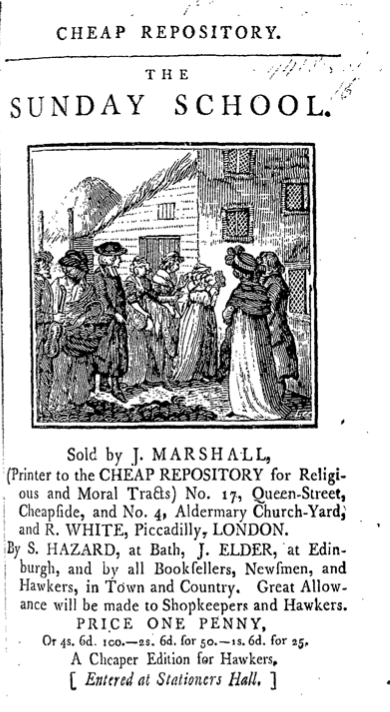 With the Reformation a focus was made on the laity as needing to be educated by the clergy. The Bible, through the miracle of the printing press, became more common and accessible. Starting in the 16th century, in the daily services of protestant churches large chunks of scripture were read. Beginning in the 17th century, peasants and labourers were taught to read in Sunday schools – Sunday being the only day they had off from work – and the text was always the Bible. The origin of Sunday Schools were not so much in religious education for children, but in teaching the lower classes. It is not an accident that Evangelicalism and various types of Protestants arose in the era, supported by ordinary people. Evangelical circles emphasized that ordinary Christians needed to accept Jesus as one’s personal Lord and Saviour. It is what Charles Wesley would call a warming of the heart, a realization that one was saved by one’s faith in Jesus, and that nothing could come between God’s love for us. In Baptist circles this would be evidenced by a testimony of what God has done for you, and then Baptism. In Charismatic or Pentecostal circles, it was evidenced by speaking in tongues, and other gifts of the Holy Spirit. The commitment of the believer was seen by extraordinary works and signs.
 I asked





 The Island Parson