
A sermon preached on 14 September 2025 at the Anglican Church of St Thomas the Apostle, Kefalas, Crete, Greece, a chaplaincy of the Diocese in Europe in the Church of England.
The readings were: 1 Timothy 1:12-17, Psalm 51:1-11, and Luke 15:1-10

In the movie When Harry met Sally (1989) Harry (played by Billy Chrystal) and Sally (played by Meg Ryan) have the following conversation at the wedding of their close friends Jess and Marie. Harry is the best man and Sally is the maid of honour. It’s important to know that Sally and Harry have had a falling out and haven’t spoken for weeks.
Harry Burns: You know how a year to a person is like seven years to a dog?
Sally Albright: Is one of us supposed to be a DOG in this scenario?
Harry Burns: Yes.
Sally Albright: Who is the dog?
Harry Burns: You are.
Sally Albright: I am? I am the dog? I am the dog?
I thought of this passage while reading the gospel this morning:
Which one of you, having a hundred sheep and losing one of them, does not leave the ninety-nine in the wilderness and go after the one that is lost until he finds it? . . . Or what woman having ten silver coins, if she loses one of them, does not light a lamp, sweep the house, and search carefully until she finds it?
In these scenarios, you are the coin, you are the sheep. In the Kingdom of Heaven God is portrayed in these two short parables as anxious and desperate, something I preached about nine years ago when I was the interim priest in charge at the Anglican Church of St John the Baptist in Cobble Hill, South Cowichan, on Vancouver Island in British Columbia. You can read what I preached then in the link, but today I want to focus on being lost.
We are the Lost Coin. We are the Lost Sheep.
There are so many ways in which we might consider ourselves to be lost.
Spiritually
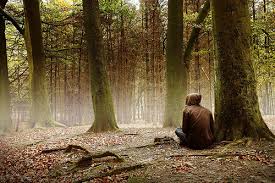
We might find ourselves lost spiritually, which is often the only way these two parables are read. Perhaps we have lost faith in God, or never had it. Perhaps we have lost the presence of God in our lives, as Mother Teresa experienced. Perhaps it is an intellectual problem leading to a spiritual one. Many divinity students arrive in theological schools with a naive idea of the scriptures, and are startled to encounter historico-critical methods that reveal the human nature of Biblical texts and call into question their inerrancy and infallibility; reconstructing a more complex understanding of divine inspiration in conjunction with an understanding of salvation being through belief in Christ and not in a particular understanding of scripture usually follows. Then again, perhaps we have experienced abuse in the church, and the way in which this abuse happened and the way it was dealt with by officers of the church may affect one’s faith. In the gospels the lost are often correlated with sinners such as sex workers, publicans, tax collectors, and so forth, although the elites, such as Pharisees and scribes, the Sanhedrin, and wealthy Jewish landlords, are often described as blind and misleading, although they believed themselves in the right. However, they may also be those who have been oppressed by the powers that be, including religious authorities. Through no fault of our own, we may find ourselves estranged from God. Thus, whether we are at fault or someone else has so traumatised us that we are removed from the divine, we are all lost and in need of being found by God. We believe that in Christ we are found – God takes the initiative and we respond.
Mentally
We may be lost mentally, through no fault of our own. Paul writes in his First Letter to Timothy
I was formerly a blasphemer, a persecutor, and a man of violence. But I received mercy because I had acted ignorantly in unbelief
Paul has a very clear view of what he was, and while his First Century context does not allow for him to psychologise himself, he understands the grace that he has received as something granted because he was just ignorant and unbelieving.

We may also be caught up in alcoholism or other addictions, which is a range of diseases that afflicts perhaps up to 25% of the population. It is hard to get spiritual when one’s highest power is alcohol, cocaine, or opioids.
We may be traumatised and perhaps have lost confidence in ourselves and others, and have developed behaviours that impede us accepting the good news and to trust in a generous God.
Politically
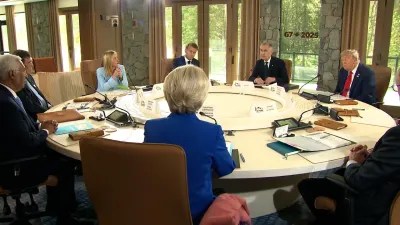
We may find ourselves having lost faith in the political systems and being filled with despair. Part of this is undoubtedly a function of both our traditional media and more recent social media. The traditional media always seemed predisposed to highlight bad news – “It it bleeds it leads” is an old journalistic adage. One only needs to have read the headlines of the London dailies to see how vituperative the authors and publishers can be. Likewise, social media takes up all the oxygen in the room with false news and conspiracy theories, and makes the old newspapers look gentlemanly in comparison.
And so we we are painfully aware of what is going wrong in politics and diplomacy, and of the human cost in lives and degradation. We do not hear the good news – the number of people that have been lifted out of extreme poverty, the general increase in wealth in the post-war era, or the extent to which violence in war has become the exception and not the rule throughout the world. Bad news generates passion and votes in a way that sunny messages do not, and so manipulative autocrats get people to act on their fears and not the better angels of their nature. And so perhaps we give up, failing to engage in civil action or even vote.
Environmentally
And associated with political despair is concern for the planet, something which seems to have disappeared in the past few years. Whether it is the rise of governments that deny climate change, or, as in my home country of Canada, regimes that seek to expand the sale and distribution of petroleum products, it is a depressing time. Here on Crete we see olive farmers having to harvest their trees earlier and in warmer climates. The snowfall on the mountains seems to be less and less, and the temperature in Athens in the summer seems to be climbing.
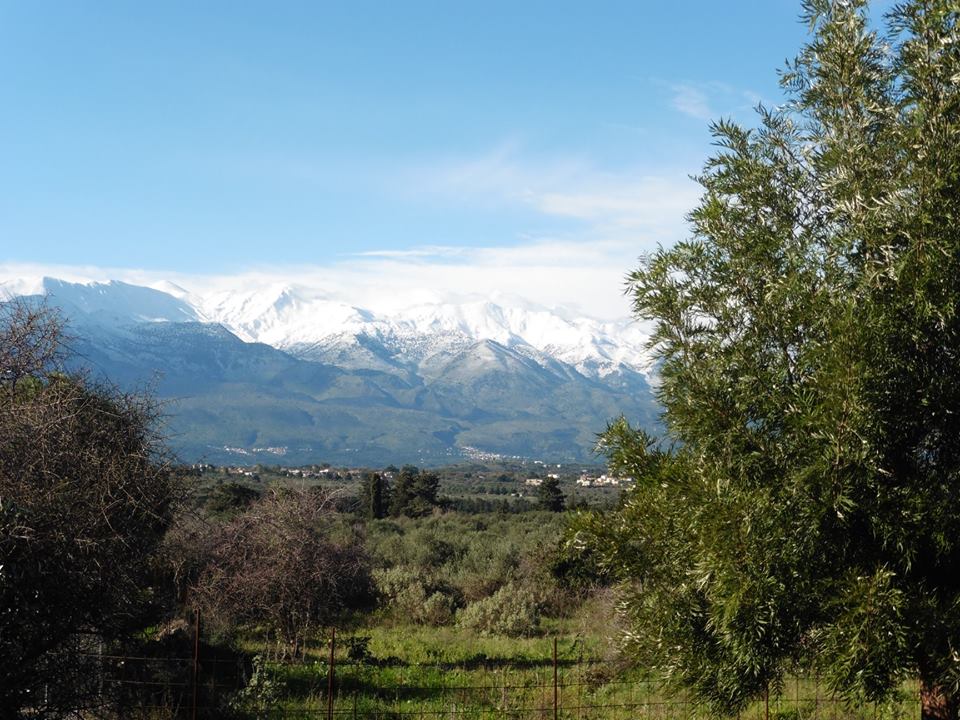
This environmental degradation has been going on a long time. We look out from this Tabernacle and see a beautiful scene of valleys and mountains, but the fact is we are looking at a view that has been transformed by human beings over the millennia. In the period of the Roman Empire the number one export was not olive oil, but lumber. We do not think of this island of Crete as being heavily forested, but it was, and the trees here served to build the apartments in Imperial Rome and the ships of the fleets that brought wheat from Egypt and North Africa. After the trees went, erosion wore down the soil, so that trees will no longer grow all the way to the tops of the mountains. The plains of Chania and Rethymno, which used to be fields with various grains such as wheat and barley, and now paved over with concrete for Cretans and tourists, creating situations that result in flash floods.
Physically

Of course, most of us here are older people and we may be entirely too caught up in the ravages of age. I spent three weeks earlier this year on sick leave, and some of us here are experiencing cancer in ourselves or in our close family. We literally do not bounce back like we used to, as I found out when I hurt myself jumping down from one path to another in Gibraltar in early March, resulting in a need for crutches. We eat the wrong things, carbohydrates and junk food, too much fat and sugar, and develop diseases such as Type II diabetes. We are far too sedentary. We may be lost in bad behaviours that we could get away with as young adults but are not reaping consequences in chronic conditions. Our environment plays into this, of course; microplastics are everywhere, including our brains, and we really have no sense of what effects they are having on us.
I Once Was Lost, But Now am Found

The good news is that despite all these ways of being lost, God is at work in the world and among us. God has not abandoned the world but in the person of Jesus Christ has come among us, and deigns to eat and drink with tax collectors and sinners. Every Sunday we are bidden to eat at his table and be refreshed for the coming journey, to hear his word and be inspired to be made new in the image of Christ. The Christian hope is an impossible hope, in taht it is rooted in the belief that Christ rose from the dead. It is a hope in the face of despair, and promise of being found despite the sense of being lost.
We believe that in Jesus God has already acted to rescue us from being lost politically, spiritually, physically, mentally, and environmentally. We are called to open ourselves to God’s healing grace and be made different from what we were. The Kingdom of this World is by no means the Kingdom of God, but as part of the Body of Christ we can begin the work of making it so, bot individually and collectively. You were a lost coin, but now you are found. We were lost sheep, but the shepherd has collected us. Heaven rejoices, and so should we.


 The Island Parson
Dear Bruce,
I just want to thank you again for sending me your sermons. They have substance and make me think—and they amply meet my test for a good (Sunday) sermon: can I remember it on Tuesday?
dpj
Thank you, sir! You are most welcome!