
A Sermon preached on The Twelfth Sunday after Trinity
at The Anglican Church of St. Thomas the Apostle, Kefalas, Crete
on the 27th of August 2023.
The readings were Romans 12:1-8, Psalm 124, and Matthew 16:13-20.
While written for the late summer, it seems appropriate to publish this thirteen days before Christmas, when many of us are scurrying around looking for gifts, and wondering what we might get from our loved ones.
Let us spend a little time talking about gifts. Gifts in general, in human society, and gifts as understood in Christian teaching.
Gifts are – pun very much intended – part and parcel of human society (see what I did there?). Some societies are grounded in gift-giving. The indigenous peoples in British Columbia and the northwest of the United States are such societies. Among the Tlingit, Tsimshian, Nisga, Kwakwakewakw, and Coast Salish there are great feasts at which leaders and celebrants will give out many things – canned fish, oolichan grease, copper shields, bracelets, rings, masks, carvings and paintings. Non-tangible things are given as well, such as dances and songs, Sometimes the feast is to celebrate the giving of a storied name to a chief who has earned her or his status. At other times it is to celebrate a marriage. The feasting is, as one would expect a something called a feast, surrounded by food, largely salmon and other local delicacies; at one feast I attended I had some sealion stew. It is not at all unusual for well over a hundred people to attend, and for the hosts to prepare for over a year. The amount one gives away is correlated to one’s status. With the arrival of Europeans in the 19th century the resources available to be acquired and given away expanded, and the feasts became much greater events than before contact. The way in which some of the leadership seemingly impoverished themselves so shocked British and American officials and missionaries that in the early 20th century they banned the potlatch, as they called the feasts. In the past seventy-five years they have been restored as a central part of these First Nations’ culture, and it is an honour for an outsider to be invited, as I was.

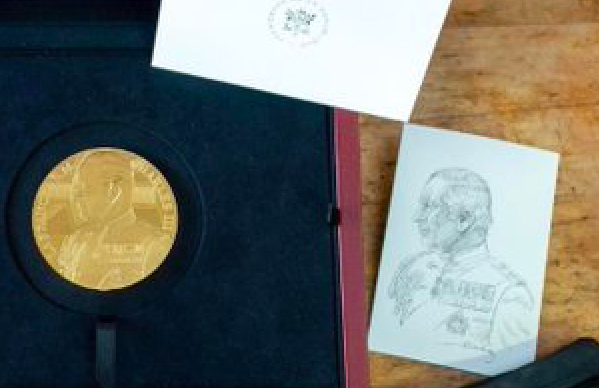
We see gift-giving in Western and international societies. Doweries used to be very important, and still, in marriage engagements, a ring is offered, and at marriage rings are exchanged. Bridal showers and wedding gifts remain a thing. At summits and in diplomatic meetings gifts are exchanged, and much attention is paid to whether the gift is just right, and whether a snob is intended or the proper respect is being paid. And then there is Christmas, where the duty to buy presents seems to have more to do with keeping the economy going than generosity.
In some Continental philosophy the gift became an important issue. Is it a gift if we are tied up in expecting it to be reciprocal? Do we require thanks? Is it really a gift if the present comes with strings attached? If we look a gift horse in the mouth, are we truly grateful? Obviously in this kind of thinking we are a long ways away from coastal British Columbia.
Christian gifts can be looked at few ways. First, there is the gift of creation and of our existence, and the challenge of what to do with our lives. Then there is the gift of redemption, in which God in Christ reaches out to us in a freely offered self-sacrifice and letting go, and invites us into the mystery. When Paul uses the word “gift” or χάρισμα he is usually thinking of spiritual gifts, and a non-exhaustive list includes:
- faith;
- prophecy;
- leadership;
- diligence;
- encouragement;
- ministry;
- teaching;
- compassion;
- cheerfulness
- tongues;
- discernment;
- interpretation of tongues;
- powerful acts;
- hospitality;
- and the crafting of things
As you hear me listing some of these you might be thinking, well, so-and-so has always had that gift. Well, perhaps so, but the gift that they have naturally is no less a gift of God from being there from birth or childhood. And, some people, in coming to faith, receive gifts of compassion that leads them from self-concern to being concerned for others. It’s like the so-called Prayer of St Francis:
Lord, make me an instrument of your peace.
Where there is hatred, let me bring love.
Where there is offence, let me bring pardon.
Where there is discord, let me bring union.
Where there is error, let me bring truth.
Where there is doubt, let me bring faith.
Where there is despair, let me bring hope.
Where there is darkness, let me bring your light.
Where there is sadness, let me bring joy.
O Master, let me not seek as much
to be consoled as to console,
to be understood as to understand,
to be loved as to love,
for it is in giving that one receives,
it is in self-forgetting that one finds,
it is in pardoning that one is pardoned,
it is in dying that one is raised to eternal life.
We pray this to God not because we have never done these things, but because if we are to continue to do them consistently we need the power of Holy Spirit within us and the gracious favour of God to persist and do the right thing. If we rely on ourselves and do not look to Jesus, we are liable to go off track, make compromises, and fall into self-justification.
What I notice is that when someone has identified their spiritual gifts, they realise that this is what they are really passionate about. We get the spiritual gifts we need to fulfill our Christ-like calling.
So, my friends, if you have not already done so, consider what gifts God has given you, and make your lights so shine that others may see your good works, and give God glory.


