
This is a remarkably poorly named blog post, as I will not actually be discussing Wittgenstein and Levinas and their approaches to language until the post after the next one. My previous post was perhaps even more poorly named, as I barely mentioned the two philosophers, and instead talked about the courses I took at the University of Toronto. Well, at least in this one I eventually get around to talking about what the gentlemen have in common. In Part Two Section B (the next post) I will talk about their differences, especially the philosophical traditions from which they came and helped to form. Sections A and B of this Part Two will frame the post after the next one.
But first, more about me. Let me summarise what I think I learned from my career in philosophy.
An Education of Limitations
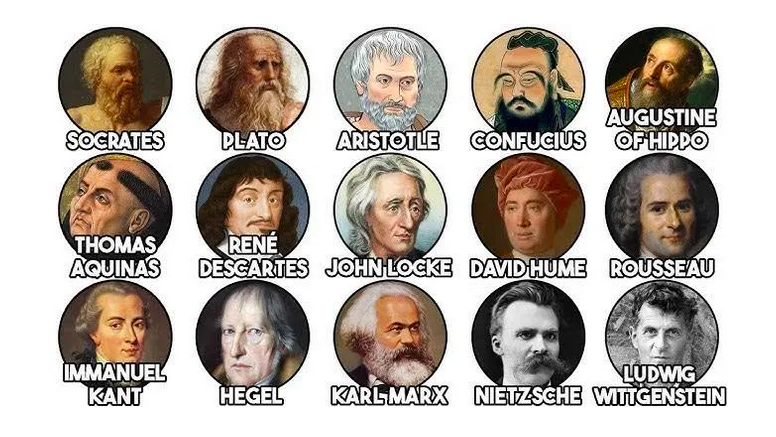
As one looks at the history of western philosophy from ancient Greece to modern times, a shift in the basic questions emerges. In the Pre-Socratics the dominant question was, “What is the world made of?” various answers came back, such as water, atoms, or observations about the ever-changing nature of the cosmos. The interesting thing is that the inquiries did not look to the gods of the Olympian pantheon, but to reasoning about things based on experience. In a sense, this was a proto-scientific method, although the Greeks did not advance to understanding how to do experiments.
With Socrates things shifted, as he asked, “What do we know?” Most of the time the answer came back that we know less than we think. Notoriously, Socrates challenged others who thought they knew what a concept or word was, and often left them confessing that they were wrong and that the natter was much more complex than they first admitted. His student, Plato, began to believe that we do know things in this world, but that they were shadowy impressions of ideals, such as Justice, the Good, Love, numbers, and so forth. Aristotle – Plato’s student – broke with his teacher and believed that while one could abstract the essence of a thing from our material world, there was no more-real world of forms or ideals. Aristotle (or his note-taking students) also wrote voluminously about everything, from biology to physics and theology (which, being the book that came after “Physics” in the manuscripts, was called “Metaphysics” or “after-Physics”). The key thing about Plato and Aristotle is that they gave a kind of reality to essences and causes, a way of thinking about things that dominated the next 2500 years. What is the meaning of a word? It will be found in its essence. Despite the plethora of philosophical ideas that followed, it can be argued that western society was dominated by a concern with metaphysics and how that leads to ethics and the good life.
Descartes shifted things dramatically with his Meditations. After him the issue became one of epistemology – how do we know things? Do we know things by reason alone, or can we know things by sensations. His use of doubt and intuition raised the value of certainty in philosophy to new heights. The Empiricists, the Rationalists, Kant, and Hegel all viewed epistemology as the foundational philosophy. This has come down to us as a series of puzzles – how do I know that another person has a mind like mine? What is the relationship between the words and ideas in my mind and the material world around me? What kinds of propositions are true, and what are nonsensical (or unproveable)? What is the relationship between my mind and my body? Are things like art and ethics utterly subjective, or is there some sense in which we can distinguish values within them? Is there any meaning to human life, or it is utterly absurd?
By the time I finished my degree in 1984 I was not particularly taken with the direction of modern philosophy in the Anglosphere. Frankly, it seemed quite depressing and uninspiring. It helped me think things through, and I became unknowingly adept at the old Jesuit maxim, “Never deny, rarely affirm, and always distinguish.” At least I learned how to write an essay, as I started getting some good grades in the last two years. However, I was drawn more to religion and the life of the Spirit, and found myself in the community of the followers of Jesus. But more about that later. On to Ludwig and Emmanuel.
Parallels
There are good online biographies on both philosophers, such as here in Wikipedia and also at the online Stanford Encyclopedia of Philosophy (“SEP”) for Wittgenstein, and here in Wikipedia for Levinas and here in SEP for him. Rather than repeat what is written there and in the many books about the two, I will simply highlight some things.
There are some interesting parallels between them.
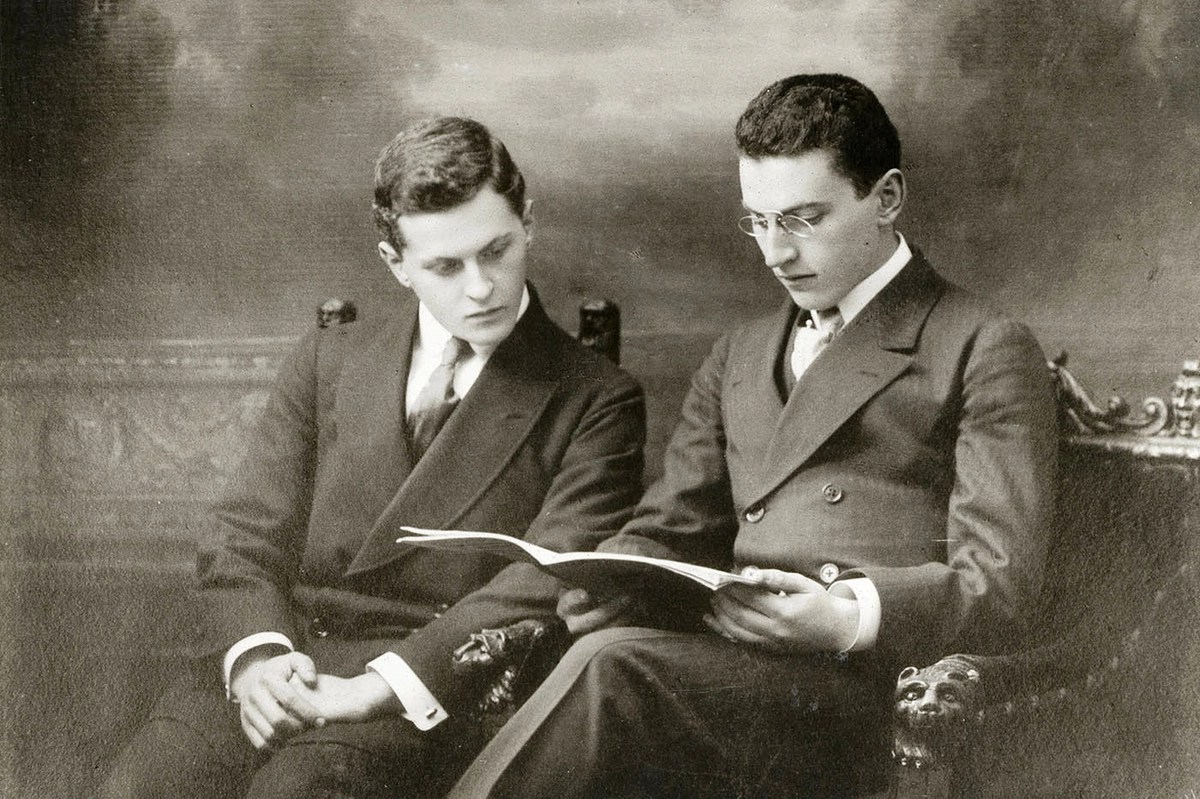
- Both were born in empires that ceased to be after World War One. Wittgenstein was born in Vienna in 1889, which was then the capital of the Austo-Hungarian Empire. After the Great War the Austro-Hungarian Empire broke up into Austria, Hungary, Yugoslavia, Czechoslovakia, and parts of it became Poland, Italy, and Romania. By default, as a man from Vienna, he became part of the new republic of Austria. Likewise, Levinas was born in the Russian Empire, in Lithuania, and his family found refuge from the fighting of World War One in Karkhiv, in Ukraine. After the war ended they returned to the new Republic of Lithuania.
- Both studied outside their home countries. Wittgenstein first studied mechanical engineering at the Technical University of Berlin (1906-1908), and then did graduate work in aeronautics at the Victoria University of Manchester (19908-1911), and finally at the University of Cambridge to work with Bertrand Russell on the philosophy of mathematics and logic (1911-1913). Levinas went to Strasbourg in the recently recovered French province of Alsace-Lorraine (1923-1930), to study philosophy, and spent one eventful year(1928-1929) at the University of Freiburg-in-Breisgau, where he said, “I went for Husserl, but found Heidegger.”
- Both functioned in languages other than their native ones. While Wittgenstein wrote his major works in German, he lectured and taught at Cambridge in English. Levinas was even more of a linguist, growing up speaking Russian, but learning Lithuanian, German, Aramaic, Hebrew, and French. His major essays and books were all in French.
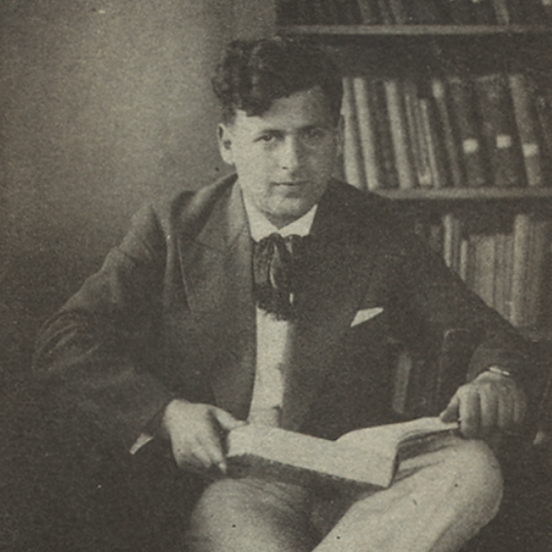
- Both were immigrants and became citizens of their new home countries in 1939, Wittgenstein of the United Kingdom, and Levinas of France.
- Both served in the military and spent time in Prisoner of war camps, Wittgenstein in the First World War with the Austrian army, and Levinas in the Second World War with the French army. Wittgenstein was captured at the beginning of November 1918 on the Italian front, and spent nine months as a prisoner. Levinas spent most of the Second World War war, from 1940 to 1945, in a German camp for French Jewish military, where he spent most of his time chopping wood. Wittgenstein was too old to fight in the Second World War, and by then he was in the United Kingdom. He served in a couple of civilian roles in hospitals.
- Both were ethnically Jewish. Three of Wittgenstein’s grandparents were of the Jewish faith, although by Ludwig’s time they had been Roman Catholic Christians for three generations. Levinas was raised in a semi-assimilated Jewish household, speaking Russian at home but attending synagogue and finishing his secondary education at a designated school for Jews. His primary reason for studying in France was the Dreyfus Affair, thinking that it was worth living in any country that could do such self-criticism around the persecution of a Jew.
- Both contrasted Greek philosophy with Hebraic thinking, seeing the former as eschewing transcendence and the latter as embracing spirituality as a way of life.
- Both had professional pianists in the family. Levinas’s son is Michaël Levinas (b. 1949), who is both a concert musician and a composer. Paul Wittgenstein (1887-1961), Ludwig’s older brother – the one who did not commit suicide – is perhaps best known for having commissioned piano works for one hand, after losing his right arm in the Great War; perhaps the best known is Ravel’s Piano Concerto for the Left Hand (1930).
- Both were school teachers. After the Great War Wittgenstein taught elementary school children, from 1920 to 1926. After receiving his doctorate, Levinas taught at a Jewish High School in Paris, l’École normale Israélite orientale, eventually becoming the principal; this school also functioned as a Normal School, training Jewish French teachers to go and work across North Africa and the eastern Mediterranean.
- Both read the Russian classics of Tolstoy and Dostoevsky, and each was influenced by them, albeit in different ways.
- Both are best known for two major works. Wittgenstein published little, but in his lifetime he was best known for the Tractatus Logico-Philosophicus (1921) and after his death his students edited Philosophical Investigations (1953). Levinas published voluminously, but he is best known for Totality and Infinity: An Essay on Exteriority in 1961 and in 1972 Otherwise than Being or Beyond Essence. It is often claimed that Wittgenstein developed a completely different philosophy to his Tractatus, but his later philosophical work can be understood better as a reframing of what he tried to do in the Tractatus, which so many readers seemed to misunderstand. Likewise, Otherwise than Being restates the basic themes of the earlier book, but does so in a way to respond to the critique of Jacques Derrida in his long essay on Levinas Metaphysics and Violence.
- Both have been very misunderstood.


 The Island Parson