
In these forty days from Ash Wednesday to Easter we are invited “to observe a holy Lent by self-examination, penitence, prayer, fasting, and almsgiving, and by reading and meditating on the word of God.” As part of my Lenten discipline this year I intend to do some writing, which may fall into the categories of “self-examination” and “meditating on the word of God”, although some might see this as a bit of a stretch. Almost two years ago I went on a retreat to the Community of the Sisters of the Church in Gerrard’s Cross, Buckinghamshire, England, about an hour’s drive west of London. In my retreat discussions with Sister Hilda Mary CSC it was suggested that I should write out some of the things I was talking about, which were largely about my particular approach to faith in Jesus Christ and the triune God.
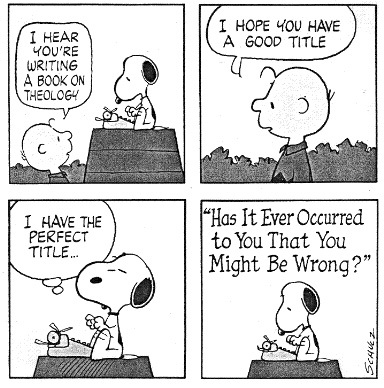
So that is what I intend to do. This will be theology, but not a systematic theology, because I am wary of grand narratives that seek or claim to explain everything, which is the impression I get whenever I see something that has the title of “systematics”. While impressed by theologians like Thomas Aquinas with his two Summas, or Karl Barth with Church Dogmatics, I tend to approach the Christian faith from various directions and perspectives. Perhaps we could call this Unsystematic Theology, in that I do not see any overarching idea whose implications are thought through the various fields of Christoan thought. Or, perhaps, Eclectic Theology, because it draws here and there in the tradition. Sarah Coakley, the English theologian who has taught in both the UK and in the USA, if I remember correctly, describes systematic theology as that which relates one theological idea or set of ideas to one another. I think I do try to do that, although I am pretty sure that I have not adopted her approach of theologie totale.
Here are some of the things which I want to write about:
- How the two philosophers Ludwig Wittgenstein (1889-1951) and Emmanuel Levinas (1906-1995) overlap when it comes to their understanding of language, and what that might mean for God-talk.
- Does God have a mind, or is that simply more anthropomorphism? If the latter, what, then, does it mean to say that God “thinks this” or “desires that”? What do we understand about the will of God? Is God “personal”? (You can see how one’s philosophy of language may be important).
- How does the uncreated Divine interact with Creation?
- How do I come to know God’s will for me?
- In our post-enlightenment world where science has given humanity great power without requiring the concept of God, why should anyone bother with Christianity (or any other religion)? Or, to put it another way, how can one be a Christian in an individualistic, secular age?
- To what extent can we rely on the Scriptures? If we use historico-critical methods, can we still have faith that Jesus said anything other than “Amen” and “Abba”?
- How do we resolve ethical disputes, such as the equality of women within the church and society, racism against people who are different from us, discrimination on socioeconomic grounds, and providing redress or reparations for the harms done in colonialism (including slavery, taking land from indigenous peoples, and attempting to assimilate or kill off indigenous peoples)?
- How does matter and the spiritual relate? If both are created, is there really any distinction? Is everything just matter?
These probably sound rather abstract, but they are the kinds of things somebody with four degrees in philosophy, divinity, and theology will think about. We’ll see if I get anywhere.


 The Island Parson