
A sermon preached on 14 September 2025 at the Anglican Church of St Thomas the Apostle, Kefalas, Crete, a chaplaincy of the Diocese in Europe, Church of England. The readings were: 1 Timothy 2:1-7, Psalm 113, and Luke 16:1-13.

And I tell you, make friends for yourselves by means of dishonest wealth so that when it is gone, they may welcome you into the eternal homes . . . No slave can serve two masters, for a slave will either hate the one and love the other or be devoted to the one and despise the other. You cannot serve God and wealth. Luke 16:9, 13.
Many years ago I read this passage as the gospel at St Peter’s Church on North Pender Island, and I have no memory of what I preached about, but I do recall that at the church door after the service one of the prominent parishioners questioned the translation. “Is it really dishonest wealth?” he asked, and I said, “Well, in the original Greek it appears to be dishonest mammon, which seems to be an Aramaic word that stands for money.” Of course, he wasn’t asking about the translation of the word mammon as wealth, but of the word “dishonest”. Was wealth really dishonest? Not that riches could not be abused, but do they not represent the power to do things and benefit people? Wealth was perhaps best regarded as neutral, and what one did with it was the issue. If one was corrupted by the power of great wealth, that said more about the individual rather than money as such.
And there is something very attractive about wealth, right? In Canada I spent nine years as a member of the Pension Committee of the Anglican Church of Canada, overseeing some CAD $800 million of assets. I was quite chuffed with that. When I moved to the Church of England it was suggested to me that I could become a member of the Church Commissioners, who oversee some £11 billion. That sounded quite interesting to me, and so when a vacancy opened on the Board of the Church Commissioners for a member of General Synod I submitted my name and qualifications . . . and in the election I came dead last, something like fourteenth out of fourteen. Oh well so much for my designs on administering great wealth.
Have you heard of the Church Commissioners before? If you are a member of the Church of England, you probably should know something about them. According to the Wikipedia article on them,
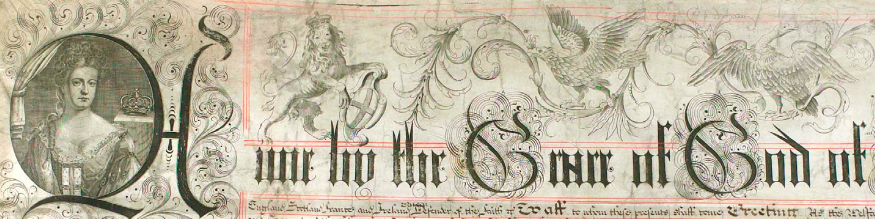
The Church Commissioners is a body which administers the property assets of the Church of England. It was established in 1948 and combined the assets of Queen Anne’s Bounty, a fund dating from 1704 for the relief of poor clergy, and of the Ecclesiastical Commissioners formed in 1836. The Church Commissioners are a registered charity regulated by the Charity Commission for England and Wales, and are liable for the payment of pensions to retired clergy whose pensions were accrued before 1998 (subsequent pensions are the responsibility of the Church of England Pensions Board).
The website at the Church of England highlights the following key numbers:
- There are 33 Commissioners.
- They manage £11.1 billion in assets
- They have committed to distribute £1.2bn to the Church of England in the current funding period (2023-25). This distribution is managed by a subcommittee of the Archbishops Council, with consultation from General Synod.
- The Church Commissioners for England contribute towards around 20% of the annual running costs of the Church of England.
Now, I think there may be a connection with the Parable of the Dishonest Steward and the issue of dishonest wealth. Questions arose in the past couple of decades about where the wealth of the Church Commissioners came from. Queen Anne’s Bounty was created in 1704 by parliament during the reign of Queen Anne (you may remember she was played by Olivia Coleman in the 2018 movie The Favourite, a somewhat unhistorical representation of the monarch). The original income was based on the annates monies: ‘first fruits’ (the first year’s income of a cleric newly appointed to a benefice) and ‘tenths’ – a tenth of the income in subsequent years. The money was invested and the income used to augment the incomes of clergy in poor parishes. Essentially, then, it was a program of income redistribution. By 1815 it was supplementing the income of some 3300 parishes in England and Wales.
It was in the investments, perhaps, that the monies became dishonest, for it was found after investigation by historians that that by 1777, Queen Anne’s Bounty had investments worth £406,942 (potentially equivalent to around £724m in today’s terms) in the South Sea Company, a company that transported slaves. The results of the investigation were published in 2023 as Church Commissioners’ Research into Historic Links to Transatlantic Slavery. The report estimated that the South Sea Company transported 34,000 slaves “in crowded, unsanitary, unsafe and inhumane conditions” during its 30 years of operation. As well, Queen Anne’s Bounty received donation from wealthy benefactors, many of whom made their money through the slave trade or the labour of enslaved persons in the Caribbean and British North America. It is thought that the South Sea Company transported some 34,000 slaves from Africa to South America, the Caribbean, and the British colonies in North America. The conditions of transportation were crowded and unsanitary, with a high mortality rate.
This means that something like 8% -10% of the assets of the Church Commissioners is derived from the unethical exploitation of enslaved human beings. What are we to do with this money? Is it right for us today in the Church of England to benefit from slavery two centuries ago?
The Church Commissioners judged that it was not. As a result they have decided to set up a fund to eventually be of some £100 million, and the income from that fund will be used to fund projects that would aid communities harmed by transatlantic chattel slavery. They are inviting other organisations who have similar histories to join with them, perhaps building the fund up to one billion pounds sterling. Now, I do have concerns about this endeavour, now named “Project Spire.” I am concerned that the Commissioners continue to control the funds, and I want to know what the criteria are for accepting applications for grants. I want to know where those grants are going – just the UK, or also in the Americas and in Africa? How will the Commissioners ensure that the grants are used for the intended purposes? Is £100 million enough? However, I laud the intention and wait with patience for the details.
Of course, there has been some push back. A few conservative historians in the UK, the type that argue that there was nothing wrong with British Colonialism, have called into questions the methodology of the forensic accountants and historians in the above-mentioned report. Questions were asked in Parliament. The Commissioners and the people who did the actual research have defended their work and approach, arguing that their critics.
In continuing to make false claims, refusing to correct mistakes, and cherry-picking arguments, our opponents seem tone-deaf to the theological underpinnings of our moral obligations. Our work focuses on how a faith-based, Christian investor addresses the issue of historic links with a crime against humanity that continues to impact our society to this day. Our critics frame this as a culture war issue — in truth, we are acting in faithful service of the Gospel. (Church Times July 11, 2025)
I strongly believe that as a Church we need to be aware of where our resources come from, and be careful in its administration. As an institution that has been around for twenty centuries we have a lot of baggage. The point of Project Spire is not to make anybody guilty, but to be responsible, and to answer the question, “Given what we know, what is our responsibility?”
This takes me back to the familiar parable of the Good Samaritan. There is an interesting shift in the rhetoric in the story. The person approaching Jesus asks him, “Who is my neighbour?” Jesus turns it around and says, “Which of these three proved a neighbour to the man in the ditch?” Obviously it was not the priest or the Levite, but the Samaritan. Jesus says, “Go and do likewise.” Rather than try to limit our responsibility, we need to ask how we are to be good neighbours. Continuing to benefit off the trauma of slavery is not one of them.


 The Island Parson