
A Sermon Preached on the 14th Sunday after Trinity in the Season of Creation
at
the Anglican Church of St Thomas the Apostle, Kefalas, Crete, Greece
on September 1, 2024, 11:00 am.
The readings were: James 1:17-27, Psalm 15, and Mark 7:1-8, 14-15, 21-23.
Purity and Grace
The theme in the readings today all relate to purity and impurity, grace and behaviour, true religion and faithless, false unrighteousness.
- The passage from the Letter of James focuses on the behaviour of Christians – “let everyone be quick to listen, slow to speak, slow to anger; for your anger does not produce God’s righteousness.” This is accomplished through “the implanted word that has the power to save your souls.” Thus, “Religion that is pure and undefiled before God, the Father, is this: to care for orphans and widows in their distress, and to keep oneself unstained by the world.” James writes that Christians are to “be doers of the word, and not merely hearers”. Later, he writes that “faith without works is dead.”
- Psalm 15 describes those worthy of entering the Tabernacle and of going up to God’s holy hill as being “Whoever leads an uncorrupt life
and does the thing that is right;
Who speaks the truth from the heart
and bears no deceit on the tongue.
Who does no evil to a friend
and pours no scorn on a neighbour;
In whose sight the wicked are not esteemed,
but who honours those who fear the Lord.
Whoever has sworn to a neighbour
and never goes back on that word;
Who does not lend money in hope of gain,
nor takes a bribe against the innocent . . . - The passage from the Gospel of Mark has Jesus telling his fellow Galileans, challenging the Pharisees and scribes from the Judeans, about what makes a person defiled. It is not the washing of hands or implements so much as what comes out of one’s heart: “fornication, theft, murder, adultery, avarice, wickedness, deceit, licentiousness, envy, slander, pride, folly.”
Now, all of this can be quite challenging. As Paul said in Romans 3:23, “All have sinned and fallen short of the glory of God,” and while I suspect few of us here are truly evil, all of us can identify some way in which we have fallen short. Riffing off of James, I know that I have been slow to listen and quick to speak in anger. I confess that I have not thought much about orphans and widows this week. While mostly honest, I may have been deceitful in some small ways, both to others and to myself. There are always things we have left undone that we ought to have done, and things we have done which we ought not to have done. We have sinned against our neighbour and our God. That is why we usually begin each service here , after the opening hymn, with a confession of sin.
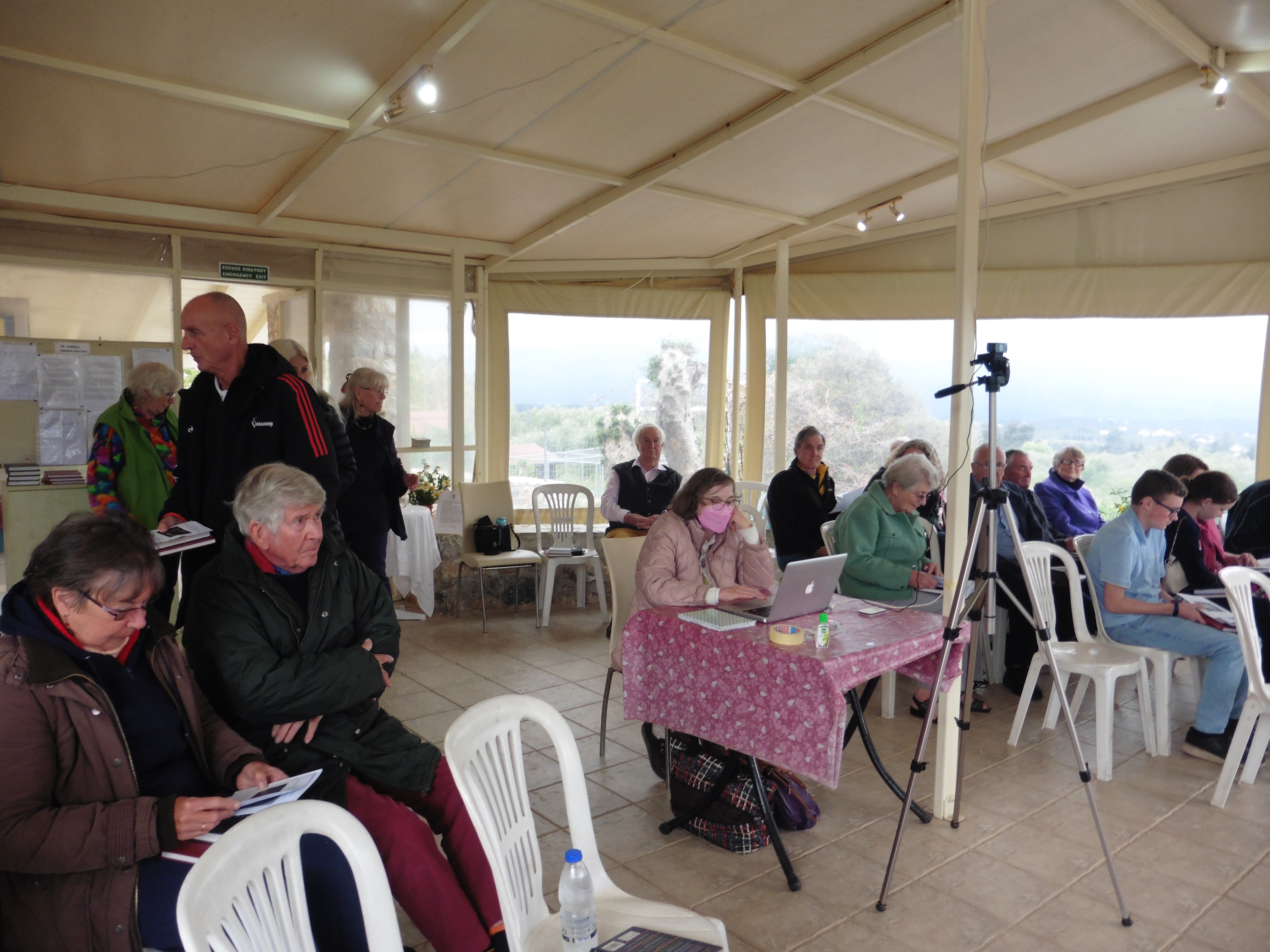
We come here, to this 21st Century Tabernacle in this little Greek village, not out of any conviction about our righteousness or purity, but because we trust in the mercy and goodness of God. We have gathered here not so much as a collection of holy saints as students in a school for sinners, in need of forgiveness and sanctification. We come together to become the Body of Christ not on our own merits but in the goodness we bring as having been created in the image of God and now being recreated in the image of God’s beloved risen Son. We are saved not by our own efforts but by the unmerited free gift of God, offered to us in the sacrificial life and death of Christ Jesus.
So much so far is familiar. The good news is that as we walk through life we boldly put our hand into that of Jesus, and we act knowing that we will be forgiven for sins confessed, unintended errors, and unexpected bad consequences.
And the paradox is that, although we cannot help ourselves, we are nonetheless exhorted to holy action, true religion, and good deeds. Martin Luther, building on St Augustine, famously understood that we are saved, not by works, but by the faith of Jesus Christ. James suggests otherwise – that our faith without works is dead. For this reason Luther did not like the Letter of James, and even thought about excluding it from his translation of the Bible (until he admitted that was not his decision to call). It is not really either/or but both/and – it is both the faith of Jesus Christ and the behaviour that flows from that.
Forestry
So, now I am going to take a sharp ninety degree turn.
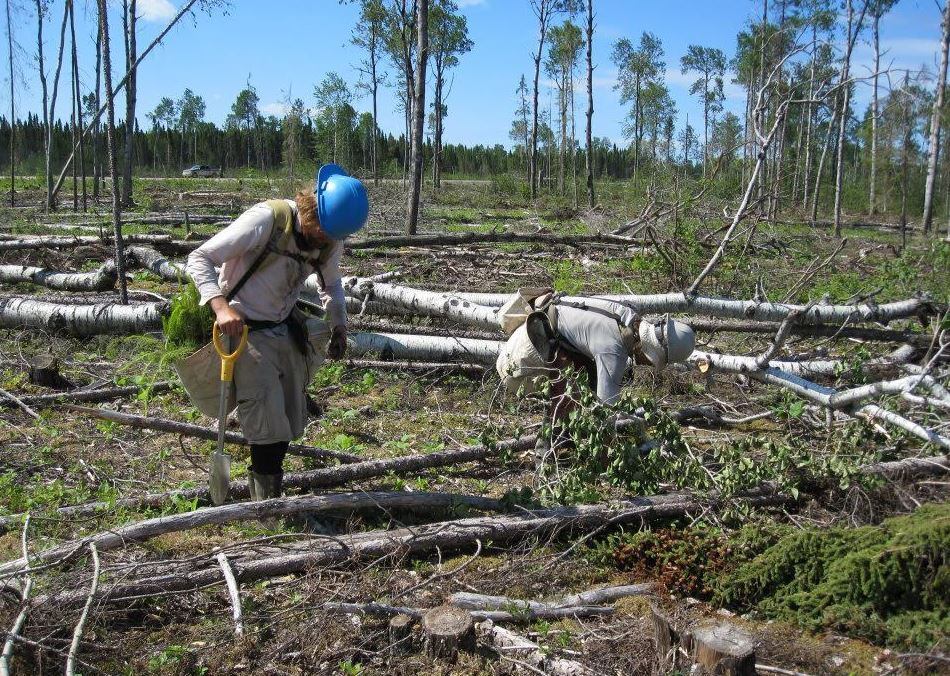
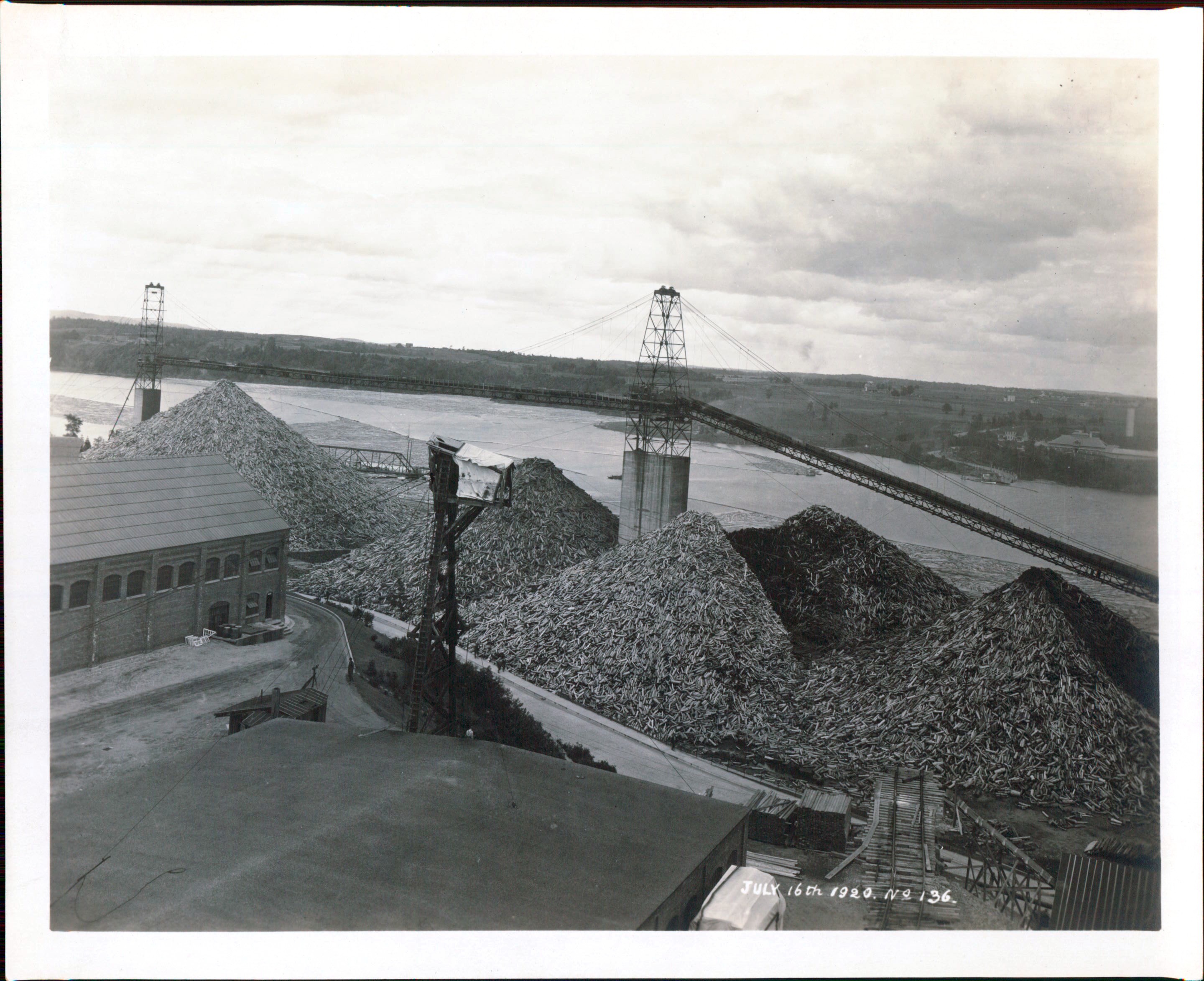
I am the product of the forestry industry in Canada, as both my father and grandfather were mechanical engineers who worked in the pulp and paper industry. What wealth I have I largely inherited from my parents, and it was derived from a combined two generations and some seventy years of labour in making newsprint for newspapers. The trees that were cut down and used largely came from northern Quebec, and were floated down the St Maurice river to four different paper plants. I spent a summer in one of them, in my home town of Grand-Mère, in 1981, hauling logs into a large boxes where they were ground up into raw pulp. Another summer I was in Northern Ontario planting trees. If memory serves correctly, the seedlings were all Black Spruce, beloved of both the lumber industry and the mills for newsprint. I lasted all of two weeks before giving up – it was hard, monotonous work, and I had the opportunity of going to London instead, which I took – but I briefly participated in a massive aspect of the forest industry, which was the replanting of areas that had been clear-cut. As my father once said, forestry was really just the same as farming, it was just that the crop took eighty years before it was ready for harvesting.
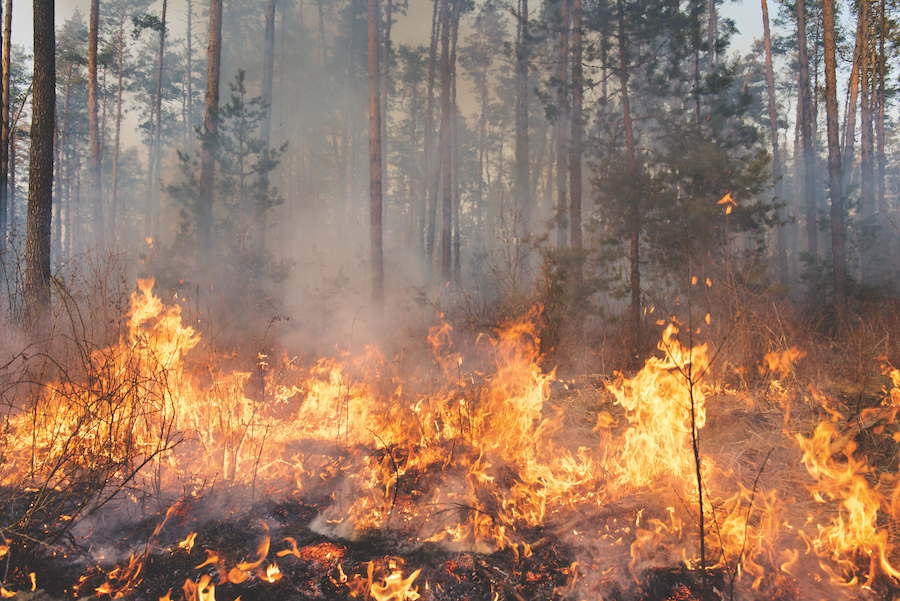
Now, as a Canadian, and as someone with a link to the forestry industry in Canada, it is likely that I have a carbon footprint larger than anyone of you. That’s because last year a combined are of Canada the size of Ireland burned down in forest fires. Most of these fires were not in forests that were old growth but second growth – planted forty, sixty, or eighty years ago. Instead of being woods with a mix of hard and softwoods, of different species, they tended to be monocultures. As managed timber lots they were often sprayed with pesticides to kill bushes and hardwoods, like aspen. If they were Black Spruce, they were also more flammable than old-growth or mixed forests.
Last year the forest fires in Canada produced a greater addition to greenhouse gases than all the airlines in the world did. The decisions that were made decades ago by Canadian foresters and government agencies has led to the situation where forests are more likely to burn. This probability is only increased by global warming, and thus we have a reinforcing loop. It makes one weep for all the minor efforts we as individuals and as groups make to combat global warming. Not surprisingly, the federal and provincial governments of Canada do not include the burning forests in the count of greenhouse gases towards the national carbon footprint, as it would increase it by several magnitudes and make Canada’s already poor reputation in this matter look even worse.
I say all of this not to say that I feel particularly guilty about all of this, but rather that it is incumbent upon me as a Canadian and as a Christian to be responsible, despite the complexity of the challenge of forest fires and global warming. This is the Season of Creation, a month in which we focus on environmental issues and celebrate what God has done in Earth. Lest you think this is some newfangled social justice thing from the left wing of the church, I hasten to point out that it started when the then Ecumenical Patriarch of Constantinople, Archbishop Dimitris, inaugurated it in 1989. Subsequently it was picked up and endorsed by Pope Francis for Roman Catholics, and it has since spread to Methodists, Lutherans, other members of the World Council of Churches, and, of course, the Anglican Communion. Concern for the Earth in the midst of global warming is a Christian value. This chaplaincy, as part of the EcoChurch programme, is working towards getting its Bronze Award, as are many the Diocese in Europe. Some have already moved up to the Silver, and a few have the Gold.
So what am I to do as a responsible Canadian and Christian? Apart from attempting to reduce my personal carbon footprint, I need to be engaged in civil society and working to convince the forest industry and the governments in Canada to change its policies and regulations. Some forest fires are natural and part of the way the ecosystem functions, but the burning of monoculture forests is not and needs to change. Advocating for biodiversity in Canada’s woodlands can be Christian action. As Christians in the modern world we are empowered through democracy and civil rights in a way unimaginable in the First Century when the New Testament authors lived under Roman Imperial despotism. So we (and I) need to be engaged. If I want to be a doer of the word and not merely a hearer, if I want to do what is right, if I want to let go of pride, avarice, and folly, I need to act. This is an issue of care for others as well, for as Pope Francis pointed out in Laudato Si, the climate crisis will affect the poorest of the earth in the least developed countries, especially those lying only a few metres above sea level, or are subject to desertification. If we care for the poor and disadvantaged, and if we have a global perspective, we will see the need to act.
But this is my story. You have a different one, but there may be things about which you have some responsibility and capacity to act. It may be directly in areas of Christian ethics, and about what you say and the care of orphans and widows, and those But it may also be in the care of creation, and the celebration of all that is good in it. So may we be forgiven by God, may we be transformed by the Holy Spirit, so that we might have the mind of Christ and be the holy Body of Christ in the world, cooperating with the divine in the transformation of the cosmos.


 The Island Parson